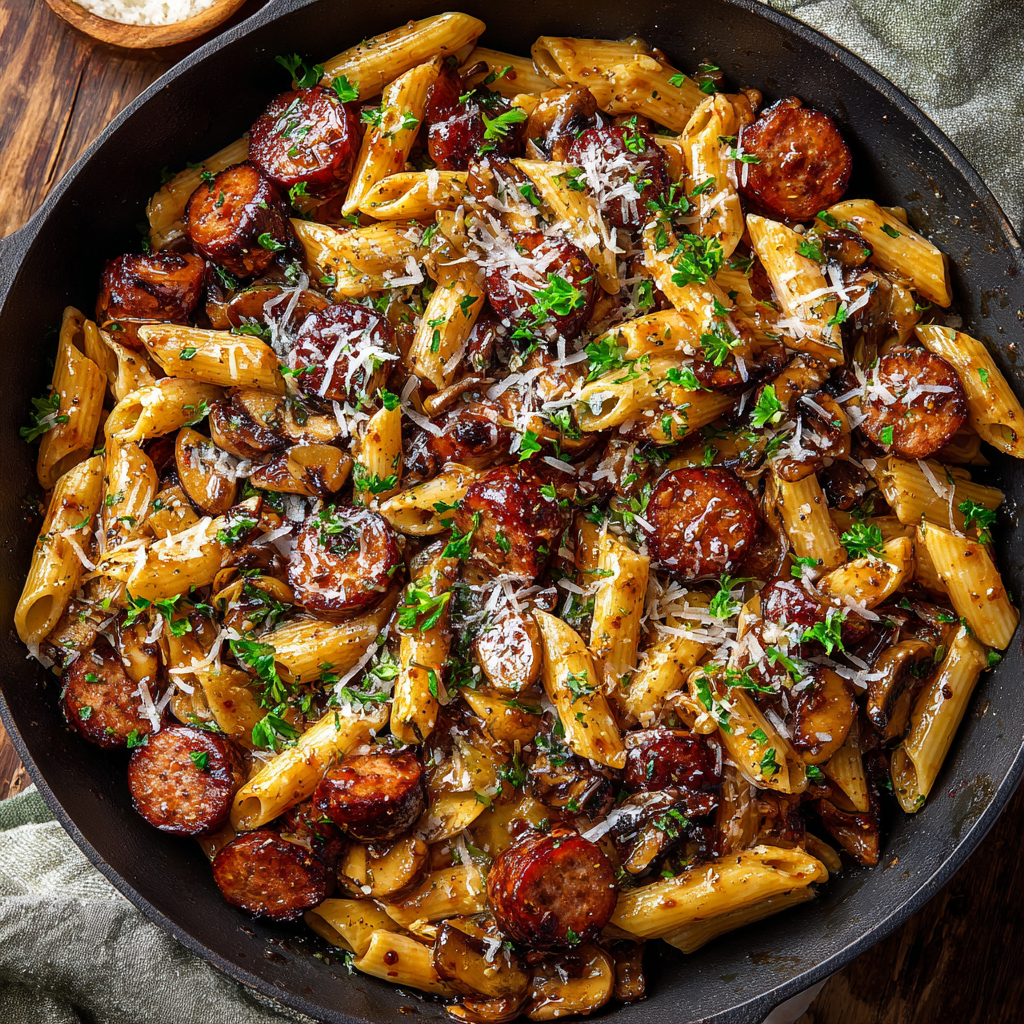
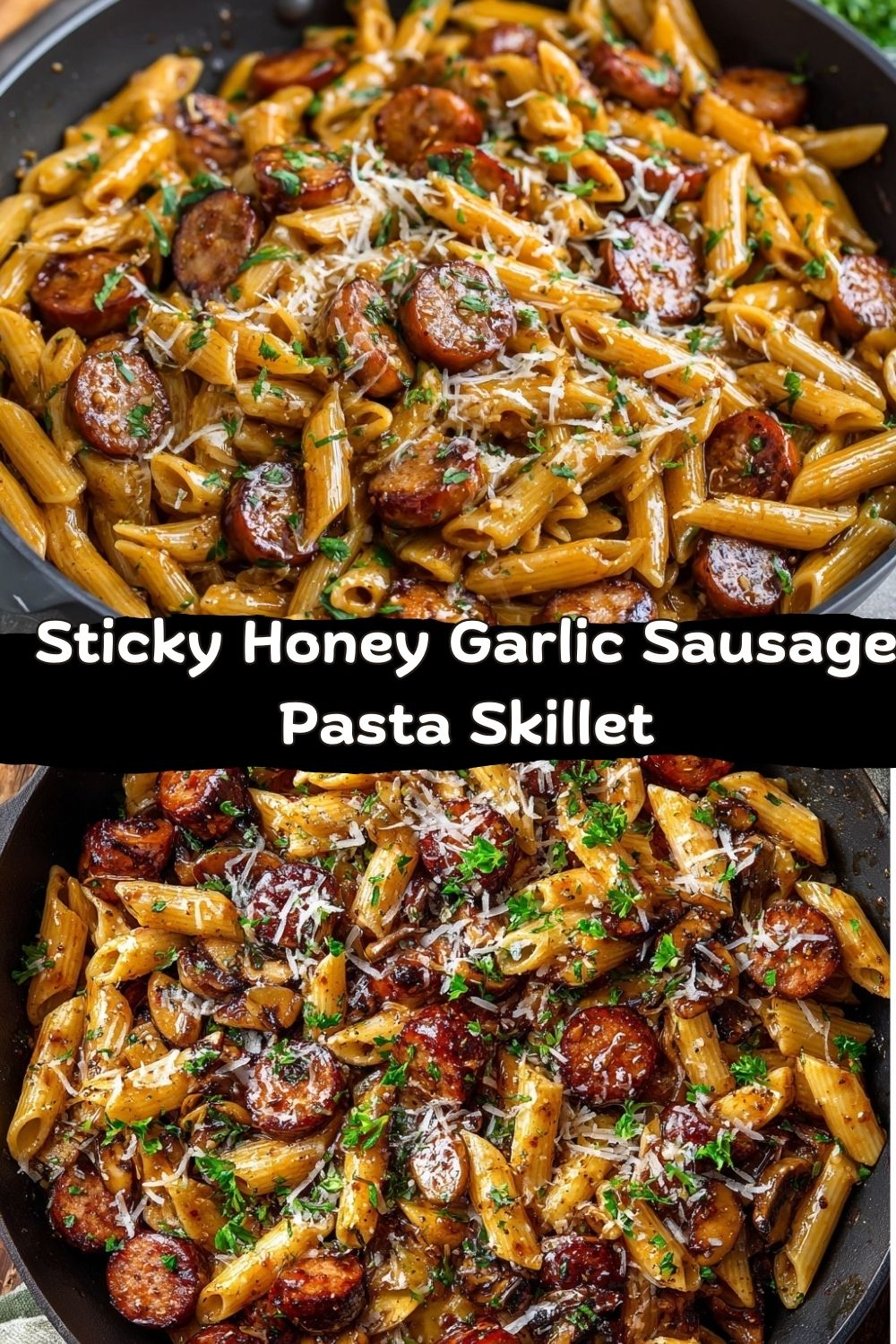
Sticky Honey Garlic Sausage Pasta Skillet: Your New Weeknight Hero
Picture this: it’s one of those nights. You’re hungry, maybe a little tired from the day, and the last thing you want is a sink full of dishes. But you also want something real—something that tastes like you actually cooked, not just reheated. You want flavor that jumps off the plate, a little sweet, a little savory, a whole lot of satisfying. Sound familiar? That’s exactly why I created this Sticky Honey Garlic Sausage Pasta Skillet.
This isn’t just another pasta dish. This is a 25-minute, one-pan wonder that feels like a hug in a bowl. It’s the glorious meeting point of juicy, browned sausage and a glossy, irresistible sauce built on honey and garlic. We’re talking about tender pasta coated in a sticky, savory-sweet glaze with just the faintest whisper of heat. It’s bold, comforting, and so incredibly simple. I built Food Meld for recipes exactly like this—where minimal effort meets maximum “wow.” So, grab your favorite large skillet. We’re about to make a mess (a small one, I promise), have some fun, and end up with a dinner that’ll have everyone asking, “When can we have this again?” Let’s get that pan hot.
The Recipe That Started in a Dorm Kitchen
Believe it or not, the very first, very rough version of this dish came to life in my college apartment kitchen. My roommate, Mike, and I were on a strict budget of “whatever is left in the fridge.” We had half a pack of smoked sausage, some questionable garlic powder, a bottle of cheap soy sauce packets from last week’s takeout, and the eternal jar of honey. Desperation, as they say, is the mother of invention. We threw it all in a pan with some boiled noodles, crossed our fingers, and took a bite.
It was… shockingly good! Not “blog-worthy” good, but “we will definitely make this again” good. That little moment of kitchen alchemy stuck with me. Over the years, I’ve refined it—fresh garlic instead of powder, a splash of vinegar for balance, real broth for depth—but the soul of it is still the same. It’s about making something awesome with what you have, without overcomplicating it. Every time I make this skillet now, it takes me right back to those messy, laughing, “I think we just invented something” nights. Food memories are the best kind, and I hope this dish starts a few for you, too.
What You’ll Need (And Why It Works)
Here’s your shopping list. The magic here is in the balance, so let’s break down why each ingredient earns its spot in the pan.
- 12 oz (340 g) Pasta (Penne or Rigatoni): These short, tube-shaped pastas are my go-to because they trap the sticky sauce perfectly in every nook and cranny. Chef’s Insight: Don’t overcook it in the boiling stage! We’ll finish it in the sauce, so aim for perfectly al dente—it should still have a slight bite.
- 1 lb (450 g) Sausage, sliced: The star protein. I love using a smoked sausage (like Andouille or Kielbasa) for a deep flavor, or a sweet Italian sausage for herby notes. Sub Tip: No sausage? Chicken breast or thighs, cut into bite-sized pieces, work beautifully. Just adjust cook time until no longer pink.
- 1 Tablespoon Olive Oil: Just enough to get our sausage nicely browned and to prevent sticking. Chef’s Insight: If your sausage is particularly fatty, you can reduce this amount. Let the sausage render its own fat first!
- 3 Cloves Garlic, minced: Non-negotiable. Fresh is best here for that pungent, aromatic punch that forms the base of our sauce. Pro Tip: Smash the cloves with the flat side of your knife first—the skins will slip right off and mincing becomes a breeze.
- 1/4 Cup Honey: Our sweet backbone. It caramelizes and creates that incredible sticky glaze. Sub Tip: For a deeper flavor, try using pure maple syrup. For a less sweet option, cut the honey to 3 tablespoons.
- 1/4 Cup Soy Sauce (low sodium recommended): The savory, salty counterpoint to the honey. Low-sodium gives you control over the final salt level. Sub Tip: For a gluten-free version, use tamari or coconut aminos.
- 1 Tablespoon Apple Cider Vinegar: The secret weapon! This little splash cuts through the richness and adds a necessary tang that brightens the whole dish. Chef’s Insight: White wine vinegar or even a squeeze of fresh lemon juice works in a pinch.
- 1/2 Cup Chicken Broth: This loosens our sauce just enough to coat everything evenly and adds another layer of savoriness. Pro Tip: Using a flavorful broth is key. If you have homemade, this is its time to shine.
- 1/4 Teaspoon Red Pepper Flakes (optional): Just a hint to add a gentle warmth in the background. You control the heat! Start with a pinch and add more if you like a kick.
- 1 Tablespoon Butter: Stirred in at the very end. This is a chef’s trick for adding a silky, luxurious finish to any pan sauce. It’s the “wow” factor.
- Salt and Pepper to taste: Always season in layers. We’ll season the pasta water and then do a final taste at the end.
- Garnish (Parsley & Parmesan): The fresh parsley adds a pop of color and freshness. The Parmesan (optional but highly recommended) adds a salty, umami bomb. Chef’s Insight: Always garnish with intention—it elevates the dish visually and on the palate.
Let’s Build That Flavor, Step-by-Step
Okay, team. Fire up the stove, put on some music, and let’s cook. We’re doing this in a logical flow to build layers of flavor and keep cleanup to a single pan.
Step 1: Cook the Pasta (But Listen Up!)
Bring a large pot of well-salted water to a boil. Salting the water is how we season the pasta from the inside out—it should taste like the sea. Cook your penne or rigatoni according to the package directions, but shave 1 minute off the suggested cook time. We want it al dente because it’s going to take a quick bath in our sauce later. Before you drain it, reserve about 1/2 cup of that starchy pasta water. This liquid gold is our insurance policy for a perfectly silky sauce. Drain the pasta and set it aside.
Step 2: Brown the Sausage Like a Pro
While the pasta cooks, heat the olive oil in a large, heavy-bottomed skillet or braiser over medium-high heat. Add your sausage slices in a single layer. Here’s the key: don’t crowd the pan! If you need to, cook in batches. We’re not just cooking the sausage; we’re seeking the Maillard reaction—that beautiful, flavorful browning. Let them sit undisturbed for 2-3 minutes to get a good sear, then flip and cook for another 3-4 minutes until they’re crispy and browned on both sides. Remove them to a plate. They’ve done their job, and they’ve left behind delicious flavorful bits (fond) in the pan. Don’t clean it!
Step 3: Craft the Glossy Sauce
Reduce the heat to medium. In that same skillet with all the sausage goodness, add the minced garlic. Sauté for just 30-60 seconds until it’s incredibly fragrant. Watch it closely! Burnt garlic is bitter, and we don’t want that. Now, pour in the honey, soy sauce, apple cider vinegar, and chicken broth. Add the red pepper flakes now if using. Give it all a good whisk, scraping up all those browned bits from the bottom of the pan. This is called deglazing, and it’s where we capture all that built-up flavor. Let the sauce simmer for 2-3 minutes. You’ll see it start to thicken slightly and become glossy.
Step 4: The Grand Meld
Return the browned sausage (and any juices on the plate) to the skillet. Stir to coat in the sauce and let it simmer together for 3-4 minutes so the sausage soaks up that flavor. Now, add the drained pasta. Use tongs to toss and fold everything together until every piece of pasta is glistening with that sticky honey garlic sauce. If the sauce seems too thick, add a splash of your reserved pasta water, a tablespoon at a time, until it loosens to your liking. Turn off the heat.
Step 5: The Chef’s Finishing Touch
Drop that tablespoon of cold butter into the skillet. Stir and toss until the butter is completely melted and emulsified into the sauce. This step, called “monter au beurre,” gives the sauce a restaurant-quality sheen and a velvety mouthfeel. Do a final taste test. Does it need a pinch more salt? A crack of black pepper? Adjust now.
How to Serve It Up Right
Presentation is part of the fun! I like to serve this family-style, right out of the skillet I cooked it in (just remember to use a trivet!). Ladle generous portions into shallow bowls. The final flourish makes all the difference: a vibrant sprinkle of chopped fresh parsley and a generous shower of grated Parmesan cheese. The parsley adds a fresh counterpoint to the rich dish, and the Parmesan adds a salty, nutty complexity.
This is a hearty, complete meal on its own, but if you want to round it out, a simple side is perfect. A crisp green salad with a sharp vinaigrette cuts through the richness beautifully. For a veggie boost, some roasted broccoli or sautéed spinach on the side is fantastic. And don’t forget the crusty bread for mopping up every last drop of that irresistible sauce—trust me, you’ll want to.
Make It Yours: 5 Flavorful Twists
The beauty of this recipe is its flexibility. Once you’ve mastered the base, play with it! Here are some of my favorite riffs:
- The Veggie-Packed Version: After browning the sausage, add 1 cup of diced bell peppers and 1/2 a diced onion to the skillet. Sauté until softened, then proceed with the garlic and sauce. You can also stir in a couple of big handfuls of fresh spinach right at the end, letting it wilt in the residual heat.
- Creamy Dreamy: Love a creamy pasta? After you combine everything in Step 4, stir in 1/4 to 1/2 cup of heavy cream or full-fat coconut milk. Let it simmer for a minute to meld. It becomes incredibly decadent.
- Spicy Gochujang Glaze: Swap the honey for 2 tablespoons of honey and 2 tablespoons of gochujang (Korean chili paste). The result is a deeper, funkier, and spicer sauce that’s absolutely addictive.
- Lemon Herb Freshness: For a brighter profile, replace the apple cider vinegar with the juice of half a lemon. Add the zest of the whole lemon when you add the butter. Finish with fresh basil or thyme instead of parsley.
- “Clean Out the Fridge” Protein Swap: As mentioned, chicken works great. You can also use pre-cooked shrimp (add them at the very end just to heat through), ground turkey, or even meatballs. Brown them well for maximum flavor.
A Few Notes from My Kitchen to Yours
This recipe has been a work-in-progress for years, and it’s evolved with every batch. One time, I accidentally used balsamic vinegar instead of apple cider vinegar. It was a happy accident—it added a wonderful depth. So don’t be afraid of small mistakes; they might lead to your new favorite version.
My biggest tip? Read the recipe all the way through before you start. Have your ingredients measured and ready (this is called mise en place). It makes the 25-minute cook time actually achievable and keeps the process stress-free. And finally, trust your palate. You’re the chef of your own kitchen. Want it sweeter? Add a drizzle more honey at the end. Want it tangier? A splash more vinegar. Make it yours.
FAQs & Quick Fixes
Q: My sauce turned out too thin/watery. What happened?
A: This usually means the sauce didn’t have enough time to reduce and thicken before adding the pasta. Next time, let the sauce simmer for an extra minute or two after adding the broth. For a quick fix right now, you can mix 1 teaspoon of cornstarch with 1 tablespoon of cold water and stir it into the simmering sauce. It will thicken up in about 60 seconds.
Q: Can I make this ahead of time?
A: Absolutely! You can cook the sausage and make the sauce up to 2 days ahead. Store them separately in the fridge. When ready to eat, reheat the sauce, cook fresh pasta, and combine. The pasta itself is best fresh, as it can absorb too much sauce and become soft if stored.
Q: It’s a bit too sweet for my taste. How can I balance it?
A: No problem! Balance is key. Add an extra tablespoon of soy sauce or a squeeze of fresh lemon juice to counteract the sweetness. Next time, you can reduce the honey to 3 tablespoons and increase the chicken broth by 1 tablespoon.
Q: What’s the best type of skillet to use?
A: I swear by a large (12-inch) cast iron or heavy stainless steel skillet. They distribute heat evenly and are perfect for getting a good sear on the sausage and reducing the sauce properly. A non-stick pan will work, but you won’t get as much fond (browned bits) for your sauce.
Nutritional Info (A Quick Breakdown)
Please note: The following is an estimate per serving (1 of 4), generated using standard ingredients and is for informational purposes only. Variations will change these values.
- Calories: ~420
- Protein: 19g (Great from the sausage!)
- Carbohydrates: 35g (Primarily from the pasta and honey)
- Fat: 25g (A mix from the sausage and oil/butter. Using a leaner protein like chicken breast will reduce this.)
- Fiber: 2g (You can boost this by using a whole-wheat or chickpea pasta!)
- Sodium: This can vary widely based on your sausage and soy sauce. Using low-sodium soy sauce and broth gives you great control. The estimated range is 800-1200mg per serving.