Steak and Mashed Potatoes – A Classic Combo That Never Misses
Hey there, Food Meld fam. Let’s talk about a truth we all hold sacred: the unbeatable, soul-satisfying magic of a perfectly cooked steak sitting next to a mountain of buttery, creamy mashed potatoes. It’s the meal you crave after a long week, the dinner you proudly serve to impress a date, and the flavor anthem that plays in your head when someone says “comfort food.” No fancy jargon, no intimidating techniques—just simple, high-quality ingredients treated with a little know-how and a lot of love.
Maybe you’re thinking, “Jackson, everyone knows how to make steak and potatoes.” And you’re right! But I’m here to show you how to elevate that classic. We’re not just throwing protein and starch on a plate. We’re building layers of flavor. We’re creating a sear on that steak that crackles with savory goodness, and whipping potatoes so smooth and rich they could be a side dish superstar. This isn’t about reinventing the wheel; it’s about polishing it until it shines.
So, whether you’re a kitchen newbie looking for a reliable showstopper or a seasoned cook who wants to nail the fundamentals every single time, you’re in the right place. Grab your favorite skillet, and let’s dive into creating a meal that’s simple, satisfying, and truly undefeated. Let’s cook something awesome together.
The First Steak: A Lesson in Flavor (and Patience)
My love for this dish goes way back, straight to my dad’s backyard grill. He was a man of few words but spoke volumes through food. One summer evening, when I was all of twelve and more interested in video games than vinaigrettes, he handed me a pair of tongs and a thick, marbled ribeye. “Don’t poke it,” he said. “Just let it be. Listen to the sizzle.”
I was so nervous. I wanted to flip it every ten seconds, press it down, *do* something. But he just shook his head, sipped his sweet tea, and pointed at the steak. “It’ll tell you when it’s ready.” That moment—the smell of charring beef mingling with the smoky grill, the patient silence—taught me more about cooking than any recipe ever could. It was about respect for the ingredient and trusting the process. The potatoes, of course, were my mom’s domain: whipped with a hand mixer, clouds of buttery bliss that perfectly caught every drop of juice from the steak. That meal, that first steak I cooked “by myself” (with dad’s quiet supervision), is the heartbeat of this recipe. It’s where my “flavor meets fun” philosophy started: with a solid sear, a patient rest, and the joy of sharing it with people you love.
Gathering Your Flavor Arsenal
Great food starts with great ingredients. Here’s exactly what you’ll need and why each one matters. I’ve also thrown in some swaps so you can make this work with what you’ve got.
For the Steak:
- 2 ribeye or strip steaks (about 1 inch thick): This is your star. Ribeye is my go-to for its rich marbling (those little white fat streaks), which equals insane flavor and tenderness. A New York strip is a leaner, beefier option that also sears up beautifully. Chef Insight: Take these babies out of the fridge 30-45 minutes before cooking. A room-temp steak sears more evenly!
- 1 tablespoon olive oil (or a high-heat oil like avocado): This is just to get the sear started. The steak’s own fat will do most of the work later. Sub Tip: If you’re using a well-seasoned cast iron, you can use just a light coat.
- Kosher salt and freshly cracked black pepper: Don’t be shy. A thick steak needs a generous crust of seasoning. I use kosher salt because it sticks better and seasons more evenly than fine table salt.
- 2 tablespoons butter: The secret weapon. Added in the last few minutes, it creates a luxurious, nutty sauce that bastes the steak. This is non-negotiable for that restaurant-quality finish.
- 2 garlic cloves, smashed: Smashing (just give it a whack with your knife) releases their oils into the butter for a sweet, aromatic punch.
- A few sprigs of fresh rosemary or thyme (optional but highly recommended): These herbs infuse the butter with a fragrance that’s just… chef’s kiss. Dried works in a pinch, but fresh is transformative.
For the Mashed Potatoes:
- 2 lbs russet or Yukon gold potatoes: Russets are the classic—fluffy and starchy, they absorb butter and cream like a dream. Yukon Golds are my personal favorite; they’re naturally buttery, creamy, and have a thinner skin, so you can peel them or not! Chef Hack: Cube them evenly so they cook at the same rate.
- ½ cup whole milk, half-and-half, or cream: The richer the dairy, the richer the mash. Pro Move: Warm it up before adding to the potatoes! Cold milk = gluey potatoes.
- ¼ cup (½ stick) butter: Again, butter is flavor. Use salted or unsalted, but taste as you go.
- Salt and pepper, to taste: Potatoes need seasoning. Season the boiling water generously (it should taste like the sea), and then season again after mashing.
Let’s Get Cooking: Your Foolproof Roadmap to Awesome
Here’s the play-by-play. Read through once, then just go for it. Cooking is about feel, not just following steps!
Step 1: The Potato Prep (Get These Going First)
Peel your potatoes (or just give Yukon Golds a good scrub) and cut them into evenly sized 1-inch cubes. Why uniform? So they all get tender at the same time. Nobody wants a half-mashed, half-crunchy spud situation. Toss them into a large pot and cover with cold water by about an inch. Now, here’s a key step: salt that water! I use a big palmful of kosher salt. It seasons the potatoes from the inside out. Bring it to a boil over high heat, then reduce to a lively simmer. Let them cook for 15-20 minutes, until they fall apart easily when pierced with a fork.
Chef Hack While You Wait: Warm your milk/cream and butter in a small saucepan or the microwave. This is the #1 trick for supremely creamy, non-gluey mash.
Step 2: The Steak Setup (Patience is a Flavor)
While the potatoes bubble away, pat your steaks bone-dry with paper towels. This is critical! Moisture is the enemy of a good sear; it steams the meat instead of browning it. Now, season both sides aggressively with salt and pepper. Really coat it. Let them hang out on the counter. Remember, we want them to lose that fridge chill.
Step 3: The Perfect Sear (This is Where the Magic Happens)
Place a heavy skillet (cast iron is my MVP here) over medium-high heat and let it get seriously hot for a good 2-3 minutes. Add the olive oil—it should shimmer immediately. Carefully lay the steaks in the pan. You should hear a confident, steady sizzle. That’s the sound of flavor forming. Now, here’s the hard part: don’t touch them! Let them sear, undisturbed, for 3-4 minutes for a medium-rare finish (adjust for your preferred doneness). You’re looking for a deep, brown crust.
Flip them over and cook for another 3-4 minutes. In the last 2 minutes of cooking, add the butter, smashed garlic, and herbs to the pan. As the butter melts, tilt the pan slightly and use a spoon to baste, baste, baste! Continuously spoon that fragrant, foamy butter over the steaks. This cooks the top side with delicious butter and infuses the meat with garlic-herb goodness.
Step 4: Mash & Rest (The Two Final Keys)
Your potatoes should be done. Drain them well in a colander, then return them to the hot pot for a minute to let any extra moisture evaporate. Mash them with a potato masher, ricer, or even a fork. Now, pour in the warm, buttery milk and keep mashing until they’re as smooth or as chunky as you like. Taste! Does it need more salt? Pepper? A extra pat of butter? Now’s the time. Cover the pot to keep them warm.
Transfer your beautiful, butter-basted steaks to a cutting board or plate. Do not slice them. Let them rest for a full 5-7 minutes. This allows the frantic juices to redistribute throughout the meat. If you cut now, all that amazing flavor ends up on the board, not in your mouth. Trust me on this.
Step 5: The Grand Finale
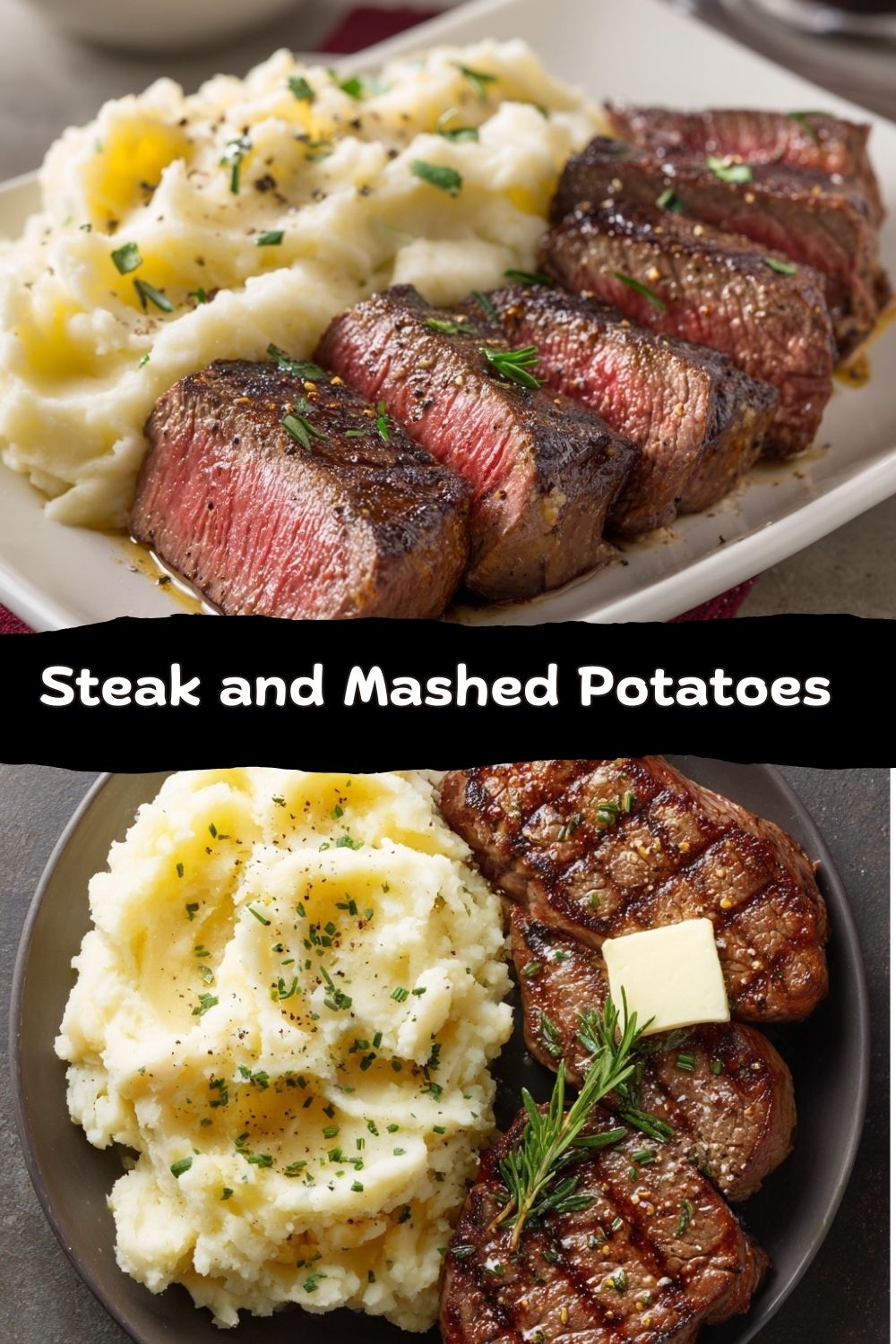
Slice your rested steak against the grain (look for the lines in the meat and cut perpendicular to them—this makes it more tender). Scoop a generous helping of mashed potatoes onto each plate, make a little well in the center (perfect for gravy or juices!), and arrange the sliced steak alongside. Don’t forget to drizzle every last drop of that garlic-herb butter from the pan over everything. That’s liquid gold.
Plating It Up: Make It a Feast for the Eyes
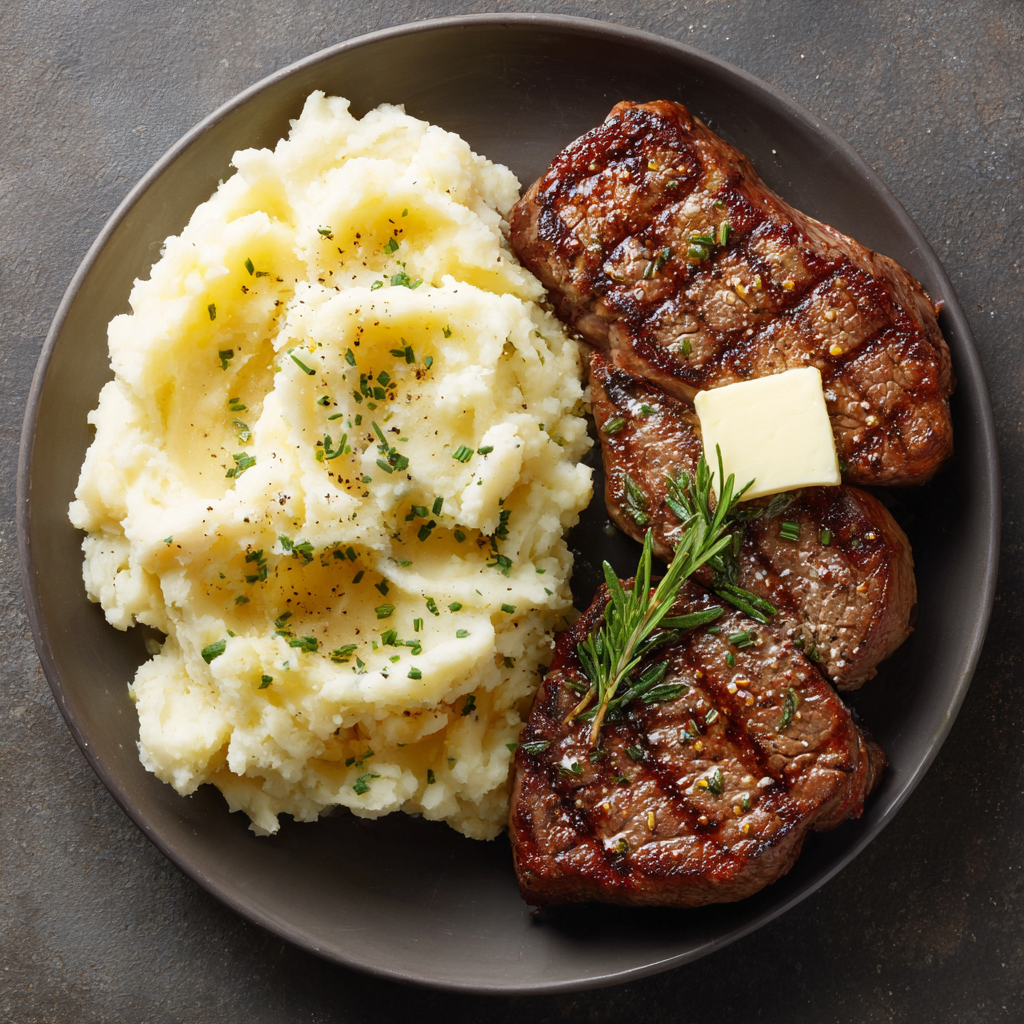
We eat with our eyes first, right? Let’s make this plate sing. I love using a wide, shallow bowl or a rimmed plate. Pile the mashed potatoes slightly off-center with the back of a spoon, creating those gorgeous, rustic peaks and swirls. Arrange the sliced steak fanned out or stacked casually next to it. That drizzle of pan butter is mandatory—let it pool around the potatoes and steak.
Want to take it up a notch? A simple garnish makes it feel restaurant-worthy. A tiny sprinkle of flaky sea salt and cracked pepper over the steak, a few fresh herb leaves (that rosemary or thyme you used), or even a quick, bright micro-green on top adds color and freshness. If you’re feeling extra, a simple side of quick-sautéed garlicky spinach or roasted asparagus adds a vibrant, healthy pop that cuts through the richness perfectly.
Mix It Up! Creative Twists on the Classic
The beauty of this recipe is its versatility. Once you’ve mastered the base, the world is your flavor playground. Here are a few of my favorite ways to mix it up:
- The “Everything But…” Loaded Mashed: Fold in crispy chopped bacon, shredded cheddar cheese, and sliced green onions to your mashed potatoes. Suddenly, it’s a loaded baked potato in mash form. Incredible.
- Global Fusion Steak: Change up your pan sauce! After removing the steak, deglaze the pan with a splash of soy sauce and a teaspoon of ginger for an Asian-inspired twist, or add a spoonful of harissa paste for a smoky North African kick. Spoon this new sauce over the steak.
- Lighter & Brighter: Swap the mashed potatoes for a creamy cauliflower purée (boil cauliflower florets until tender, then blend with a little butter, Parmesan, and nutmeg). It’s surprisingly decadent and lower-carb.
- Herb-Forward Steak: Instead of rosemary, finish your steak with a classic maître d’hôtel butter: mix softened butter with chopped parsley, lemon zest, salt, and pepper. Slice the steak and place a disc of this compound butter on top to melt.
- The “No Steak” Steak Dinner: For a vegetarian spin, use thick, meaty king oyster mushroom “scallops” or a well-seasoned portobello cap. Sear them just like the steak and use all the same butter-basting techniques. You’ll be amazed at the depth of flavor.
From My Kitchen to Yours: A Few Parting Thoughts
This recipe has been my go-to for years, and it’s evolved with every cook. I’ve learned that the type of salt matters, that warming the dairy is a game-changer, and that letting the steak rest is the ultimate test of willpower. I’ve also had my share of “learning experiences”—like the time I used a non-stick pan and couldn’t get a proper sear to save my life, or when I added cold cream to my potatoes and ended up with a texture reminiscent of library paste. We live and we learn!
The core of it, though, remains the same: quality ingredients, confident seasoning, and cooking with all your senses. Listen to that sizzle, watch for that crust, smell the garlic and butter mingling. That’s where the real joy is. Don’t stress about perfection; aim for delicious. And it will be.
FAQs: Your Questions, Answered
Q: My steak always turns out gray and tough, not brown and juicy. What am I doing wrong?
A: The two most common culprits are: 1) The steak wasn’t dry enough before it hit the pan (pat it drier than you think!), and 2) The pan wasn’t hot enough. Give your skillet plenty of time to preheat until it’s seriously hot. A good sear requires a confident, immediate sizzle.
Q: How do I know when my steak is done without cutting into it?
A: Use the hand test! Gently press the center of the steak with your finger. If it feels soft and squishy like the base of your thumb (when your hand is relaxed), it’s rare. Slightly springy like the base of your thumb when you touch it to your fingertip? That’s medium-rare. Firmer, like the base of your thumb when touching it to your pinky? That’s well-done. A good instant-read thermometer is your best friend: 130°F for medium-rare, 140°F for medium.
Q: My mashed potatoes are gluey/gummy. What happened?
A: This usually comes down to two things: overworking the potatoes or adding cold liquid. Potatoes release starch when they’re mashed too aggressively—especially if you use a blender, food processor, or electric mixer for too long. Stick to a hand masher or ricer. And always add warm milk or cream. Cold dairy shocks the starch and turns fluffy mash into paste. Gentle + warm is the winning combo.
Q: Can I make any part of this ahead of time?
A: Absolutely. You can peel and cube the potatoes up to a day ahead—just store them submerged in cold water in the fridge. For the steak, you can season it up to a few hours in advance and keep it uncovered in the fridge; this actually helps dry the surface for a better sear. Just bring it back toward room temp before cooking.
Q: What’s the best pan if I don’t have cast iron?
A: A heavy stainless-steel skillet is your next best option. Avoid lightweight nonstick pans—they don’t retain enough heat to build a proper crust. Weight = better sear.
Q: How do I scale this for a crowd?
A: Cook steaks in batches so you don’t crowd the pan (crowding = steaming). Keep finished steaks warm on a rack in a low oven (250°F) while you finish the rest. Mashed potatoes double beautifully—just keep them covered and warm with a splash of extra milk before serving.
Final Thoughts: Why This Combo Never Misses
Steak and mashed potatoes endure for a reason. They’re honest. They’re comforting. They’re dramatic in the best way—sizzling, buttery, rich, and deeply satisfying. This isn’t trendy food. It’s timeless food. The kind that reminds you why cooking at home can feel just as special as a restaurant night out—maybe even more so.
If this meal shows up on your table after a long day, you’re doing something right. If it earns silence at the table followed by smiles, you definitely are. Cook it for someone you love. Cook it for yourself. Either way, let it be a reminder that mastering the classics is one of the greatest flexes in the kitchen.
If you make it, tag me @FoodMeld—I love seeing your wins.
Until next time, keep it hot, keep it buttery, and keep cooking with confidence.
— Jackson