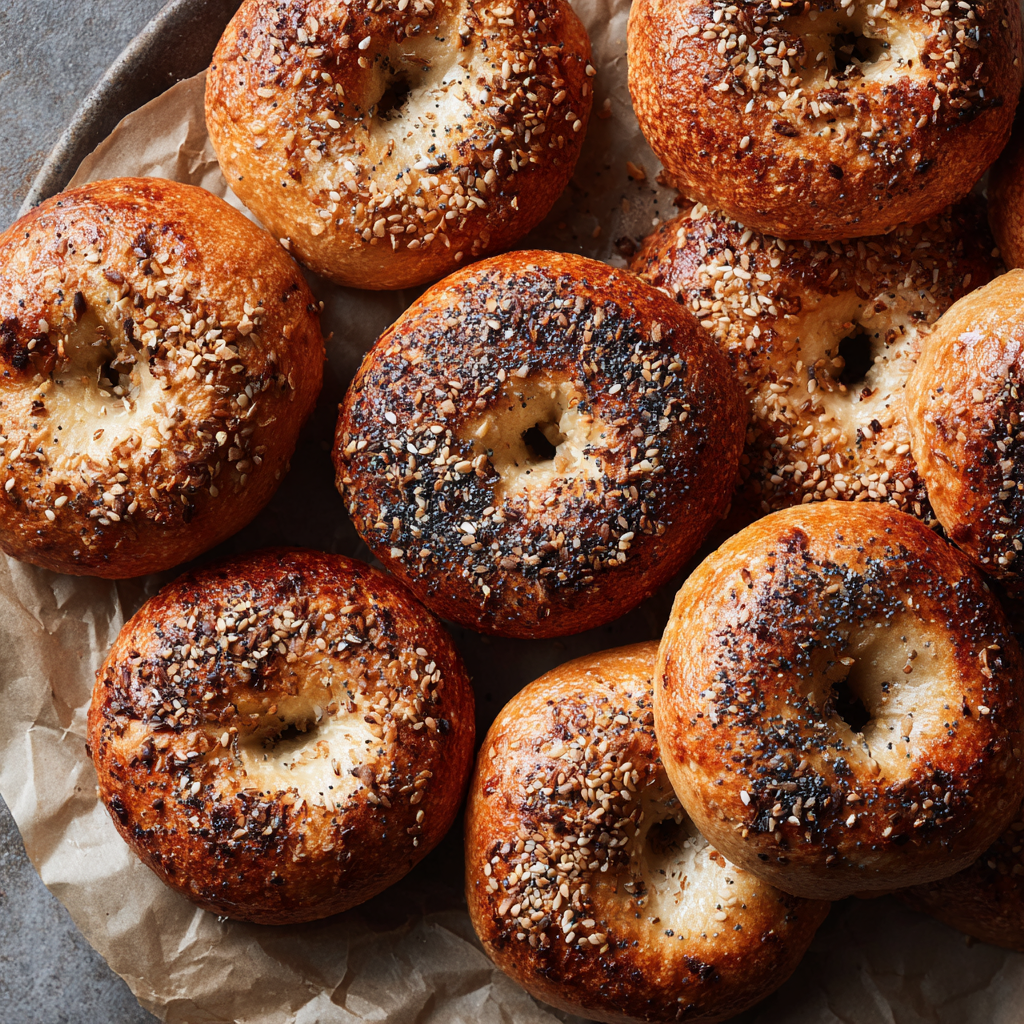
Forget the Bakery Line: Let’s Make Unbeatable Sourdough Bagels
Hey friends, Jackson from Food Meld here. Let’s get real for a second. Is there anything better than walking into a bakery first thing in the morning and being hit with that warm, yeasty, soul-comforting smell of fresh bagels? That crisp, shiny crust giving way to a chewy, dense crumb? It’s pure magic. But what if I told you that magic isn’t locked away in a professional kitchen? What if you could create that same jaw-dropping, “you-made-this?!” masterpiece right on your own counter?
Well, you absolutely can. And we’re doing it today with a recipe that’s close to my heart: Sourdough Bagels. These aren’t just any bagels. They’re the chewy, golden, tangy heroes of the breakfast table. We’re leveraging the power of your sourdough starter for a deep, complex flavor that store-bought versions can only dream of. I know the word “sourdough” can sound a little intimidating, but trust me on this one. We’re keeping it simple, real, and packed with that “what if we tried this?” energy. This recipe is a project, a fun, overnight adventure that rewards you with the most incredible payoff. So, dust off that starter, and let’s cook something awesome together.

The Bagel That Started It All
My love affair with bagels started on a trip to New York City with my grandad. I was maybe ten years old, and he dragged me out of the hotel at what felt like the crack of dawn, promising me “a real breakfast.” We ended up in this tiny, steamy shop in Brooklyn, where the line was out the door and the guy behind the counter yelled your order back at you. Grandad got us two “everything” bagels, toasted, with a thick schmear of cream cheese. I took one bite, and my world changed. The crunch of the seeds, the sharp onion and garlic, the slight resistance of that perfectly chewy interior… it was a flavor and texture symphony.
On the train back home to Georgia, I couldn’t stop talking about it. “Pawpaw, why don’t our bagels taste like that?” He just laughed and said, “Son, some things you just gotta learn to make yourself.” That stuck with me. This recipe is my homage to that Brooklyn bagel shop and my grandad’s wisdom. It’s my way of bringing that unforgettable bite right into my own kitchen, with a little Southern twist of patience and a whole lot of sourdough soul.
Gather Your Flavor Arsenal
Here’s the lineup for our bagel brilliance. Using a kitchen scale is a game-changer for baking, so I’ve listed weights for accuracy, but I’ve got cup measures for my fellow “scoopers” too. Let’s dig in.
- 300g (about 1 ¼ cups) Active Sourdough Starter: This is the heart and soul of our recipe! Make sure your starter is fed, bubbly, and has at least doubled in size. It should smell sweet and tangy, not like acetone. If it’s sluggish, your bagels will be too.
- 500g (about 2 cups + 2 tbsp) Warm Water: Not hot, just warm to the touch—think baby-bottle temperature. Hot water will hurt our sourdough yeasties.
- 1000g (about 8 cups) Bread Flour: The high protein content in bread flour is our secret weapon for that classic, chewy bagel texture. In a pinch, you can use all-purpose, but the chew won’t be quite as epic.
- 80g (about ⅓ cup) Sugar: A little food for the starter to keep it happy during the long ferment. It also contributes to that beautiful golden-brown color.
- 22g (about 1 tbsp + 1 tsp) Fine Sea Salt: Crucial for flavor development and for strengthening the gluten structure. Don’t skip it!
- 2 tbsp Olive Oil: My little chef’s hack. This adds a whisper of softness and depth to the crumb and makes the dough a dream to work with.
- 40g (about 2 tbsp) Honey: For the boiling bath! This gives the bagels their signature shiny, slightly sweet crust. You can swap it for brown sugar or barley malt syrup for a more traditional flavor.
- Optional Toppings: This is where you get creative! Sesame seeds, poppy seeds, everything bagel seasoning, flaked sea salt, or even dehydrated garlic and onion. The world is your bagel!
Let’s Get Our Hands Doughy: The Step-by-Step
Alright, let’s roll up our sleeves. This process is a labor of love, but I’ll walk you through every step. Read through once before you start—it’s my number one tip for any recipe.
- Mix the Base: In a large bowl, whisk together your active starter, warm water, and sugar until the starter is mostly dissolved. It’s okay if it’s a little lumpy. Now, add the bread flour and salt. I like to mix the salt in with the flour so it doesn’t directly contact the starter. Use a sturdy spatula or your hands to mix until you have a shaggy, floury mess of a dough. No dry spots left! Now, drizzle in that olive oil. It might seem slippery at first, but just keep working it in.
- The Knead for Speed: Turn your shaggy dough out onto a clean, un-floured surface. Here’s the deal: this dough is stiff. It’s supposed to be! Don’t be tempted to add more water. We want a firm dough for a dense, chewy crumb. Knead for 8-10 minutes. Put on some music, find your rhythm. You’re looking for a smooth, slightly tacky, but very elastic dough. Do the “windowpane test”: take a small piece and gently stretch it between your fingers. If you can stretch it thin enough to see light through it without it tearing, you’re golden.
- The Long, Slow Ferment (The “Overnight Magic” Step): Place your beautiful, smooth dough ball back into a lightly oiled bowl, turn it over to coat, and cover it with a damp kitchen towel or plastic wrap. Now, we walk away. Let it bulk ferment at room temperature for about 8 hours, or overnight. It won’t double in size like a regular bread dough, but it should look puffy and have risen by about 50%. You might see some bubbles on the surface. This slow rise is where all that incredible sourdough tang develops.
- Shape the Bagels: The next morning, turn your dough out onto a lightly floured surface. Divide it into 8-10 equal pieces (I use a scale for precision, but eyeballing is fine!). To shape, roll each piece into a tight ball. Press down firmly in the center. Now, here’s my favorite method: pick it up and gently poke your thumb through the center. Using your fingers, slowly rotate the bagel, stretching the hole to about 2 inches in diameter. They’ll shrink back a bit, which is perfect.
- The Brief Rest: Place your shaped bagels on a parchment-lined baking sheet, cover them with that same damp towel, and let them rest for 30-45 minutes. This is called the bench rest, and it lets the gluten relax after all that shaping.
- Boil ‘Em Up (The Secret to the Shine & Chew): Preheat your oven to a hot 425°F (220°C). Bring a large, wide pot of water to a rolling boil and add your honey. Gently drop 2-3 bagels into the boiling water—don’t crowd the pot! They’ll sink and then float. Boil for 30 seconds, flip them over, and boil for another 30 seconds. This quick bath gelatinizes the starches on the surface, giving us that iconic chewy crust and shiny finish.
- Top and Bake: Using a slotted spoon or spider strainer, pull the bagels out, let the excess water drip off, and place them back on the baking sheet. While they’re still wet, this is the time to add your toppings! Sprinkle generously. Bake for 18-22 minutes, rotating the pan halfway through, until they are deeply golden brown and sound hollow if you tap the bottom.
- The (Hardest) Final Step: Cool! Transfer your gorgeous, golden bagels to a wire rack and let them cool completely before slicing. I know, it’s torture. But cutting into a hot bagel can make it gummy. Trust me, it’s worth the wait.
Serving Up the Goodness
Okay, the wait is over. That first slice is a revelation. Now, how do we do these beauties justice?
For the classic treatment, you can’t beat a thick layer of full-fat cream cheese. Let it come to room temperature so it’s spreadable. For my Everything Bagel version, I love adding thin slices of smoked salmon, a few capers, and a squeeze of fresh lemon juice. It’s a restaurant-quality brunch right at home.
If you’ve got a sweet tooth, try a swipe of creamy peanut butter and sliced bananas on a plain or sesame seed bagel. Or, lean into the sourdough tang with a generous smear of good butter and a drizzle of local honey.
And don’t you dare forget about bagel sandwiches! A toasted everything bagel, a fried egg, a slice of sharp cheddar, and a piece of crispy bacon is my ultimate fuel for a busy day.
Mix It Up: Your Bagel, Your Rules
Once you’ve mastered the base recipe, the fun really begins. Here are a few of my favorite twists:
- Everything But The… Bagel: The classic! Mix together sesame seeds, poppy seeds, dried minced garlic, dried minced onion, and flaked salt. Press it on generously after the boil.
- Sweet Cinnamon Raisin: When mixing the dough, add 2 teaspoons of ground cinnamon and ⅔ cup of raisins (soak them in warm water for 10 minutes first to plump them up). A cinnamon-sugar sprinkle on top before baking is divine.
- Savory Jalapeño Cheddar: Fold ½ cup of shredded sharp cheddar and ¼ cup of finely diced pickled jalapeños into the dough during the last minute of kneading. The cheese gets all melty and the jalapeño gives a perfect little kick.
- Whole Wheat Twist: Swap out 300g of the bread flour for whole wheat flour. You’ll get a heartier, nuttier bagel with extra fiber. You might need to add a tablespoon or two more water, as whole wheat flour absorbs more liquid.
- “Everything” Vegan Style: This recipe is naturally vegan if your starter is! Just ensure your sugar is vegan (some refined sugars use bone char) and use maple syrup instead of honey for the boil.
Jackson’s Chef’s Notes
This recipe has evolved so much in my kitchen. The first time I made them, I was so nervous about the boil that I under-baked them. Let’s just say we had “bagel rocks” that could have been used in a slingshot. Don’t be afraid of that deep golden color—it’s your friend!
I’ve also learned that the temperature of your kitchen is the boss. In the summer, my bulk ferment might only take 6 hours. In the winter, it might need 10. Learn to read the dough, not the clock. Look for that puffy, airy look rather than watching the timer.
And my final, most important tip? Share them. A warm, homemade bagel is one of the most generous things you can give someone. The look on their face is better than any bakery line.
Bagel FAQs: Your Questions, Answered
Q: My bagels didn’t rise much during the bulk ferment. What happened?
A: This is almost always a starter issue. Your starter might not have been active and bubbly enough when you started. Next time, do the “float test”: drop a small spoonful of starter into a glass of water. If it floats, you’re good to go! If it sinks, let your starter ferment for a few more hours before using it.
Q: Why are my bagels tough or dense?
A> Two likely culprits: 1) You added too much flour during kneading. Remember, the dough is stiff but should still be smooth. 2) You didn’t knead enough to develop the gluten. That windowpane test is your best friend here!
Q: Can I speed up the process?
A> You can try a warmer spot for the bulk ferment (like an oven with the light on), but the slow, cool ferment is what builds the signature sourdough flavor and a better texture. I highly recommend embracing the overnight method. The wait is part of the magic.
Q: How do I store them and for how long?
A> Once completely cool, store them in a paper bag at room temp for a day or two. For longer storage, slice and freeze them in a zip-top bag. They toast up perfectly straight from the freezer!
Nutritional Lowdown (Because We’re Curious!)
Okay, let’s talk fuel. A homemade sourdough bagel is a beautiful thing. Because of the long, natural fermentation process, the wild yeast and bacteria pre-digest some of the starches and gluten in the flour. This can make the nutrients more bioavailable and easier on your digestive system compared to a quickly-made commercial bagel.
Per bagel (assuming you make 10 from this recipe), you’re looking at roughly:
Calories: ~260 | Protein: 8g | Carbohydrates: 52g | Fat: 2g | Fiber: 2g
Remember, these are estimates. The real value is in the quality of ingredients and the love you put into them. You control what goes in, with no mysterious preservatives. That’s a win in my book.
You Did It! Welcome to the Bagel-Making Club
Look at you, you magnificent bagel baker! You took flour, water, and your own lively starter and transformed them into something truly spectacular. That crisp, shiny crust and that soft, tangy, chewy interior… you made that. I hope you feel an immense sense of pride, because you absolutely should.
This recipe is more than just a list of instructions; it’s an invitation to slow down, to connect with your food, and to create those “you’ve gotta try this!” moments in your own kitchen. I hope this becomes a regular weekend ritual for you, just like it is for me. Now, go slice one of those beauties, slather it with cream cheese, and enjoy every single, well-earned bite.
Got questions or want to show off your bagel masterpieces? Tag me on social @FoodMeld—I love seeing what you cook up! Until next time, keep melding those flavors.
Happy baking,
Jackson