Maple Dijon Salmon: Your New Favorite 30-Minute Powerhouse Meal
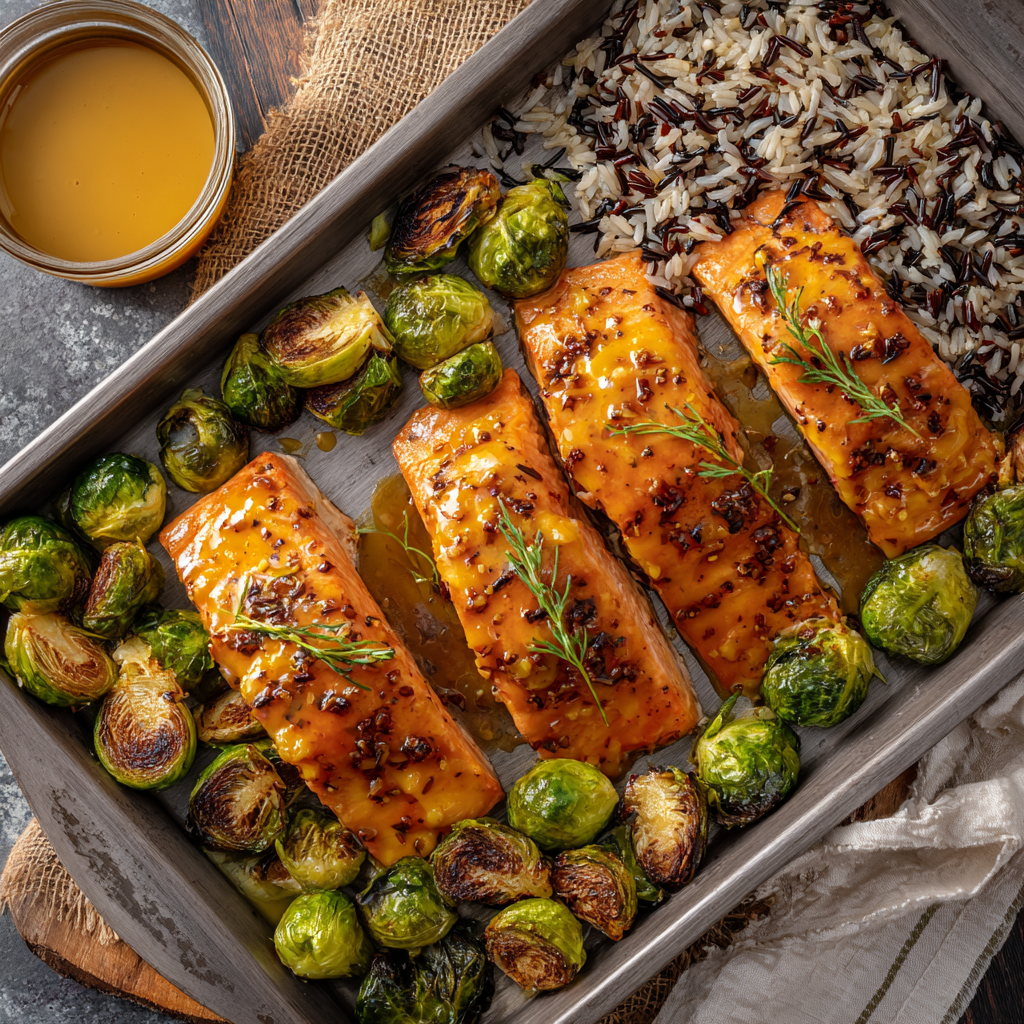
Hey friends, Jackson from Food Meld here. Let’s talk about a dinner that feels like it belongs in a fancy restaurant but is secretly one of the easiest, most foolproof meals you can whip up on a busy Tuesday. I’m talking about this glorious Maple Dijon Salmon. If you’re even slightly hesitant about cooking fish, this recipe is your new best friend. It’s the ultimate flavor meld—sweet, sticky maple syrup tangoing with the sharp, zesty kick of Dijon mustard, all clinging to a beautifully tender, flaky piece of salmon. We’re roasting it up with some crispy-edged Brussels sprouts and a bed of nutty wild rice for a plate that’s balanced, satisfying, and downright beautiful.
I get it. Sometimes you stare into the fridge after a long day and the inspiration just isn’t there. You’re tired of the same old rotation. That’s exactly why I created Food Meld—to be that little spark of “you’ve gotta try this” energy. This dish is that spark. It’s healthy without screaming “health food,” it’s elegant enough for date night, and it’s simple enough that you won’t be left with a mountain of dishes. We’re talking minimal prep, maximum flavor payoff. So, preheat that oven, grab your favorite bowl for mixing, and let’s cook something awesome together that will have everyone at the table asking for seconds.
The Night This Salmon Became a Legend
This recipe has a special place in my heart because it was the star of the show at one of the most impromptu, chaotic, and fun dinner parties I’ve ever thrown. It was a few years back. My buddy texted me last minute saying he was in town with a couple of friends. My apartment was a mess, and my fridge was… creatively stocked. I had some salmon fillets I was saving for a quiet night, a half-empty bottle of real maple syrup from pancake Sunday, and a bag of Brussels sprouts that were begging to be used.
I’ll be honest, I was winging it. I whipped together the maple and Dijon, gave it a taste, and knew I was onto something. The smell that filled my tiny kitchen was insane. Sweet, savory, a little pungent from the mustard—it was magic. When I pulled that glistening salmon out of the oven, my friends gathered around like moths to a flame. We ate straight off the baking sheet, perched on stools around my kitchen island. There was laughter, stories, and that beautiful silence that only happens when everyone is truly enjoying a meal. That’s the power of a great recipe—it’s not just about the food, it’s about the moment it creates. This Maple Dijon Salmon has been a weeknight hero and a party star ever since.
Gathering Your Flavor All-Stars
Here’s the lineup. The beauty of this recipe is in its simplicity, so using quality ingredients really makes a difference. Don’t worry, I’ve got substitution ideas for everything!
For the Maple Dijon Salmon:
- 4 salmon fillets (6 oz each): I prefer skin-on for roasting—it helps keep the fillet incredibly moist and adds a bit of crispy texture. But skinless works perfectly fine, too! Look for fillets that are bright in color and smell fresh, like the ocean, not fishy.
- 3 tablespoons pure maple syrup: This is non-negotiable for me. The deep, caramel-like flavor of real maple syrup is what makes the glaze so special. In a pinch, honey or agave nectar will work, but the flavor profile will be different.
- 2 tablespoons Dijon mustard: Dijon has that perfect sharpness that cuts through the sweetness. If you only have yellow mustard, use it, but know it’ll be tangier and less complex. Whole-grain mustard would add a fantastic texture and milder flavor.
- 1 tablespoon olive oil: Helps create a beautiful, silky glaze and prevents sticking.
- 1 garlic clove, minced: A little garlicky punch that rounds out the whole sauce. Feel free to use ½ teaspoon of garlic powder if that’s what you have on hand.
- Salt and black pepper to taste: Seasoning is key! Don’t be shy here.
For the Sides:
- 2 cups Brussels sprouts, halved: When you halve them, any loose outer leaves will get extra crispy and delicious—don’t toss them! No Brussels? Broccoli or asparagus are fantastic substitutes.
- 1 tablespoon olive oil, Salt and pepper: Simple is best for the sprouts.
- 1 cup wild rice: I love the chewy, nutty texture of wild rice with the soft salmon. It feels hearty. You can absolutely use brown rice, quinoa, or even couscous for a faster option—just adjust the cooking time according to the package.
- 2 cups water or low-sodium broth: Using broth (chicken or vegetable) will add another layer of flavor to your rice.
Let’s Cook This Thing: Your Step-by-Step Guide
Okay, team. Let’s get our hands dirty. This process is a dance, but I’ll lead. Follow these steps, and you’ll have a restaurant-quality meal in no time.
- Preheat and Prep: Crank that oven to 400°F (200°C). Line a baking sheet with parchment paper—this is my number one hack for easy cleanup. Trust me, you’ll thank yourself later. If you’re making wild rice, now is the time to get it going. Bring your water or broth to a boil in a medium saucepan, add the rice, give it a stir, reduce the heat to low, cover it, and let it simmer. It’ll need about 40-45 minutes, so it can hang out while we work on the rest.
- Create the Magic Glaze: In a small bowl, whisk together the maple syrup, Dijon mustard, olive oil, and minced garlic. Give it a taste. Is it amazing? Yes. This is your sauce. Chef’s Hack: If you have a microplane, grate the garlic directly into the bowl—it’ll practically melt into the sauce and distribute the flavor evenly.
- Get the Salmon Ready for Its Close-Up: Arrange your salmon fillets on the prepared baking sheet, skin-side down. Pat them dry with a paper towel first—this helps the glaze stick better. Now, using a pastry brush or the back of a spoon, slather that beautiful maple-Dijon glaze all over the top and sides of the salmon. Be generous! Season the fillets with a good pinch of salt and a few cracks of black pepper.
- Tackle the Brussels Sprouts: On a separate baking sheet (crowding is the enemy of crispiness!), toss your halved Brussels sprouts with the olive oil, salt, and pepper. Make sure they’re in a single layer. This is crucial for getting those delicious, caramelized, crispy edges we’re after.
- The Main Event: Roast! Place both baking sheets in the preheated oven. The salmon will roast for 12-15 minutes. You’re looking for the flesh to be opaque and flake easily with a fork at the thickest part. The Brussels sprouts will need a bit longer, about 20-25 minutes. About halfway through their cooking time, give the sprouts a good shake or stir to ensure even browning.
- The Final Touch: Once the salmon is done, pull it out. Let it rest for a couple of minutes—this allows the juices to redistribute. By now, your wild rice should be tender. Fluff it with a fork.
Plating Up: Making It Look as Good as It Tastes
We eat with our eyes first, right? Let’s make this plate pop. Here’s how I like to serve it for that “wow” factor.
Start with a generous scoop of that fluffy wild rice right in the center of each plate. Use the back of a spoon to create a little bed. Carefully place a gorgeous glazed salmon fillet right on top of the rice. The contrast of the dark rice with the shiny, golden-brown salmon is just beautiful. Next, artfully arrange your crispy Brussels sprouts around the side. For a final flourish, if you have any extra glaze left in the bowl, drizzle a little over the top of the salmon and the plate rim. A sprinkle of fresh chopped parsley or thyme adds a touch of color and freshness. It’s simple, elegant, and guaranteed to impress.
Mix It Up: Creative Twists on the Classic
Once you’ve mastered the base recipe, the fun begins! Here are a few of my favorite ways to mix it up.
- Spicy Kick: Add ½ to 1 teaspoon of smoked paprika or a pinch of cayenne pepper to the glaze. The subtle heat playing with the sweet and tangy is a game-changer.
- Herbaceous Delight: Stir 1 tablespoon of freshly chopped rosemary or thyme into the glaze right before brushing it on. The aromatic herbs take it to a whole new level of comfort food.
- Citrus Burst: Add the zest of one orange or lemon to the glaze. A squeeze of fresh lemon juice over the plated dish just before serving brightens everything up beautifully.
- Protein Swap: Not a salmon fan? This glaze is incredible on chicken breasts or thighs! Just adjust the cooking time accordingly (chicken will take longer).
- Low-Carb/Veggie-Packed: Skip the rice and serve the salmon and Brussels sprouts over a bed of sautéed kale or zucchini noodles (“zoodles”). It’s just as satisfying!
Jackson’s Chef Notes & Kitchen Confessions
This recipe has evolved so much since that first chaotic dinner party. I used to be scared of overcooking the salmon, so I’d pull it out too early. Then I learned the power of the fork test—gently pressing a fork into the top of the fillet. If it flakes easily, it’s done. Simple. I’ve also tried broiling it for the last minute to get an extra-caramelized crust (highly recommended if you’re watching it like a hawk!).
One time, I was filming a reel for Instagram and got so caught up in talking to the camera that I completely forgot the Brussels sprouts in the oven. Let’s just say we had *very* crispy Brussels sprouts that night. They were borderline charcoal, but hey, we laughed about it and ordered pizza. Cooking should be fun, not stressful. Embrace the little mishaps—they make the best stories!
Your Questions, Answered
Q: Can I make the glaze ahead of time?
A: Absolutely! You can whisk the glaze together up to 3 days in advance and store it in an airtight container in the fridge. Just give it a good stir before using.
Q: My glaze is sliding off the salmon. What did I do wrong?
A: The number one culprit is moisture. Always, always pat your salmon fillets completely dry with a paper towel before adding any glaze. A dry surface is a sticky surface for that delicious sauce.
Q: How do I know when the salmon is perfectly cooked?
A: The best method is the “flake test.” Gently press the tines of a fork into the thickest part of the fillet and twist slightly. The flesh should separate easily into large, moist flakes and be opaque all the way through. If you see a lot of white protein (albumin) seeping out, it’s a sign it might be a tad overdone, but it’ll still taste great!
Q: Can I use frozen salmon?
A: Yes, but thaw it completely in the refrigerator overnight first. If you try to cook it from frozen, it will release a ton of water and the glaze won’t stick properly.
The Nutritional Lowdown (Because We’re All Curious!)
Let’s break it down. This meal is a nutritional powerhouse. Salmon is packed with high-quality protein and those famous omega-3 fatty acids, which are fantastic for heart and brain health. Brussels sprouts are little cabbages of victory, loaded with fiber, vitamins C and K, and antioxidants. Wild rice is actually a grass seed, making it a great source of complex carbohydrates, fiber, and protein. The glaze adds a bit of natural sugar from the maple syrup, but it’s balanced by the acidity of the mustard and the healthy fats. It’s a meal that fuels your body and satisfies your soul. The approximate nutritional information per serving is a great guideline, but remember, exact numbers can vary based on the specific ingredients you use.
Final Thoughts: You’ve Got This!
And there you have it. Maple Dijon Salmon that’s going to change your weeknight dinner game. I hope this recipe gives you the confidence to get in the kitchen and create something unforgettable. Remember, the best meals aren’t about perfection; they’re about the joy of creating and sharing. So don’t stress if your glaze isn’t perfectly even or your Brussels sprouts are a little extra crispy. You made it, and that’s what counts.
I’d love to hear how it turns out for you! Tag me on Instagram @FoodMeld with your creations. Did you add a spicy twist? Try it with chicken? I want to see your flavor melds! Until next time, keep cooking, keep experimenting, and most importantly, enjoy every bite.
Prep time: 10 minutes
Cook time: 30–45 minutes
Total time: About 50 minutes
Servings: 4
Per serving (approximate):
Calories: 430 | Protein: 35g | Carbohydrates: 28g | Fat: 22g | Fiber: 4g