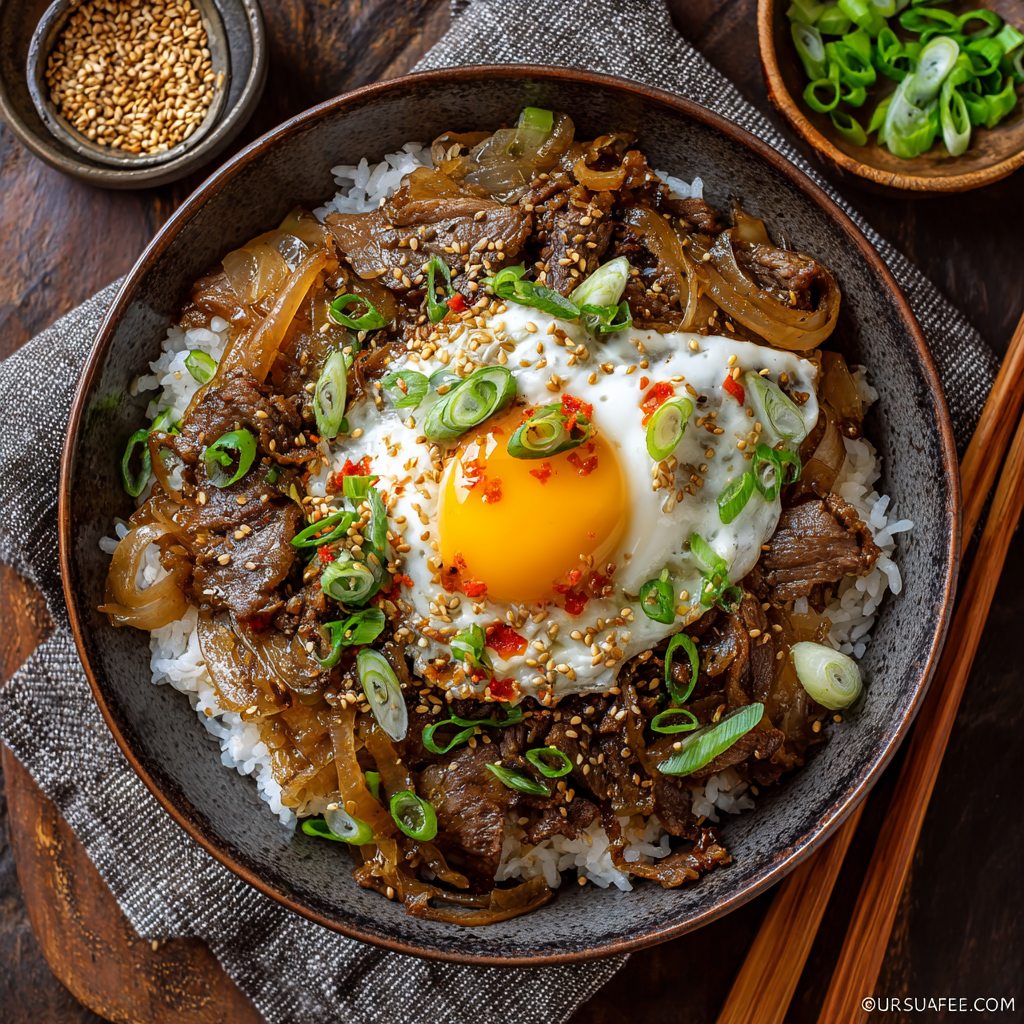
Your New Favorite Weeknight Hero is Here: Japanese Beef Bowl (Gyudon)!
Hey friends, Jackson from Food Meld here. Let’s talk about one of life’s greatest simple pleasures: a steaming, savory, deeply comforting bowl of food that comes together in the time it takes to watch your favorite sitcom. I’m talking about Gyudon (pronounced *gyoo-dohn*), Japan’s legendary beef bowl. Imagine whisper-thin slices of beef and sweet onions, simmered in a salty-sweet broth that’s pure umami magic, all piled high on a fluffy bed of warm rice. It’s the kind of meal that feels like a hug from the inside out.
Now, I know what you might be thinking. “Jackson, that sounds amazing, but is it complicated?” My friend, that’s the best part. This is the ultimate “food meld” moment—taking a few simple, humble ingredients and transforming them into something truly unforgettable. We’re talking about 20 minutes, one pan, and a flavor payoff that’s off the charts. This isn’t fussy, restaurant-only food. This is real-deal, soul-satisfying comfort food that you can make on a busy Tuesday night, and it’s about to become a permanent star in your dinner rotation. So, grab your favorite skillet, and let’s cook something awesome together.
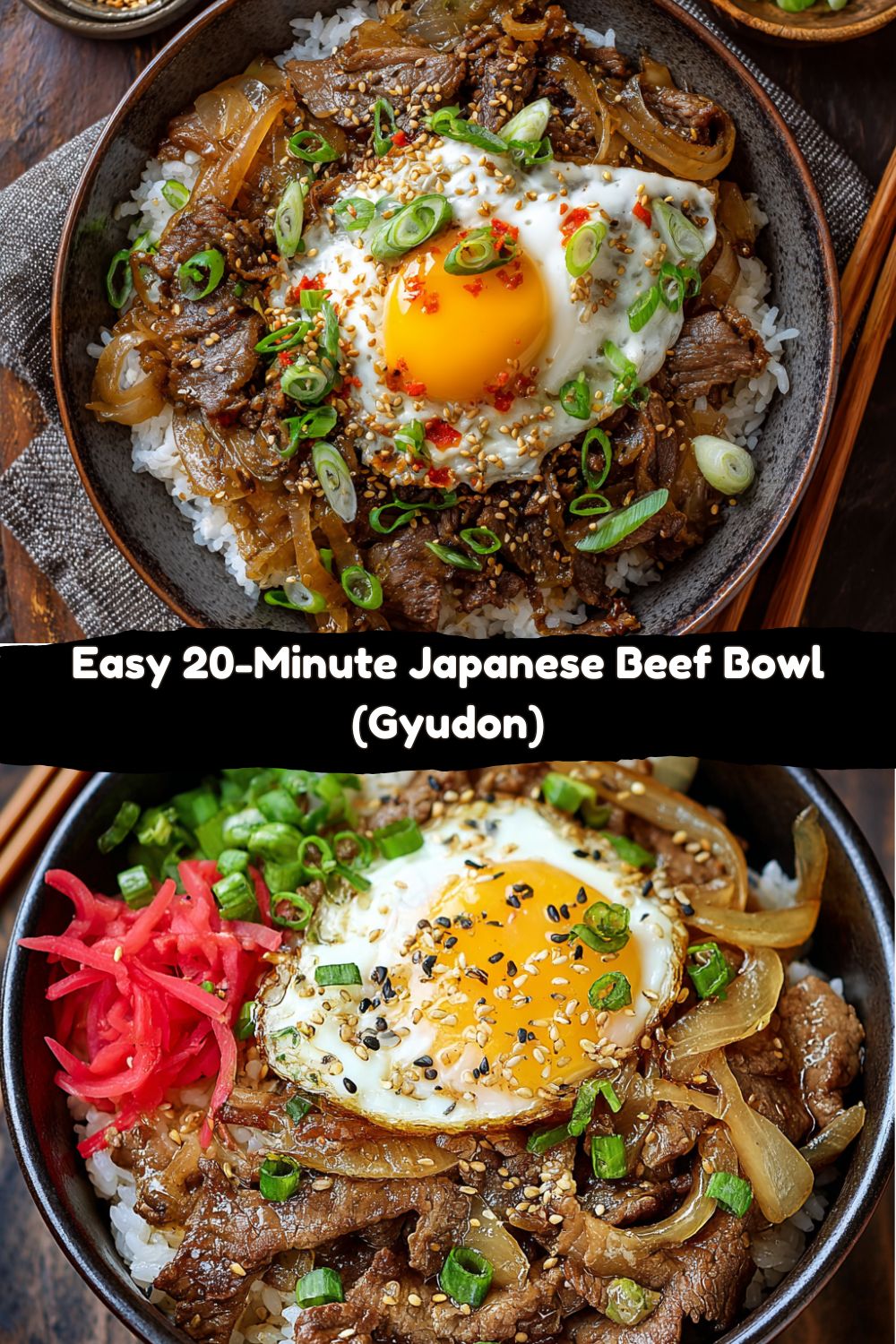
The Tokyo Lunch Counter That Stole My Heart
I’ll never forget the first time I truly *got* Gyudon. I was in Tokyo, jet-lagged and wandering down a side street, completely overwhelmed (in the best way) by the sights and sounds. The smell of something incredible—savory, sweet, and deeply meaty—pulled me right into a tiny, standing-room-only lunch counter. I pointed at a picture of a beef bowl on the menu, not even knowing its name.
What arrived minutes later was a revelation. The beef was so tender it practically melted, the onions had turned silky and sweet, and that glorious sauce had seeped into every grain of rice. I stood there, shoulder-to-shoulder with salarymen and students, and devoured the entire bowl in what felt like 30 seconds. It was more than just a meal; it was a moment of pure, unadulterated joy. It was fast food, but it was also *real* food—made with care and packed with flavor. That’s the spirit I want to bring to your kitchen with this recipe. No fancy equipment, no intimidating techniques, just a big, bold bowl of happiness.
Gathering Your Flavor Power Players
Part of the magic of Gyudon is its beautiful simplicity. You only need a handful of ingredients to create a symphony of flavor. Here’s your shopping list, with a few of my chef-ly insights to help you along the way.
- ½ lb (225g) Thinly Sliced Beef (Ribeye or Sirloin): This is the non-negotiable star. You need it thin—like, “see-through” thin. Your best bet is to find pre-sliced “shabu-shabu” or “sukiyaki” beef at an Asian grocery store. If you can’t find it, pop a semi-frozen piece of sirloin in the freezer for 30 minutes and use your sharpest knife to slice it as thinly as humanly possible. Trust me, it’s worth the effort for that melt-in-your-mouth texture.
- 1 Medium Onion, Thinly Sliced: A humble yellow or white onion is perfect here. We’re slicing it thinly so it softens and sweetens beautifully as it simmers, becoming a sweet, silky companion to the beef.
- 1 Cup Dashi Stock: This is the secret weapon, the umami backbone of the dish. Dashi is a Japanese stock made from kelp and bonito flakes. You can find instant dashi powder online or at Asian markets—it’s a total pantry game-changer. Chef’s Swap: In a pinch, a low-sodium beef broth will work, but seek out dashi if you can for that authentic flavor.
- 2 Tbsp Soy Sauce: For that deep, salty, savory base. I use a regular Japanese soy sauce like Kikkoman.
- 1 Tbsp Mirin: This sweet Japanese rice wine adds a subtle complexity and glossy sheen to the sauce. Chef’s Swap: If you don’t have mirin, you can use a teaspoon of sugar mixed with a tablespoon of dry sherry or even just a little extra broth.
- 1 Tbsp Sake (optional): This adds a layer of depth and helps balance the sweetness. If you don’t have it, no sweat—just replace it with an extra tablespoon of dashi or water.
- 1 Tbsp Sugar: This is what creates that iconic sweet-savory balance. Don’t be shy—it’s essential!
- 2 Cups Cooked Japanese Short-Grain Rice: The perfect fluffy, sticky foundation for our beefy masterpiece. Medium-grain rice works too, but short-grain has the perfect texture to soak up the sauce.
- Optional Toppings: This is where you make it your own! I love a sprinkle of sliced scallions for freshness, a pinch of sesame seeds for crunch, a pile of sharp pickled ginger (beni shoga) for a tangy kick, and the pièce de résistance—a soft-boiled egg with a gloriously runny yolk.
Let’s Build Your Flavor Bowl: A Step-by-Step Guide
Alright, team. Fire up the stove and get your skillet ready. We’re about 10 minutes away from greatness. I’ll walk you through every step.
- Get Your Broth Bubbling. Grab a large skillet or a shallow saucepan. Pour in your dashi stock, soy sauce, mirin, sake (if using), and sugar. Give it a good whisk to dissolve the sugar. Now, bring it to a gentle simmer over medium heat. You’ll know it’s ready when you get that first whiff of savory-sweet steam. Chef’s Hack: Taste the broth now! This is your chance to adjust. Want it a touch sweeter? A pinch more sugar. More savory? A dash more soy sauce. You’re the boss of your bowl.
- Sweeten Up Those Onions. Toss your thinly sliced onions into the simmering broth. Let them cook for about 3-5 minutes. We’re not looking for a serious caramelization here, just until they’ve lost their raw bite and turned translucent and soft. They’re going to drink up that amazing broth and become little flavor sponges.
- Introduce the Star: The Beef. Now, carefully lay your thinly sliced beef over the onions and broth, trying to spread it out in a relatively even layer. Don’t just dump it in and stir—we want to let it simmer and cook gently. Let it go for about 3-4 minutes. You’ll see the color change from pink to a beautiful, cooked brown. As it cooks, you can gently separate the slices with chopsticks or a fork. Pro Tip: Don’t overcook the beef! Since it’s so thin, it cooks in a flash. Overcooking is the only way to mess this up—we want tender, not tough.
- Skim for a Silky Finish (Optional but Awesome). As the beef cooks, you might see some foam or scum rise to the top of the broth. If you have a minute, use a small spoon to skim this off. It’s not a huge deal, but it gives your final broth a cleaner, more beautiful appearance and a purer flavor. It’s a little touch that makes a big difference.
- The Grand Finale: Assembly! Divide your hot, fluffy rice between two deep bowls. Using a slotted spoon or tongs, generously pile the beef and onions on top of the rice. Then, for the grand finale, spoon that incredible simmering broth right over everything. Don’t be stingy—the broth is what makes the rice so magical. Now, top it all off with your chosen garnishes and get ready for the “oohs” and “aahs.”
How to Serve Your Gyudon Like a Pro
Presentation is part of the fun! I like to serve Gyudon in deep, wide bowls—the kind that make you feel cozy just holding them. Pile that rice high, creating a little mountain of beef and onions on top. Let some of the beef slices cascade down the sides; it just looks more inviting.
The toppings are your chance to play with color and texture. A vibrant green sprinkle of scallions, the bright pink of the pickled ginger, the white and black of sesame seeds… it’s a feast for the eyes before you even take a bite. And if you went for the soft-boiled egg, place it right on top and let that golden yolk be the crown jewel. The moment you break into it and the yolk mixes with the beef and rice… that’s the stuff of legends, my friends. This is a complete meal in a bowl, so all you need on the side is maybe a simple miso soup or a crisp, green salad to balance the richness.
Make It Yours: 5 Tasty Twists on Classic Gyudon
Once you’ve mastered the classic, the “what if we tried this?” energy can take over. Here are a few of my favorite ways to mix it up.
- The Spicy Meld: Add a kick by tossing in a teaspoon of chili garlic sauce or a sprinkle of shichimi togarashi (Japanese seven-spice) into the broth as it simmers.
- Veggie-Packed Power Bowl: Add sliced shiitake mushrooms or a handful of spinach in with the onions to simmer. It’s an easy way to get more greens in and add another layer of earthy flavor.
- Chicken Donburi (Oyakodon): Love the concept but not feeling beef? Swap the beef for thinly sliced chicken thigh or breast and follow the exact same method. It’s a whole different, but equally delicious, bowl of comfort.
- Pork-tastic Version (Butadon): Got some thinly sliced pork in the fridge? You’re in luck! You can make Butadon using this exact same recipe. The pork works beautifully with the sweet-salty sauce.
- The Extra-Umami Bomb: Stir a teaspoon of miso paste into the broth along with the other seasonings for an even deeper, more complex savory flavor.
Jackson’s Kitchen Notes & Stories
This recipe has become one of my ultimate weeknight lifesavers. I’ve made it so many times I could probably do it in my sleep. It’s evolved a bit in my kitchen—I used to be nervous about the sugar, but I learned to embrace it. That sweet-savory balance is the heart of the dish! I also used to stir the beef in frantically, but I’ve learned that a gentle, patient simmer gives the beef that perfect, tender texture.
One funny story: I once tried to impress a date by making this, and I was so busy talking that I completely forgot the sugar. Let me tell you, the difference was shocking! It was just… salty beef. Not the romantic, flavor-packed meal I had envisioned. We laughed about it, I whipped up a quick new batch of sauce, and it became a funny “our first cooking disaster” story. The moral? Don’t forget the sugar, and don’t be afraid to laugh at your kitchen mishaps—they make the best stories.
Your Gyudon Questions, Answered!
Let’s tackle a few common questions to make sure your Gyudon is perfect every single time.
- Q: My beef turned out tough. What happened?
A: This almost always means the beef was overcooked or it wasn’t sliced thinly enough. Remember, we’re working with super thin slices here—they only need 3-4 minutes in the simmering broth. Any longer and they’ll tighten up. Also, double-check that you’re using the right cut (ribeye or sirloin are ideal) and that it’s sliced against the grain.
- Q: Can I make this ahead of time?
A: Absolutely! You can simmer the beef and onion mixture and store it in the fridge for up to 2 days. The flavors actually get even better! Just reheat it gently on the stove, being careful not to overcook the beef. I’d recommend cooking fresh rice when you’re ready to serve, though.
- Q: My broth is too watery. How can I thicken it?
A: No problem! Mix one teaspoon of cornstarch with one tablespoon of cold water to create a slurry. Once your beef is cooked, push everything to one side of the pan, add the slurry to the bubbling broth, and stir constantly for about 30 seconds until it thickens beautifully.
- Q: I can’t find dashi. What’s the best substitute?
A: While dashi is ideal, a good low-sodium beef broth is your next best bet. To mimic dashi’s umami, you can add a tiny pinch of MSG (Accent) or a teaspoon of fish sauce to the beef broth. It won’t be exactly the same, but it’ll be delicious!
A Quick Look at the Nutrition (Because Knowledge is Power!)
I’m all about flavor, but I also believe in knowing what’s going into your body. Here’s a rough breakdown of what you’re getting in one satisfying bowl of Gyudon (without the optional egg). Remember, these are estimates and can vary based on your specific ingredients.
Per Serving (approx.): Calories: 430 | Fat: 15g | Carbs: 46g | Sugar: 10g | Protein: 24g
This dish is a fantastic source of protein from the beef, giving you lasting energy. The carbs from the rice are your body’s primary fuel source, making this a great meal to refuel after a busy day. The sugar content comes from the mirin and added sugar, which is part of the classic flavor profile, but you can reduce it slightly if you prefer. To boost the fiber, consider serving it with a side of steamed broccoli or edamame. It’s a balanced, wholesome meal that proves comfort food can also be good for you!
You’ve Just Mastered a Japanese Classic
And there you have it! You’re now armed with everything you need to create a truly spectacular Japanese beef bowl right in your own kitchen. You’ve seen how a few simple ingredients, a hot pan, and a little bit of “what if” energy can create something that’s so much greater than the sum of its parts.
This Gyudon is more than just a recipe; it’s a passport to a different culinary world, a weeknight dinner game-changer, and a reminder that the best food doesn’t have to be complicated. It’s about big, bold flavors that make you feel good. I hope this recipe brings as much joy and satisfaction to your table as it does to mine. Now, go forth and enjoy every single bite. And don’t forget to tell me how it turned out! Tag me on social with #FoodMeld so I can see your beautiful creations. Until next time, happy cooking!