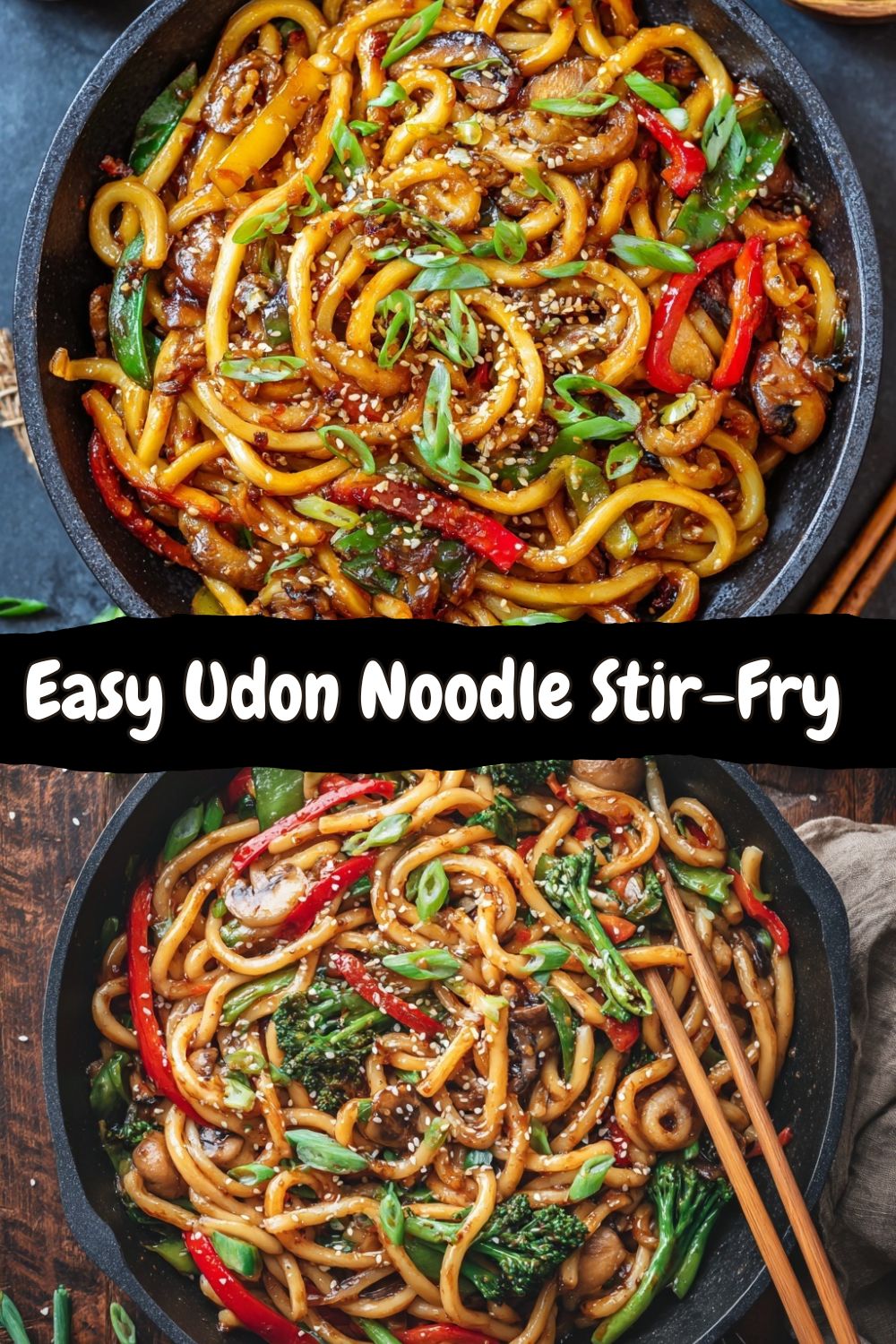
Easy Udon Noodle Stir-Fry – Savory, Slurpy & Ready in 20 Minutes
Hey friends, Jackson here from Food Meld! Let’s be real for a second. You’ve stared into the fridge after a long day, willing dinner to magically assemble itself. You want something that feels like a hug in a bowl—satisfying, flavorful, and maybe even a little exciting—but you absolutely do not want to spend your entire evening chained to the stove. Sound familiar? That, my friends, is exactly where this recipe swoops in like a weeknight dinner superhero.
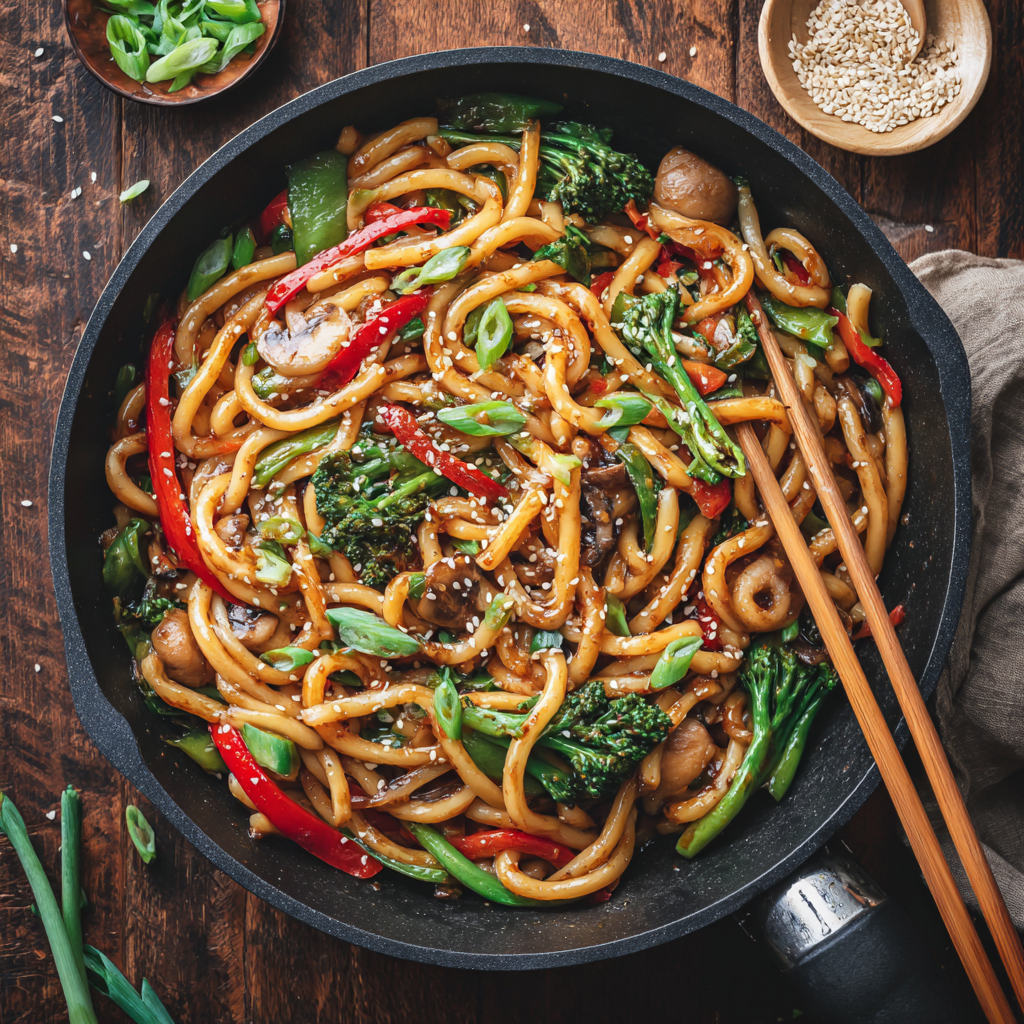
Today, we’re making an Easy Udon Noodle Stir-Fry that’s all about maximum flavor with minimal fuss. We’re talking about those gloriously thick, chewy udon noodles that are practically designed to soak up every drop of a savory, garlicky, sesame-kissed sauce. We’ll toss them with crisp-tender veggies, maybe some protein if you’re feeling it, and have a complete, comforting meal on the table in the time it takes to watch half an episode of your favorite show.
This isn’t just about following steps; it’s about unlocking a method. Once you get the hang of this stir-fry rhythm—sauce, sizzle, toss, serve—you’ve got a blueprint for a hundred different meals. It’s forgiving, it’s fast, and it’s packed with that “you’ve gotta try this” energy I live for. So, grab your favorite skillet or wok, and let’s turn a mundane Tuesday into a slurp-worthy celebration. Ready to cook something awesome together? Let’s do this.
The Noodle That Started It All
My love affair with udon noodles started in a tiny, steam-clouded restaurant in a college town, far from my Southern roots. I was broke, hungry, and desperately missing the hearty comforts of home. A friend dragged me in, promising “the chewiest noodles you’ll ever taste.” I was skeptical. One bite of that steaming bowl—thick noodles swimming in a rich, savory broth with bits of tempura floating on top—and I was a convert. It was different from any pasta or ramen I’d had. It was substantial, comforting, and fun to eat.
But here’s the real memory that sticks: A few years later, trying to recreate that feeling in my own kitchen with a single pan and a pack of frozen udon. I didn’t have time for broth, so I cranked the heat, threw everything into my trusty cast-iron skillet, and made a stir-fry. It was messy, improvised, and absolutely perfect. That’s when it clicked—great food doesn’t need to be complicated. It just needs good ingredients and a bit of “what if we tried this?” courage. This stir-fry is the delicious, weeknight-friendly child of that messy, beautiful kitchen experiment.
Gathering Your Flavor Arsenal
Here’s the beautiful part: this dish comes together with pantry staples and a few fresh bits. The magic is in how you combine them. Let’s break it down.
- 14 oz Cooked Udon Noodles (frozen or vacuum-packed): This is our star. Chef Insight: I highly recommend seeking out the frozen udon blocks—they have the best, springiest texture. The vacuum-packed ones work in a pinch, too. Just give them a quick rinse under warm water to separate and remove any starchiness.
- 2 tbsp Soy Sauce: Our salty, umami backbone. Sub Tip: Use tamari for a gluten-free version, or coconut aminos for a slightly sweeter, soy-free option.
- 1 tbsp Oyster Sauce: This is the secret weapon for depth and rich color. Sub Tip: For a vegetarian/vegan twist, use hoisin sauce (it’ll be sweeter) or a dedicated vegetarian “oyster” sauce made from mushrooms.
- 1 tsp Sesame Oil: Pure fragrance in a bottle! Chef Insight: Always add this off the heat or at the very end. High heat makes its delicate flavor bitter. We’re using it for aroma, not for cooking.
- 2 Garlic Cloves, minced: Non-negotiable. Fresh is best here for that punchy aroma.
- 1 tbsp Vegetable Oil (or any neutral high-heat oil): For stir-frying. Avocado, peanut, or canola oil are all great.
- 1 cup Mixed Vegetables: This is your playground! I love a combo of bell peppers (for sweetness), carrots (for crunch), and snap peas (for that fresh pop). Thinly slice the carrots so they cook fast.
- Optional Protein: Sliced chicken breast, shrimp, firm tofu (patted dry!), or a scrambled egg stirred in at the end. Cook it first, then set it aside.
- The Grand Finale Garnishes:
- Sliced Green Onions: For a fresh, sharp finish.
- Sesame Seeds: For nutty crunch and visual appeal.
- Red Pepper Flakes or Chili Crisp: For those who like a gentle (or not-so-gentle) kick.
Let’s Get Sizzling: Your Step-by-Step Guide
Okay, apron on, pan ready? Here we go. The key to great stir-fry is mise en place—a fancy term for having everything chopped, measured, and within arm’s reach before you turn on the heat. Things move fast!
- Prep the Sauce & Noodles: In a small bowl, whisk together the soy sauce and oyster sauce. Leave the sesame oil out for now—we’ll add it later. If using frozen udon, run the package under hot water for a minute to loosen the block. For vacuum-packed, open and rinse under warm water. Set aside. Chef Hack: Doing this first means no frantic scrambling mid-cook.
- Cook Your Protein (If Using): Heat half the vegetable oil in a large skillet or wok over medium-high heat. Add your protein in a single layer and cook until done—golden on chicken, pink on shrimp, browned on tofu. Remove to a clean plate. Tip: Don’t crowd the pan! Crowding steams food instead of searing it. Cook in batches if needed.
- Stir-Fry the Aromatics & Veggies: Add the remaining oil to the hot pan. Toss in the minced garlic and stir for just 20-30 seconds until fragrant—don’t let it burn! Immediately add your harder veggies (like carrots) first, stir for a minute, then add quicker-cooking ones (like peppers and snap peas). Cook for 3-4 minutes total until they’re vibrant and just tender-crisp. We want a bit of bite! Commentary: Listen to that sizzle—that’s the sound of flavor building.
- Noodle Time: Add the loosened udon noodles to the pan with the veggies. Use tongs or two spoons to toss and stir-fry for 1-2 minutes, letting the noodles heat through and maybe get a little color on the edges. Chef Insight: This quick fry before saucing helps the noodles absorb flavor better.
- Sauce It Up: Pour your pre-mixed soy-oyster sauce over everything. Toss, toss, toss! Ensure every noodle and veggie gets coated. Let it bubble and cook for another minute so the sauce thickens slightly and clings to the noodles.
- The Final Flourish: Turn off the heat. Now, drizzle in that precious teaspoon of sesame oil and add your cooked protein back in. Toss one more time to combine and warm the protein through. Why off the heat? This preserves the beautiful aroma of the sesame oil. Taste and adjust—a tiny splash of water if it’s too salty, a pinch of sugar if you want more balance.
- Plate & Garnish: Divide between bowls. Scatter generously with green onions, sesame seeds, and a pinch of red pepper flakes. The garnishes aren’t just pretty—they add crucial new layers of texture and flavor.
How to Serve It Like a Pro
Presentation is part of the fun! For a casual family dinner, I serve this right from the skillet at the table and let everyone dig in. For a more composed look, use tongs to lift and twirl a nest of noodles into a shallow bowl, making sure to get plenty of veggies and protein peeking out. Pile the garnishes high in the center.
This stir-fry is a complete meal, but if you want to round it out, keep it simple. A light, crisp side salad with a ginger-sesame dressing complements the rich noodles perfectly. Or, for the ultimate comfort spread, add a small bowl of miso soup or some steamed edamame for dipping in sea salt. And don’t forget the chopsticks! There’s something uniquely satisfying about mastering the art of picking up a thick, slippery udon noodle.
Make It Your Own: 5 Flavorful Twists
The true beauty of this recipe is its flexibility. Here are a few of my favorite ways to mix it up:
- Thai-Inspired Peanut Udon: Swap the sauce for 3 tbsp peanut butter, 2 tbsp soy sauce, 1 tbsp lime juice, 1 tbsp honey, and a splash of hot water to thin. Garnish with cilantro and crushed peanuts.
- Spicy Szechuan Kick: Add 1-2 tsp Szechuan chili bean paste (doubanjiang) to the garlic. Finish with a drizzle of chili oil and Szechuan peppercorns for that iconic tingly mala spice.
- Vegetarian “Dan Dan” Style: Crumble in 1/2 cup of plant-based ground “meat” with the garlic. Add 1 tbsp of Chinese black vinegar and 1 tsp of tahini or peanut butter to the sauce for nutty depth.
- Japanese Curry Udon: Stir 1-2 tbsp of Japanese curry roux blocks into the sauce mixture before adding. The result is a thick, rich, and incredibly comforting curry-coated noodle dish.
- Simple Sesame & Greens: Skip the mixed veggies and stir-fry 3-4 cups of hearty greens (like baby bok choy or kale) until wilted. Top with an extra drizzle of sesame oil and seeds. Pure, simple, delicious.
Jackson’s Chef Notes & Kitchen Confessions
This recipe has been my reliable dinner ejector seat for years, and it’s evolved with me. I once tried to be “chefy” and make my own udon from scratch for it. Let’s just say the results were… gummy, and the process turned my kitchen into a flour bomb site. I learned my lesson: the frozen ones are consistently better than my stressed-out homemade attempt! The goal here is joy, not perfection.
My biggest tip? Don’t be afraid of high heat. A hot pan is what gives the noodles and veggies that slight char and “wok hei” (breath of the wok) flavor. If things seem dry as you’re stir-frying, a tablespoon or two of water or broth added to the pan will create instant steam and loosen everything up beautifully. This dish is a friend, not a fussy critic. Have fun with it!
Your Questions, Answered
Q: My noodles are sticking to the pan! What did I do wrong?
A: This usually means the pan wasn’t hot enough before adding the noodles, or they were too starchy. Make sure your pan is nice and hot over medium-high heat. Rinsing vacuum-packed noodles well helps, and don’t be shy with that initial toss in the oil. If they stick, add a tbsp of water or broth to release them.
Q: Can I use dried udon noodles?
A: You can! Cook them according to package directions (usually boiling for 8-10 mins) until just tender. Drain well and rinse under cold water to stop the cooking. Then, proceed with the recipe. They’ll be a bit more delicate than pre-cooked udon, so toss gently.
Q: The sauce is too salty for me. How can I fix it?
A> No worries! Balance is key. Next time, use low-sodium soy sauce. To fix it now, a squeeze of fresh lime or lemon juice can brighten and cut the salt. A teaspoon of honey or maple syrup can also mellow it out. Adding a bit more of a non-salted element (like more noodles or veggies) can dilute it, too.
Q: Can I make this ahead of time?
A> Stir-fries are best served immediately. However, you can do all the prep ahead: chop veggies, make sauce, and have your protein ready. When it’s dinner time, the actual cook time will be under 10 minutes. Leftovers will keep for 2 days but the noodles will soften.
Nutritional Information (A Quick Note)
Disclaimer: I’m a cook, not a dietitian. The info below is a general estimate using online calculators and is for the base vegetarian version without optional protein or heavy garnishes. It will vary based on your specific ingredients and brands.
This dish is a satisfying carb-forward meal, with the udon providing lasting energy. Using lots of veggies boosts the fiber and vitamin content. To adjust:
-
- To Lower Carbs: Use a smaller portion of udon and double up on non-starchy veggies like broccoli, cabbage, and mushrooms.
To Boost Protein: Adding 4 oz of chicken breast, shrimp, or firm tofu can increase the protein by 20-30 grams per serving, making it a more balanced meal.
- To Lower Sodium: Opt for low-sodium soy sauce and be mindful of the oyster sauce quantity. You can also increase the veggies to dilute the sauce per bite.
Approximate Per Serving (Serves 2, base recipe): Calories: 400 | Protein: 10g | Fat: 10g | Carbohydrates: 60g | Fiber: 5g | Sugar: 8g | Sodium: ~1200mg*
*Sodium is high due to the sauces; using low-sodium options significantly reduces this.
Final Thoughts
And there you have it—your new secret weapon for busy nights that doesn’t sacrifice an ounce of flavor. This Easy Udon Noodle Stir-Fry is more than just a recipe; it’s a reminder that incredible meals don’t require complexity. They require good ingredients, a bit of heat, and the confidence to just go for it.
I hope this recipe brings as much joy to your kitchen as it has to mine. Remember, cooking is supposed to be fun, a little messy, and always, always full of flavor. If you give this a try, I’d love to hear how it went! Tag me on social @FoodMeld or drop a comment on the blog. Did you add your own twist? What’s your favorite veggie combo? Let’s keep the conversation—and the cooking—going.
Until next time, keep experimenting, keep tasting, and most importantly, keep enjoying every single bite. Happy cooking!
— Jackson