Let’s Cook a Little French Magic
Hey friends, Jackson here. Pull up a stool and let me pour you a virtual cup of coffee (or hey, maybe a splash of that apple cider we’re about to cook with). Today, we’re not just making dinner. We’re taking a quick, flavor-packed trip to Normandy, France, without ever leaving our kitchens. We’re making Chicken Normandy, or as the French call it, Poulet à la Normande—and trust me, it sounds fancier than it is to make.
Picture this: tender, juicy chicken with that perfect golden skin, swimming in a velvety, creamy sauce that’s got the sweet-tart punch of apples and the cozy depth of caramelized onions. It’s the kind of dish that makes your kitchen smell like a five-star bistro and fills your dining room with that “what is that amazing smell?!” energy. This is my kind of cooking: impressive, soul-warming comfort food that doesn’t require a culinary degree or a whole Saturday to pull off. It’s rustic elegance, my friends, and it’s totally achievable on a Tuesday.
If you’ve ever been intimidated by French cuisine, let this be your gateway dish. It’s all about building layers of flavor—a good sear here, a gentle sauté there, a glorious deglaze—and ending up with something that feels like a hug in a bowl. Whether you’re cooking to impress a date, treating your family to something special, or just want to break out of the weeknight chicken rut, this recipe is your answer. So, tie on your apron, grab your favorite skillet, and let’s cook something awesome together. Welcome to Food Meld style French comfort.
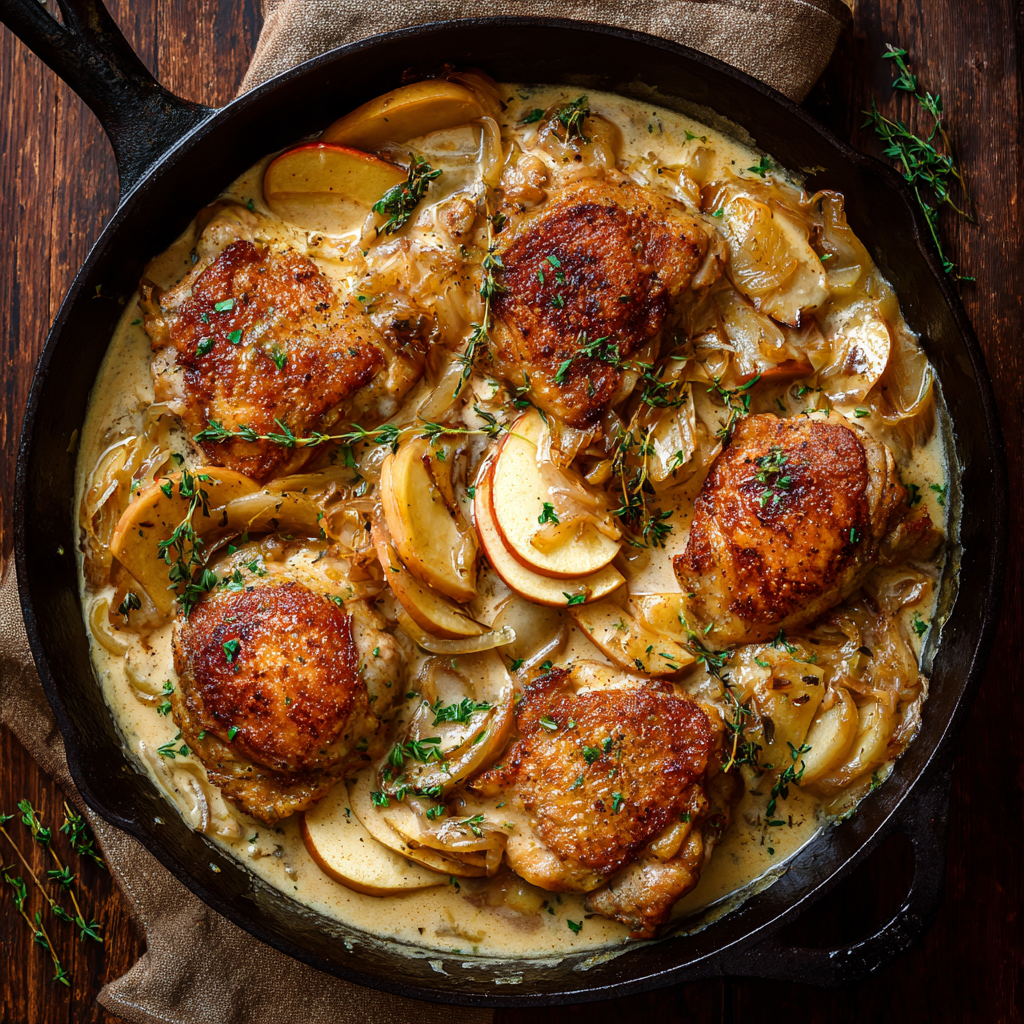
A Southern Boy Meets Normandy
This recipe always takes me back to my first real food adventure outside of my Southern roots. I was visiting a friend’s family in the countryside, and her French grandmother, Mémé Lucie, decided I needed an education in “real food.” She didn’t speak much English, and my French was, well, limited to “bonjour” and “merci.” But in her kitchen, we didn’t need words. She handed me an apple, a knife, and a chicken thigh, and with a series of gestures, smiles, and the universal language of “smell this,” she guided me.
Watching her transform those simple, orchard-fresh ingredients into this rich, incredible dish was pure magic. It wasn’t fussy. It was intuitive. She tasted, adjusted, and just cooked. That afternoon, sharing that meal around a worn wooden table, laughing despite the language barrier, taught me more about the heart of cooking than any cookbook ever could. It’s about flavor, sharing, and the stories we tell through food. Every time I make this Chicken Normandy, I get a little of that Mémé Lucie feeling—the joy of taking humble things and making them unforgettable. Now, I get to share that feeling with you.
What You’ll Need: Your Flavor Toolkit
Here’s the cast of characters for our cozy French masterpiece. I’ve added my chef insights and swaps because I want this to work in your kitchen with what you have.
- 4 bone-in, skin-on chicken thighs (or 2 breasts, halved): The bone and skin are KEY for insane flavor and juicy meat. The skin gets crispy, the bone adds depth to the sauce, and it’s harder to overcook. Insight: If you’re using breasts, pound them to an even thickness so they cook at the same rate as the thighs.
- Salt and pepper, to taste: Don’t be shy! Season that chicken generously. This is your foundation.
- 2 tbsp olive oil: For that perfect sear. A neutral oil like avocado works too.
- 1 tbsp butter: Because butter makes everything better, especially when mingling with apples. It adds a nutty, rich note.
- 1 large onion, thinly sliced: We want sweet, meltingly soft strands. Yellow or white onions are perfect here.
- 2 apples (like Honeycrisp or Fuji): You want a firm, sweet-tart apple that holds its shape. Chef’s Swap: Granny Smith for more tartness, or Braeburn for deeper sweetness. Peel ‘em for a smoother sauce, or leave the peel on for texture and color.
- 2 garlic cloves, minced: Our aromatic powerhouse. Fresh is best!
- 1/2 cup dry apple cider: This is the soul of the sauce! Look for dry, alcoholic cider, not sweet apple juice. No cider? Use a dry white wine (like Chardonnay) and a splash of apple cider vinegar.
- 1/2 cup chicken broth: Low-sodium is my go-to so I can control the salt. Veggie broth works in a pinch.
- 1/2 cup heavy cream: For that luxurious, velvety texture. For a lighter version, half-and-half will work, but the sauce will be thinner.
- 1 tsp Dijon mustard (optional but brilliant): My secret weapon! It doesn’t make it taste like mustard; it adds depth, tang, and helps emulsify the sauce. Give it a try!
- Fresh thyme or parsley for garnish: A pop of green and freshness. Thyme is classic, but flat-leaf parsley is a bright finish.
Let’s Build Those Flavor Layers: Step-by-Step
Okay, team. Let’s fire up the stove. We’re going to take this one beautiful, flavorful step at a time.
- Sear the Chicken – Get That Golden Crust!Pat your chicken completely dry with paper towels. This is the #1 trick for perfect skin—wet chicken steams, dry chicken sears. Season aggressively on both sides with salt and pepper. Heat the olive oil in a large, heavy-bottomed skillet or Dutch oven over medium-high heat until it shimmers. Carefully add the chicken, skin-side down. Don’t touch it! Let it cook, undisturbed, for a good 5-6 minutes until it’s deeply golden and releases easily from the pan. Flip and sear the other side for 4-5 minutes. Remove to a plate. That gorgeous brown stuff left in the pan? That’s liquid gold (fond!). We’re using it next.
- Sauté Apples & Onions – The Sweet BaseReduce the heat to medium. Add the butter to the same skillet. Once it’s foamy, toss in your onions and apples. Sprinkle with a tiny pinch of salt (it helps them release water and caramelize). Cook, stirring occasionally, for 6-8 minutes. We’re not looking for mush; we want soft, golden-edged apples and translucent, sweet onions. Now, add the garlic and stir for just 60 seconds until fragrant. Don’t let it burn!
- Deglaze & Simmer – The “Wow” MomentHere’s where the magic happens. Pour in the dry apple cider and chicken broth. As the liquid hits the hot pan, use your wooden spoon to scrape up ALL those delicious browned bits from the chicken. This is called deglazing, and it’s where we capture all that flavor. Let it bubble for a minute to cook off the sharp alcohol. Now, stir in the heavy cream and that sneaky teaspoon of Dijon mustard if you’re using it.
- Finish Cooking – Let It Get CozyNestle the seared chicken back into the skillet, along with any juices that collected on the plate. Spoon some of the sauce over the top. Cover the skillet, reduce the heat to low, and let it simmer gently for 25-30 minutes. This gentle braise makes the chicken fall-off-the-bone tender and lets all the flavors marry into one happy family.
- The Final Check & GarnishChicken is done when it reaches 165°F internally, or when the juices run clear. The sauce should be creamy and slightly reduced. Give it a taste—does it need another pinch of salt or a crack of pepper? Now’s the time. Remove from heat, sprinkle with your fresh herbs, and get ready to serve.
How to Serve It Like a Pro (But Keep It Real)
This dish is a star, so let it shine! I like to serve it family-style, right out of the skillet in the middle of the table. It’s rustic and inviting. But the real question is: what’s underneath all that glorious sauce?
My Top Picks for Soaking Up Every Drop:
- Garlic Mashed Potatoes: The ultimate cozy companion. A fluffy pile of potatoes is basically a sauce delivery system.
- Crusty Bread: A warm baguette or a slice of sourdough is non-negotiable for me. You will want to mop your plate clean.
- Buttered Egg Noodles or Rice: Simple, easy, and perfect for a weeknight. They cradle the sauce beautifully.
- Polenta or Creamy Grits: A nod to my Southern roots! The creamy corn flavor is incredible with the apple and cider.
Add a simple green salad with a sharp vinaigrette on the side to cut through the richness. Pour a glass of the same dry cider you cooked with, or a Chardonnay, and dinner is served.
Make It Your Own: Food Meld Twists
I’m all about the “what if we tried this?” energy. Here are a few ways to riff on this classic and make it yours.
- The “Forest Floor” Version: Add 8 oz of sliced mushrooms (cremini are perfect) when you sauté the onions. They add an earthy, savory depth that’s incredible.
- Bacon Lover’s Dream: Chop 4 slices of thick-cut bacon and cook them in the skillet first. Remove the crispy bits, then use the bacon fat to sear your chicken. Sprinkle the bacon on top at the end. You’re welcome.
- Herb-Forward & Bright: Stir in 2 tablespoons of chopped fresh tarragon along with the cream. Tarragon has a subtle anise flavor that is CLASSIC with chicken and cream sauces.
- Dairy-Free/Paleo Twist: Swap the heavy cream for full-fat canned coconut milk (the creamy part). It adds a subtle sweetness that works wonderfully with the apples. Use ghee or more oil instead of butter.
- Pork or Veggie Swap: This sauce is magical with pork chops or even seared tofu or cauliflower steaks for a vegetarian option. Adjust cooking times accordingly.
Jackson’s Kitchen Notebook
This recipe has evolved in my kitchen from a “special occasion” dish to a regular in my rotation. The biggest lesson? Don’t rush the sear. That patience is what builds the foundation of flavor. One time, I got impatient and flipped the chicken too soon—it stuck, the skin tore, and the sauce just wasn’t the same. Lesson learned!
I also started adding that bit of Dijon mustard after a friend suggested it off-hand. It was a game-changer, adding a complexity that makes people go, “What is that amazing taste?” but they can never quite place it. That’s my favorite kind of ingredient. Feel free to play with the apple-to-onion ratio, too. Sometimes I add an extra half-apple because I love those tender little slices in every bite.
Your Questions, Answered
Q: My sauce is too thin! How can I thicken it?
A: No sweat! Once the chicken is cooked, remove it to a plate. Turn the heat up to medium and let the sauce simmer uncovered for 5-8 minutes. It will reduce and thicken nicely. You can also make a quick slurry with 1 tsp cornstarch and 1 tbsp cold water, whisk it in, and simmer for a minute.
Q: Can I make this ahead of time?
A: Absolutely, and it might even taste better! Cook the dish completely, let it cool, and store it covered in the fridge for up to 2 days. Reheat gently on the stove over low heat, adding a splash of broth or cream if the sauce seems too thick.
Q: I can’t find dry apple cider. What’s the best substitute?
A: A dry white wine (like Sauvignon Blanc or unoaked Chardonnay) is the next best thing. Add it as directed, and maybe add a tiny splash (½ tsp) of apple cider vinegar at the end to brighten it up if you miss that apple tang.
Q: Can I use boneless, skinless chicken?
A> You can, but you’ll lose some flavor and the meat can dry out faster. If you do, reduce the final simmering time to 15-20 minutes and keep a close eye on it. You might want to add a splash more broth as it cooks.
Nourishment & Enjoyment
Let’s talk real food. This is a wholesome, satisfying meal built on protein, fruits (yes, apples count!), and good fats. The exact numbers can vary based on your specific ingredients and portion size, but here’s a general picture per serving (about one chicken thigh + sauce):
Approximate Nutritional Info (per serving):
Calories: 450–500 | Carbohydrates: 15–20 g | Protein: 30–35 g | Fat: 30–35 g | Sugar: 8–10 g | Sodium: 400–500 mg
Remember, I’m a chef, not a dietitian. This info is an estimate to help you make informed choices. To me, food is about more than numbers—it’s about the joy of cooking, the pleasure of sharing, and the nourishment of both body and spirit. This dish is a celebration of real ingredients coming together in the most delicious way possible.
Your Cozy French Kitchen Moment Awaits
And there you have it, friends—a little taste of Normandy, right from your own stovetop. ✨
This Chicken Normandy is the kind of dish that slows you down in the best possible way. It invites you to linger at the table, mop up every last bit of that apple-cider cream sauce, and maybe pour one more glass of wine just because the moment feels right. It’s proof that French-inspired cooking doesn’t have to be intimidating or overcomplicated—it can be warm, welcoming, and deeply comforting.
I hope this recipe gives you that same feeling Mémé Lucie gave me all those years ago: confidence, curiosity, and the joy of cooking with your senses. Taste as you go. Adjust. Make it yours. Add a little extra apple if your heart says yes. Serve it with mashed potatoes one night and crusty bread the next. That’s the magic.
If you try this dish, I’d love to hear how it turned out for you. Did you add mushrooms? Go heavy on the apples? Serve it for a special dinner or a cozy weeknight? Drop a comment or tag me over at @FoodMeld—those shared kitchen stories are what this whole thing is about.
Until next time, keep cooking with heart, curiosity, and a little French flair.
— Jackson 🇫🇷🍎🍗