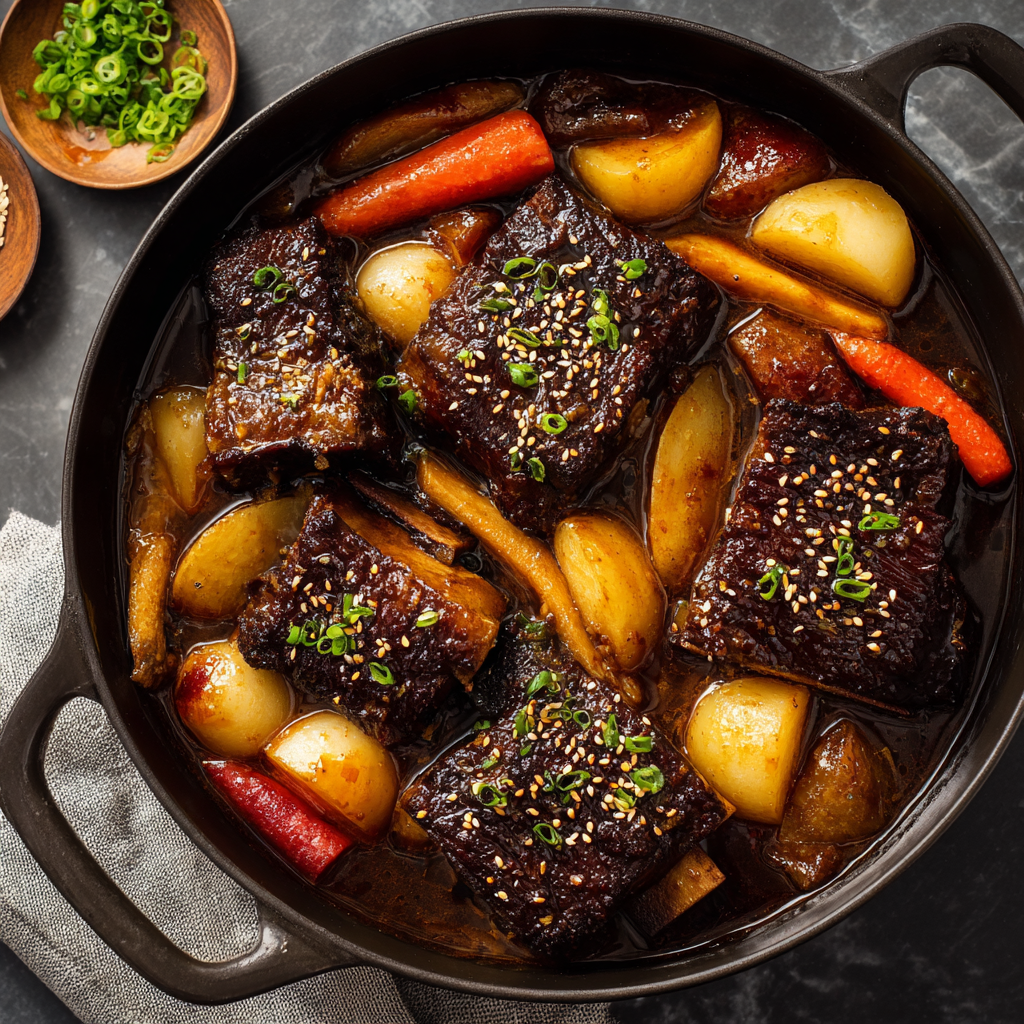
Braised Korean Short Ribs (Galbi Jjim): Your New Soul-Warming Obsession
Hey friends, Jackson here from Food Meld! Let me paint you a picture: It’s a crisp fall evening, maybe you’ve had one of *those* weeks, and all you crave is something that hugs your soul from the inside out. Something that makes everyone at the table go completely silent except for happy little “mmm” sounds and the clink of spoons scraping bowls. That, my friends, is the magic potion we’re cooking up today: Braised Korean Short Ribs, or as it’s gloriously known in Korea, Galbi Jjim. Imagine beef short ribs so tender they practically melt off the bone, swimming in a deep, glossy sauce that’s the perfect harmony of sweet, savory, and just a whisper of warmth. Chunks of potato and carrot soak it all up, turning into little flavor bombs. This isn’t just dinner; it’s a warm embrace, a celebration on a plate. And guess what? It’s way easier to make than that fancy restaurant menu makes it look. Forget intimidation – we’re diving into bold flavor, comforting vibes, and that unbeatable “wow” factor you can totally pull off right in your own kitchen. So grab your favorite Dutch oven (or heavy pot), and let’s turn simple ingredients into pure, unforgettable deliciousness together. Trust me, your taste buds (and everyone you feed) will thank you. Welcome to flavor town, Food Meld style!
A Taste of Seoul & Grandma’s Kitchen: Where This Dish Lives in My Heart
This dish takes me straight back to two places. First, the buzzing streets of Seoul, where the aroma of Galbi Jjim spilling out of tiny alleyway restaurants hits you like a delicious brick wall – pure, unadulterated food joy. But deeper down, it reminds me of my own Southern grandma’s kitchen, believe it or not. Not the flavors, but the *feeling*. See, Grandma Walker’s pot roast was legendary – hours of low, slow simmering, filling the whole house with this promise of meat so tender you could cut it with a sigh. The first time I tasted authentic Galbi Jjim in Korea, it hit that same deep comfort chord, but with this exciting, complex new melody. It was like my Southern comfort food soul met its Korean kindred spirit. I remember attempting my first batch back home, nervously juggling soy sauce and sesame oil, convinced I’d mess it up. When that first forkful of meat slid effortlessly off the bone, bathed in that rich, sweet-salty glaze? Pure magic. It felt like connecting dots across continents, finding that universal truth: good food, cooked slow and with heart, is the ultimate love language. That’s the spirit I bring into every pot of this stuff now.
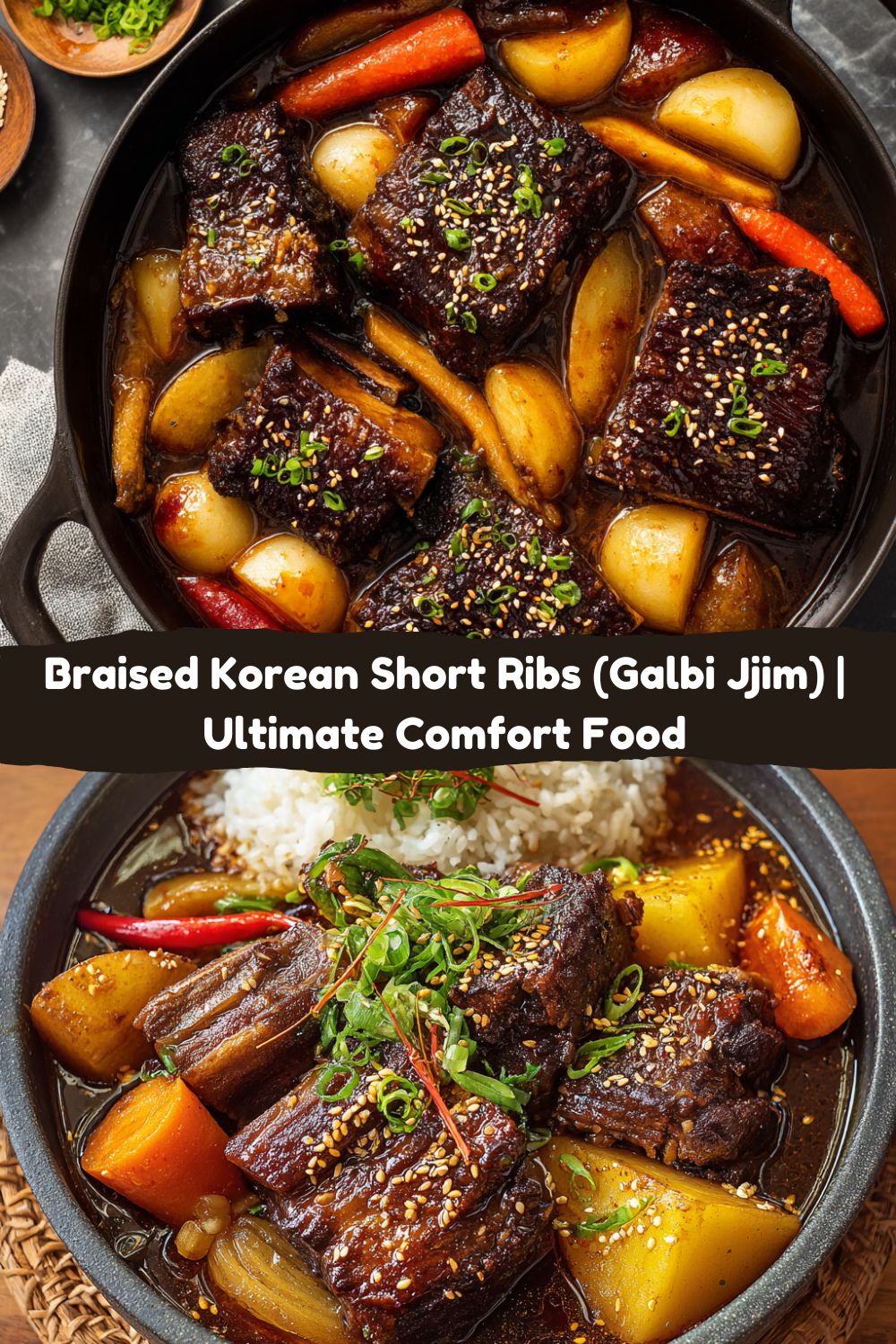
Gathering Your Flavor Arsenal: What You’ll Need
Don’t sweat the list! It looks long, but it’s mostly pantry staples coming together for something incredible. Here’s the lineup for your Korean short rib masterpiece (Serves 10-12 hungry souls or makes *amazing* leftovers):
- 8–12 lbs beef short ribs, bone-in (about 20 two-inch pieces): The STAR! Bone-in is non-negotiable – it adds insane flavor and helps keep the meat juicy during the long braise. Look for pieces with good marbling (that white fat running through) for maximum tenderness. Pro Tip: Ask your butcher for “English cut” or “flanken cut” short ribs specifically for braising like this.
- 4 medium potatoes, peeled and cubed: Our hearty sponges! Starchy potatoes like Russets or Yukon Golds break down slightly, thickening the sauce beautifully and soaking up all that goodness.
- 6 carrots, peeled and cubed: Sweetness and color! Cut them slightly larger than the potatoes so they don’t turn to mush. They add that essential earthy-sweet balance.
- 1 cup soy sauce: The savory backbone. Use regular or low-sodium. *Crucial for Gluten-Free:* Swap in Tamari or a certified GF soy sauce here! It makes ALL the difference in the sauce.
- 1 cup beef broth: Liquid gold for depth. Homemade is great, but a good quality store-bought low-sodium works perfectly. Adds that rich, meaty undertone.
- ½ cup honey (OR 2 cups cubed Korean/Asian pear or Bosc pear): The sweet magic! Honey brings pure sweetness and shine. BUT, using pear? That’s the traditional secret weapon! Korean pears (if you can find them) or ripe Bosc pears add a subtle, complex fruity sweetness and natural enzymes that tenderize the meat even further. Honestly, try the pear version once – it’s a game-changer!
- 2 medium onions, coarsely chopped: Flavor builders! They melt down into the sauce, adding sweetness and body. Don’t chop them too fine.
- 10 cloves garlic: Flavor bomb alert! Smash them lightly with the side of your knife – no need to mince. They infuse the braising liquid with pungent goodness.
- 4 tablespoons sesame seeds: Nutty depth. Toast them lightly in a dry pan for 1-2 minutes until fragrant before adding – unlocks SO much more flavor!
- 2 tablespoons freshly grated ginger: The bright, zingy kick! Fresh is essential here – that jarred stuff just doesn’t compare. Grate it right over the pot.
- 2 tablespoons sesame oil: The finishing aroma! Added at the end (usually with the veg), it gives that signature, toasty Korean fragrance. Don’t sub with another oil!
- 2 teaspoons crushed red pepper (optional): Your heat dial! Start with less if you’re sensitive, or leave it out. It adds a gentle warmth, not intense heat. Gochugaru (Korean chili flakes) is even more authentic if you have it!
- Steamed rice (for serving): The essential canvas! Short-grain white rice (like sushi rice) is traditional and perfect for soaking up the glorious sauce.
- 2 teaspoons sesame seeds (for garnish): Toast these too! Extra nutty crunch.
- 2 teaspoons green onions, finely chopped (for garnish): Fresh, bright pop of color and mild onion flavor. The perfect finishing touch!
Let’s Get Braising: Your Foolproof Roadmap to Tenderness
Okay, team! Time to transform these ingredients into melt-in-your-mouth magic. This isn’t fussy, it’s about low, slow, and letting the flavors mingle. Follow these steps, embrace the simmer, and get ready for applause:
- The Prep Work (30 min): “Hey Jackson, why soak the ribs?” Great question! Placing those beautiful short ribs in a big bowl of cold water for a solid 30 minutes is our first pro move. It draws out some of the excess blood and impurities, leading to a cleaner-tasting, more beautiful final sauce. It’s simple but effective! After their bath, give them a good rinse under cold water and pat them super dry with paper towels. Dry meat = better browning potential later! While they soak, chop those onions, smash the garlic, cube the potatoes and carrots (keep them separate!), and measure out your braising liquids. Chef Hack: Prep everything now (mise en place!) so you’re not scrambling later.
- Building the Flavor Base (10 min): Grab your biggest, heaviest pot – a Dutch oven is my absolute MVP here (that even heat distribution is key!). Dump in the soy sauce, beef broth, honey (or those glorious pear cubes!), chopped onions, smashed garlic cloves, those toasted sesame seeds (toast them now if you haven’t!), grated ginger, and the crushed red pepper (if you’re using it). Give this mixture a really good stir. It might look a bit chaotic, but trust the process! This is your flavor powerhouse.
- Braising Bliss (1.5 – 2 hours): Carefully nestle the drained, dried short ribs into the pot bone-side down if you can. Don’t worry if they’re not fully submerged – they will be soon! Crank the heat up to high and bring this beautiful mess to a vigorous boil. Once it’s bubbling away confidently, immediately reduce the heat to the lowest possible simmer. Cover that pot TIGHTLY with a lid. This is where patience becomes your best friend. Let it simmer gently, undisturbed, for 1.5 to 2 hours. Chef Hack: Resist the urge to peek constantly! Every peek lets precious heat and steam escape. Set a timer for 1.5 hours, then check. The meat should be starting to get incredibly tender but not quite falling apart yet. You should be able to pierce it fairly easily with a fork. If it’s still tough, give it another 15-30 minutes. Low and slow wins the race!
- Veggie Time & Sauce Magic (30-40 min): Okay, NOW you can peek! Carefully uncover the pot (steam is hot!). Skim off any large bits of fat or foam that have risen to the surface using a spoon – this makes the sauce cleaner and more refined. Now, gently stir in your cubed potatoes and carrots. Here’s where you add that essential 2 tablespoons of sesame oil too! Stir it in. DO NOT cover the pot again. We’re letting the liquid reduce now, concentrating those flavors and thickening the sauce into that luscious glaze. Let it simmer uncovered for 30-40 minutes. Check the veggies – they should be fork-tender but not disintegrating. The sauce should be noticeably thicker, coating the back of a spoon nicely. Chef Hack: If the sauce isn’t thickening enough, crank the heat up slightly for the last 5-10 minutes, stirring frequently to prevent sticking.
- The Final Touch (5 min): You’re almost there! One last skim of any excess fat that might be pooled on top. Taste the sauce – this is YOUR moment! Does it need a tiny pinch more salt? A tiny drizzle more honey? Adjust if needed, but it’s usually perfect. The meat should be falling-off-the-bone tender.
Plating Up Pure Comfort
Presentation? Easy and rustic is the name of the game! Spoon a generous amount of fluffy steamed white rice into deep bowls – it’s the foundation. Carefully ladle over those gorgeous short ribs (they’ll be fragile!), plenty of tender potatoes and carrots, and most importantly, that incredible, glossy braising liquid. Drizzle extra sauce over everything! Finish it like a pro: sprinkle with those extra toasted sesame seeds and a vibrant shower of finely chopped green onions. The contrast is beautiful! Serve immediately while it’s piping hot. Watch the steam rise, inhale that amazing aroma, and get ready for the silence that falls over the table. Pure comfort, Food Meld style.
Make It Your Own: Flavor Twists & Swaps
Love the base recipe? Awesome! Now let’s play with some delicious variations:
- Fruit Power: Swap the honey COMPLETELY for 2 cups of cubed Korean/Asian pear or Bosc pear (traditional!). Or, try adding 1/2 cup pureed pineapple or kiwi along with the honey for extra tenderizing enzymes and fruity sweetness.
- Heat Lover’s Dream: Add 1-2 tablespoons Gochujang (Korean chili paste) to the braising liquid with the soy sauce for deeper, more complex heat and umami. Or, toss in 1-2 sliced fresh Thai chilies.
- Veggie Boost: Add 1 cup of cubed daikon radish with the potatoes and carrots for a peppery kick. Throw in a handful of shiitake mushrooms during the last 20 minutes of veg cooking.
- Instant Pot Speed Run: Sear ribs on Saute mode first (optional but recommended). Add all braising ingredients (except sesame oil, potatoes, carrots). Pressure cook on High for 35-40 minutes. Quick release, add veggies and sesame oil, pressure cook another 4-5 minutes. Thicken sauce on Saute mode if needed.
- Slow Cooker Simplicity: After soaking/drying ribs, place everything (except sesame oil, potatoes, carrots) in the slow cooker. Cook on Low for 7-8 hours or High for 4-5 hours. Add veggies and sesame oil in the last 1.5-2 hours on High.
Jackson’s Kitchen Chronicles: Galbi Jjim Tales
Man, this recipe has seen some things! I remember one epic Friendsgiving where I doubled the recipe… and nearly needed a bathtub-sized pot. Let’s just say my tiny NYC kitchen counter looked like a Korean BBQ warzone, but the rave reviews made the cleanup totally worth it. The biggest evolution? Embracing the pear! My first few batches were honey-only, thinking pear was fussy. Boy, was I wrong. The first time I used ripe Bosc pears (couldn’t find Korean ones), the depth of flavor and tenderness was unreal – it felt like unlocking a secret level. Now I’m team pear all the way, though honey is still a fantastic backup. Another lesson learned the hard way? Don’t skip the soaking step! I got impatient once, skipped it, and the sauce had a slightly murky flavor and color. Never again. This dish is forgiving, but those little steps matter. It’s become my ultimate cold-weather comfort food, my go-to impressive-but-easy dinner party showstopper, and frankly, just pure happiness in a pot. Seeing friends close their eyes after the first bite? That’s the real win.
Galbi Jjim Q&A: Your Questions, Answered!
Got questions before diving into the pot of Korean comfort food gold? I’ve got you covered! Here are the most common Galbi Jjim conundrums—solved, Food Meld style.
Q: Can I skip the rib soaking step?
A: Technically yes, but please don’t. Soaking short ribs in cold water for 30–60 minutes helps remove blood and impurities that can cloud your sauce and muddy the flavor. It’s a small step that makes a huge difference in achieving that deep, clean braising liquid. Pro tip: While they soak, prep the rest of your ingredients!
Q: My short ribs aren’t getting tender! What’s wrong?
A: Two things to check:
-
Time – This dish needs low and slow cooking. If you’re under 1.5 hours into the braise, give it more time.
-
Heat – Make sure you’re simmering gently, not boiling hard. A rapid boil can toughen meat rather than break it down.
Fork-tender should feel like the meat is thinking about falling apart when you poke it.
Q: Can I use a slow cooker or Instant Pot instead?
A: Absolutely!
-
Slow Cooker: After soaking and searing (optional but recommended), combine everything except the sesame oil and vegetables. Cook on Low for 7–8 hours. Add carrots, potatoes, and sesame oil during the last 1.5–2 hours.
-
Instant Pot: Sear ribs with sauté mode (optional), then pressure cook everything (minus veggies/sesame oil) on High for 35–40 minutes, quick release, add veg + sesame oil, and pressure cook another 5 minutes.
Q: My sauce is too sweet—can I fix it?
A: Yep! First, reduce the honey next time (start with ¼–⅓ cup). For this batch, a splash of rice vinegar, soy sauce, or a squeeze of lemon juice can help balance it out without overpowering the flavors. You want harmony, not cloying sweetness.
Q: Is it freezer-friendly?
A: Oh yes—and it gets even better with time! Let it cool completely, store in airtight containers, and freeze for up to 3 months. Thaw overnight in the fridge, reheat gently on the stove with a splash of broth or water. Pro tip: Skim off any solidified fat before reheating for a cleaner sauce.
Q: Can I use boneless short ribs?
A: You can, but you’ll miss out on some of the rich, gelatinous goodness that bones bring to the broth. If using boneless, reduce braising time by 20–30 minutes, and keep an eye on tenderness—they can dry out faster.
Q: What if my sauce isn’t thick enough?
A: Uncover the pot for the last 30–40 minutes and let the sauce reduce naturally. Want a shortcut? Stir in a slurry (1 tbsp cornstarch + 2 tbsp cold water) during the last few minutes of simmering. Stir frequently until the sauce thickens and coats the back of a spoon.
Q: What’s a good side dish besides rice?
A: Traditional short-grain rice is classic, but you could also serve with:
-
Kimchi (classic contrast!)
-
Steamed bok choy or spinach with sesame oil
-
Korean-style potato salad
-
Simple cucumber salad with rice vinegar
-
Warm toasted baguette (fusion-friendly sauce mop!)
Q: Can I prep this ahead for a dinner party?
A: Absolutely—please do! Galbi Jjim tastes even better the next day as the flavors deepen. Make it a day ahead, store in the fridge, skim the fat layer off the top, then reheat gently before serving. It’ll wow your guests without you breaking a sweat on the day-of.
Galbi Jjim Nutrition Info (Per Serving)
(Based on a 10-serving yield with bone-in short ribs, potatoes, carrots, and sauce. Values may vary depending on cut size, trimming, and ingredient brands.)
🥣 Calories: ~610
🥩 Protein: ~38g
🍚 Carbohydrates: ~28g
** – Sugars:** ~10g (from honey/pear, carrots, onions)
** – Fiber:** ~3g
🥑 Fat: ~38g
** – Saturated Fat:** ~15g
** – Monounsaturated Fat:** ~14g
** – Polyunsaturated Fat:** ~3g
🍳 Cholesterol: ~125mg
🧂 Sodium: ~980mg (based on standard soy sauce and broth)
🌿 Iron: ~25% DV
🦴 Calcium: ~6% DV
🔥 Potassium: ~850mg
💡 Nutrition Tips:
-
Want a lighter version? Trim excess fat from short ribs before cooking. Skim fat after braising (chilling overnight makes this easy!).
-
Lower sodium? Use low-sodium soy sauce and broth.
-
Gluten-free? Use tamari or certified GF soy sauce.
-
Extra veggies = extra fiber – Add mushrooms, daikon, or extra carrots!
This dish is rich, satisfying, and packed with protein, making it a fantastic occasional comfort meal with serious flavor power. Pair it with a big scoop of rice and maybe a crisp side salad to round out the bowl! 🥢🍲
Print
Braised Korean Short Ribs (Galbi Jjim)
- Total Time: ~3.5 hrs
- Yield: 10 - 12 1x
Description
Tender, fall-off-the-bone short ribs braised in a sweet-savory soy glaze with hearty vegetables—this Korean classic is pure comfort with a touch of elegance. Serve it over steamed rice for a dish that warms from the inside out.
Ingredients
8–12 lbs beef short ribs, bone-in (about 20 two-inch pieces)
4 medium potatoes, peeled and cubed
6 carrots, peeled and cubed
1 cup soy sauce
1 cup beef broth
½ cup honey (or 2 cups cubed pear)
2 medium onions, coarsely chopped
10 cloves garlic
4 tablespoons sesame seeds
2 tablespoons freshly grated ginger
2 tablespoons sesame oil
2 teaspoons crushed red pepper (optional)
Steamed rice (for serving)
2 teaspoons sesame seeds (for garnish)
2 teaspoons green onions, finely chopped (for garnish)
Instructions
Soak short ribs in cold water for 30 minutes to remove excess blood. Rinse and drain.
In a large pot or Dutch oven, combine soy sauce, beef broth, honey or pear, onions, garlic, sesame seeds, ginger, sesame oil, and red pepper if using.
Add short ribs to the pot. Bring to a boil, then reduce to a simmer. Cover and cook for 1.5–2 hours until ribs are tender.
Add potatoes and carrots. Simmer uncovered for another 30–40 minutes until vegetables are soft and sauce is thickened.
Skim off excess fat.
- Prep Time: 30 minutes
- Cook Time: 2.5–3 hrs
Nutrition
- Calories: 620 / serving
- Protein: 40g / serving
Final Thoughts:
If soul food had a passport, Galbi Jjim would be stamped right next to Grandma’s pot roast and your coziest winter stew. This dish is everything: rich, tender, complex, and layered with heart. Whether it’s your first time exploring Korean flavors or you’re a seasoned spice-lover, this Braised Korean Short Rib masterpiece delivers a powerful punch of nostalgia, warmth, and straight-up culinary joy.
What I love most? It’s a dish that asks for your time, but not your stress. It rewards patience with melt-in-your-mouth tenderness and a sauce so glossy and flavorful, it practically demands a second helping. And once you serve it—whether to friends around a dinner table or just to yourself, curled up with a bowl and a blanket—you’ll understand why this has become one of my top “I need comfort and flavor and magic” recipes.
So pull out your Dutch oven, soak those ribs, and let your kitchen fill with the kind of aroma that draws people in from down the block. This isn’t just food—it’s a love language in a bowl. And trust me, once you make it, you’ll crave that cozy, braised perfection all season long. 🥢🍲🔥