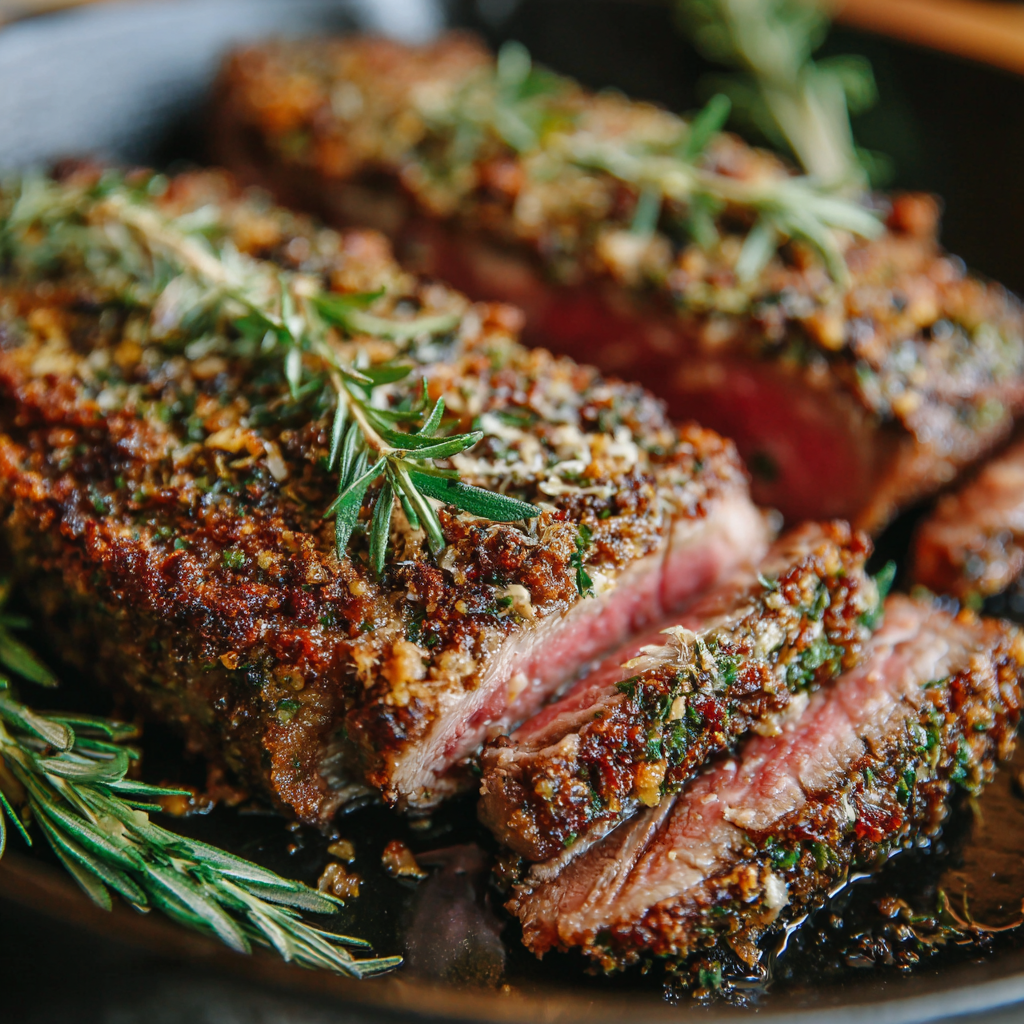
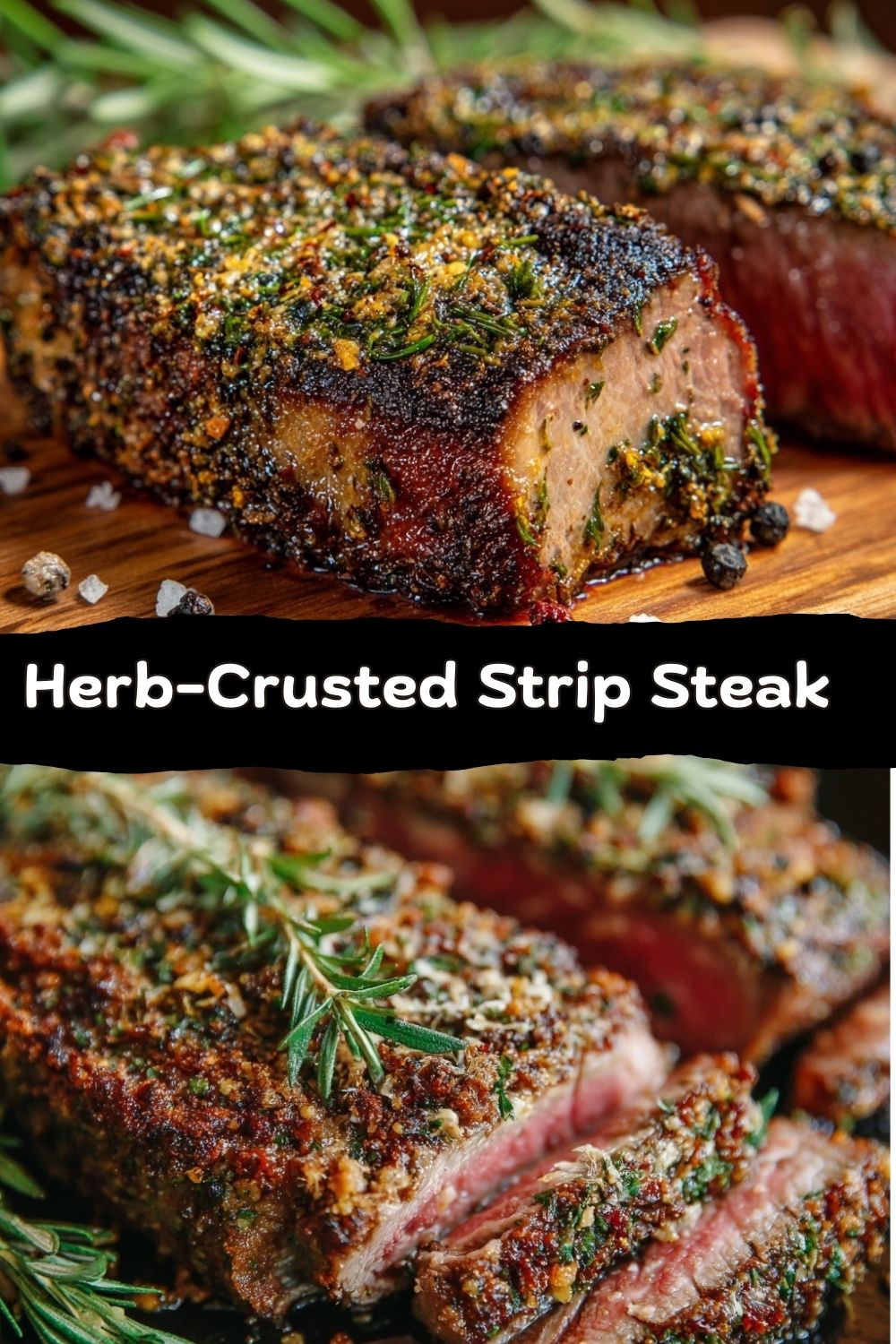
Herb-Crusted Strip Steak: Your Ticket to Steakhouse Glory at Home
Hey friends, Jackson here from Food Meld. Let’s have a real talk for a second. How many times have you stood in front of the meat case, picked up a beautiful strip steak, and thought, “I could totally cook this… but will it taste as good as that place downtown?” You imagine that perfect, crackly-crisp crust giving way to a juicy, pink center. You can almost hear the sizzle. Then, the doubts creep in. What if I overcook it? What if the seasoning is bland? What if I just… mess it up?
I’m here to tell you, with a hug and a high-five, that you can absolutely nail it. This Herb-Crusted Strip Steak isn’t just a recipe; it’s your secret weapon. It’s the proof that you don’t need a fancy degree, a $500 grill, or a mysterious chef’s pantry to create something absolutely unforgettable. All you need are a few fresh ingredients, one trusty skillet, and about 20 minutes of your time.
This is the magic of Food Meld in action. We’re taking that solid, reliable foundation of a great steak—its beautiful beefy flavor—and giving it a creative, flavor-packed twist with a simple herb crust. It’s Southern comfort (hello, cast-iron sear) meets global inspo (those aromatic herbs!) with that “what if we tried this?” energy that makes cooking an adventure. The result? A steak so good, it feels like a celebration. It’s perfect for a date night that impresses, a dinner party that gets everyone talking, or even a Tuesday night where you decide you deserve something awesome. So, tie on your apron, grab your favorite skillet, and let’s cook something incredible together.
The Steak That Started It All
This recipe takes me right back to my grandpa’s backyard. He wasn’t a fancy chef—he was a man of few words and a well-worn charcoal grill. But every summer Sunday, he’d perform this ritual. He’d pat his steaks dry with a solemn focus, then he’d reach into this old coffee tin where he kept his “magic dust.” It was just dried rosemary from his bush, coarse salt, and black pepper he’d cracked himself. He’d press it onto the meat with those big, gentle hands.
The smell when those steaks hit the grill was unreal. It was the smell of patience, simplicity, and love. He taught me that the best food isn’t about the most ingredients; it’s about treating a few great ingredients with respect. My herb-crusted strip steak is a direct love letter to that memory. I’ve just taken his “magic dust” and brought it into my kitchen, using fresh herbs and a hot skillet to create that same unforgettable, crusty magic. It’s my way of honoring those simple, powerful flavors that stick with you for a lifetime.
Gathering Your Flavor Arsenal
Here’s everything you’ll need. I’ve included my little chef insights and swaps so you can make this recipe work with what you’ve got!
- 2 New York Strip Steaks (1 inch thick): This is our star. The “strip” is from the short loin—it’s tender, has a beautiful fat cap for flavor, and is forgiving for home cooks. Chef’s Insight: Thickness is key! One inch gives you time to build a crust without overcooking the center. If it’s thinner, reduce cook time. No strip? Ribeye (more marbling) or filet (leaner, very tender) work great too.
- 1 Tbsp Olive Oil: Our glue and searing agent. A good, neutral extra virgin olive oil is perfect. Chef’s Swap: Avocado oil or grapeseed oil are fantastic for high-heat searing as they have a higher smoke point.
- 1 Tbsp Fresh Rosemary, finely chopped: Piney, earthy, and robust. It’s the bold backbone of our herb crust. Chef’s Tip: To easily chop rosemary, strip the leaves from the woody stem and give them a rough chop. No fresh? Use 1 teaspoon dried, but fresh makes a world of difference here.
- 1 Tbsp Fresh Thyme, finely chopped: Adds a subtle, lemony-herbal note that brightens everything up. Chef’s Twist: If you have lemon thyme, even better! Dried substitution is 1 teaspoon.
- 2 Garlic Cloves, minced: The aromatic powerhouse. When pressed into the crust and seared, it becomes sweet and nutty. Chef’s Hack: Use a microplane to grate the garlic for an even finer paste that really adheres to the steak.
- 1 Tsp Coarse Salt (like Kosher salt): This isn’t just for seasoning—the coarse grains help create texture and that ultimate crust. Chef’s Note: If using fine table salt, use about ¾ teaspoon to avoid over-salting.
- ½ Tsp Cracked Black Pepper: We want cracks, not dust! Pre-ground pepper loses its punch. Freshly cracked gives a floral, spicy kick.
- 1 Tbsp Butter: Our finishing luxury. Adding this at the end creates a rich, nutty, restaurant-style sauce as we baste. Chef’s Secret: For an insane flavor boost, use a compound butter here (like garlic-herb butter) or even a pat of salted butter.
Let’s Build That Perfect Steak, Step-by-Step
Okay, team. Let’s do this. Read through once, then let’s get cooking. It’s easier than you think!
Step 1: The Prep – Setting the Stage for Success
First things first: take your steaks out of the fridge about 30 minutes before cooking. This is non-negotiable for me! Letting them come to room temperature ensures they cook evenly from edge to center. While you wait, mix your herb crust. In a small bowl, combine the chopped rosemary, thyme, minced garlic, coarse salt, and cracked pepper. Give it a stir—smell that? That’s the magic. When your steaks are ready, use paper towels to pat them completely dry. This is THE secret to a killer sear. Moisture is the enemy of crust. Rub each steak lightly with olive oil on both sides—this helps the herb mixture stick. Now, generously and firmly press the herb mix onto every surface of the steak. Don’t be shy! Pack it on there. You want a solid, flavorful coating.
Step 2: The Sizzle – Sear Like a Pro
Place your cast-iron or heavy-bottomed skillet over medium-high heat and let it get seriously hot. You want it smoking just a touch. No oil needed yet—the steak has its own. Carefully lay your steaks in the pan. You should hear an immediate, confident sizzle. That’s the sound of flavor being born. Now, here’s the hard part: don’t touch it! Let it sear, undisturbed, for 3-4 minutes. This builds that gorgeous, crispy crust. Peek at the edges; when you see a deep brown color creeping up the sides, it’s time to flip. Use tongs, not a fork (we don’t want to poke holes and lose juices!), and flip to the other side for another 3-4 minutes for medium-rare. For a 1-inch steak, this usually gets you there. If you like it more done, see the FAQ below!
Step 3: The Butter Bath – The Chef’s Finishing Touch
In the last minute of cooking, drop that tablespoon of butter into the pan right next to the steaks. As it melts and starts to foam, tilt the pan slightly. Use a spoon and start continuously scooping the bubbling, fragrant butter and pouring it over the tops of the steaks. Baste, baste, baste! This buttery waterfall cooks the herbs and garlic just a bit more, infuses the steak with insane richness, and creates an instant pan sauce. It’s a game-changer.
Step 4: The Patience Payoff – The Rest
Your steaks are beautifully browned and smell like heaven. Transfer them to a cutting board or plate. DO NOT CUT INTO THEM. I know it’s tempting. But let them rest, tented loosely with foil, for a full 5-7 minutes. This allows the frantic, hot juices inside to redistribute throughout the meat. If you cut now, all those gorgeous juices will run out onto your board, leaving you with a dry steak. The rest is what guarantees that juicy, perfect bite.
Plating Up Your Masterpiece
After the rest, slice your steak against the grain (look for the lines in the meat and cut perpendicular to them—this makes each bite more tender). I love to fan the slices out on a warm plate. Pour any of those buttery, herby juices from the cutting board right over the top. Now, the fun part: sides!
For a classic steakhouse vibe, you can’t beat creamy mashed potatoes or crispy roasted garlic potatoes. They’re perfect for soaking up that butter. A simple arugula salad with a lemon vinaigrette cuts through the richness beautifully. Need something easy? Roasted asparagus, broccoli, or even some quick sautéed mushrooms and onions cooked in the same pan after the steak are winners. The goal is a plate that looks abundant, colorful, and incredibly inviting. This is your moment—serve it with pride!
Make It Yours: Creative Twists on the Classic
Once you master the basic formula, the world is your oyster (or, well, your steak). Here are a few of my favorite ways to mix it up:
- The “Spicy Meld”: Add 1 teaspoon of cracked red pepper flakes or ½ teaspoon of smoked paprika to the herb mix. The warmth plays so nicely with the rosemary and garlic.
- The “Umami Bomb”: Finely grate 1 tablespoon of Parmesan or Pecorino Romano cheese into your herb crust. The cheese will melt and create an incredibly savory, almost nutty, extra-crispy layer.
- The “Citrus Zing”: Add the zest of one lemon to the herb mixture. After slicing the rested steak, squeeze a little fresh lemon juice over the top. It’s incredibly bright and fresh.
- The “Everything Crust”: Swap the herbs for 2 tablespoons of “Everything Bagel” seasoning. Trust me. The garlic, onion, sesame, and poppy seeds create a wildly delicious and textured crust.
- Dietary Swap – Gluten-Free & Whole30: This recipe is naturally gluten-free! For a Whole30/Paleo version, just make sure your salt has no additives, and use ghee instead of butter for the basting step.
Jackson’s Kitchen Notes
This recipe has been my go-to “impress without stress” dish for years. It’s evolved from my grandpa’s simple grill method to this pan-seared version because, let’s be real, sometimes you don’t want to fire up the grill. The biggest lesson I learned? Don’t skimp on the rest. I ruined many a good steak in my early 20s by slicing right into it, watching my dinner literally flow away. It was a tasty but sad lesson.
Also, your fire alarm might go off. It’s a rite of passage for a proper sear! Just open a window, turn on the vent fan, and wave a towel like you just won the championship. It’s all part of the fun. Every time I make this, it reminds me that the best cooking is confident, a little loud, and always full of flavor.
Your Questions, Answered
Q: How do I know when my steak is done without cutting it open?
A: The best tool is an instant-read meat thermometer. Aim for 130-135°F for medium-rare (it will rise to 135-140°F while resting). No thermometer? Use the “hand test.” Gently press the center of the steak. If it feels like the fleshy part of your palm when your hand is relaxed (like a loose fist), that’s rare. Like your palm when you touch your thumb to tip of your index finger? Medium-rare. Thumb to middle finger? Medium. Practice makes perfect!
Q: My herbs are burning in the pan! What did I do wrong?
A> This usually means your pan is too hot. It should be medium-high, not screaming nuclear. The herbs will darken and toast (that’s good!), but if they’re blackening before the steak is cooked, just lower the heat a bit next time. You can also press the herbs on extra firmly so they stick to the steak and aren’t just loose in the pan.
Q: Can I use dried herbs instead of fresh?
A: You can, but the flavor will be more muted and earthy. Use 1 teaspoon dried for every 1 tablespoon fresh called for. I highly recommend seeking out fresh for this one—it makes a noticeable difference in the brightness of the crust.
Q: What do I do with all the delicious stuff left in the pan?
A> That’s liquid gold! After removing the steak, you can deglaze the pan with a splash of red wine or beef broth, scrape up the browned bits (the “fond”), let it reduce for a minute, and then swirl in another pat of cold butter. Instant, incredible pan sauce. Pour it over your sliced steak.
Nutritional Information (Approximate, Per Serving)
Let’s keep it real—this is a celebratory, protein-packed main dish. One serving (one 8oz strip steak with the herb crust and butter) comes in around 500-550 calories. You’re looking at about 38g of high-quality protein, which is fantastic for keeping you full and satisfied. The 38g of fat includes the marbling in the steak (monounsaturated fats) and the butter—this is where a huge amount of the flavor and satisfying mouthfeel comes from. The carbs are negligible (just 2-3g), coming from the herbs and garlic. Sodium is moderate and controllable based on the salt you use.