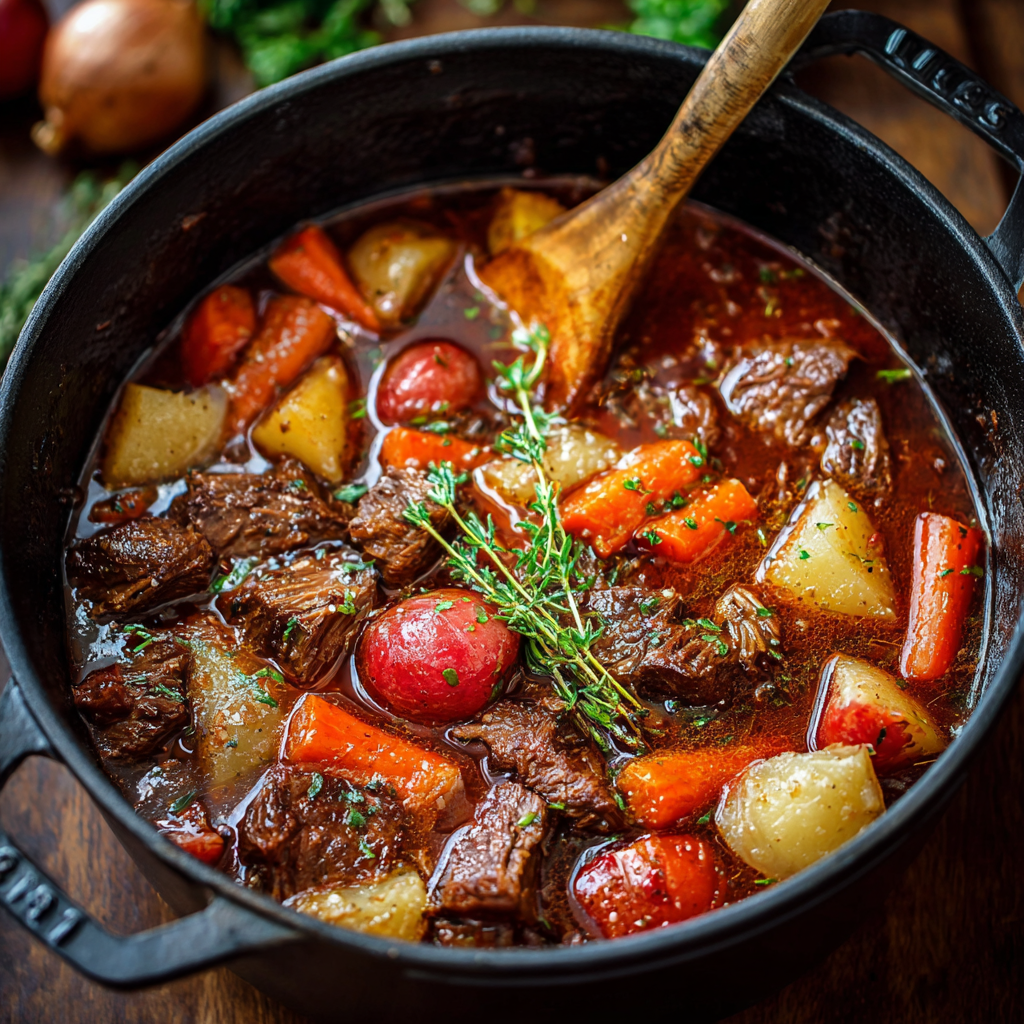
Your New Favorite Comfort Food is Simmering on the Stove
Hey there, friend. Come on in—can you smell that? It’s the kind of aroma that wraps around you the second you open the front door. It’s rich, it’s savory, and it whispers promises of a seriously good meal. That, my friend, is the magic of a classic, slow-cooked beef stew. And the one we’re making today? It’s a total game-changer.
Now, I know what you might be thinking: “Beef stew? Isn’t that just… beef and veggies in a pot?” And sure, on the surface, yeah. But a truly unforgettable beef stew is a symphony. It’s about building layers of flavor, starting with a killer sear on the beef, building a deeply savory base, and then letting time and low heat work their tenderizing magic. This isn’t just dinner; it’s a warm hug in a bowl. It’s the meal you crave on a chilly evening, the one that brings everyone to the table without being asked twice.
I’ve taken this timeless classic and infused it with a few of my favorite chef-approved hacks (hello, secret thickener!) to make it foolproof and packed with even more flavor. We’re talking fall-apart-tender chunks of chuck roast, carrots and potatoes that have soaked up all that incredible broth, and a gravy that’s so good you’ll want to eat it with a spoon. So, grab your favorite Dutch oven or heavy pot, and let’s cook something awesome together. This is the only beef stew recipe you’ll ever need.
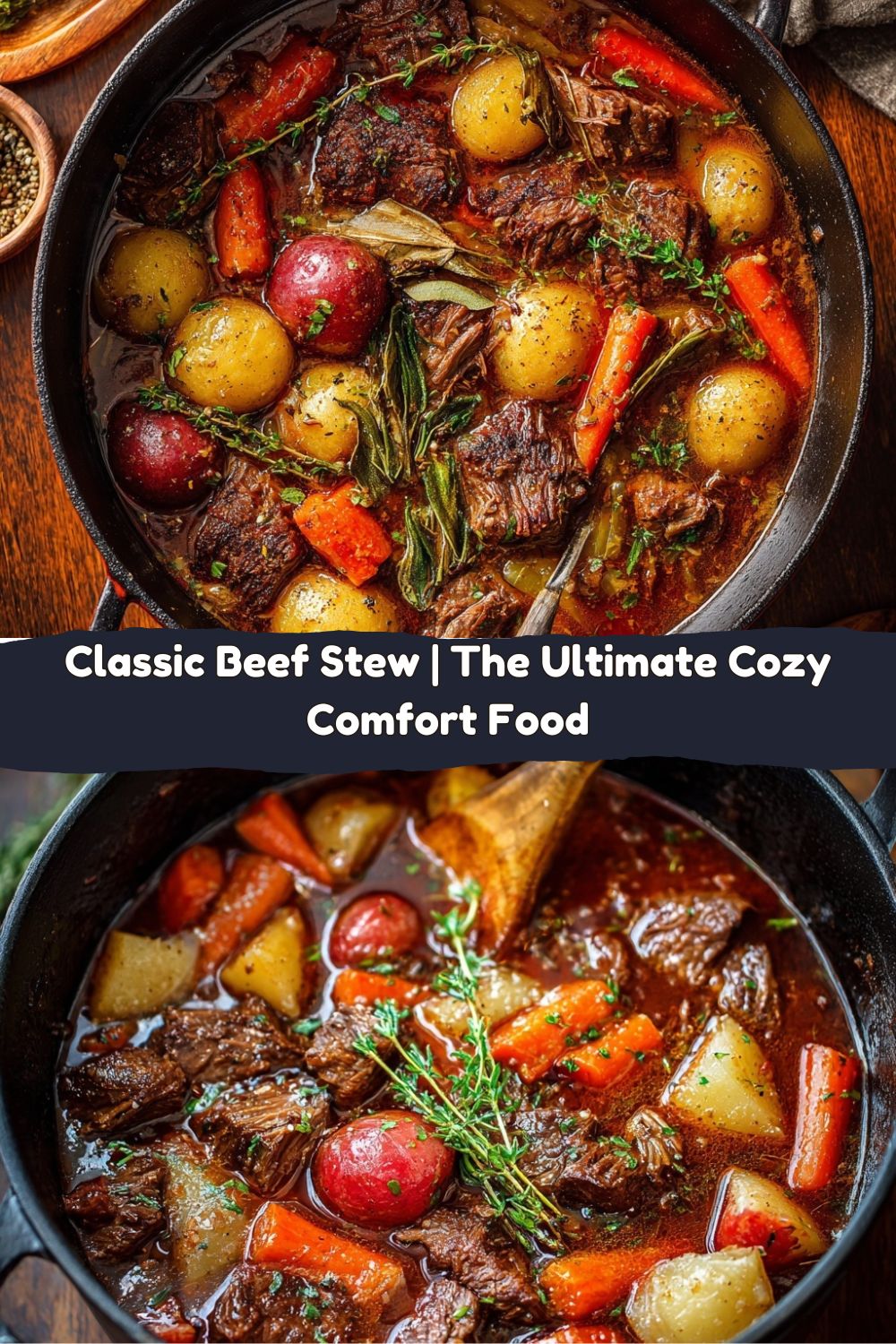
A Pot of Stew and a Whole Lot of Memories
This recipe takes me right back to my grandma’s kitchen in Georgia. It wasn’t a fancy kitchen—formica counters, a linoleum floor that had seen better days, and a window that looked out over her herb garden. But when she made her stew, the whole house transformed. It was her go-to for family gatherings, especially during those crisp, leaf-kicking autumn weekends.
I remember pulling up a stool to watch her work. She never measured a thing—just a pinch of this, a handful of that. But the one thing she was militant about was the sear on the beef. “You gotta lock in the joy, Jackson!” she’d say, winking at me as she laid those chunks of chuck roast into the sizzling pot. The sound and the smell are etched into my memory. To me, that sizzle is the sound of home, of family, and of a meal made with a whole lot of love. This recipe is my homage to her—a little more structured for reliability, but with all the soul and flavor of her original.
Gathering Your Flavor All-Stars
Here’s the lineup for our culinary masterpiece. Don’t be shy about quality here—simple ingredients shine the brightest when they’re the best you can get!
- 3 lbs chuck roast, cut into large, hearty chunks – Chuck roast is the MVP here. It’s a tougher cut with beautiful marbling that, when slow-cooked, becomes incredibly tender and flavorful. Don’t trim off too much fat—that’s where the flavor lives! Chef’s Insight: Cut your chunks a bit larger than you think—about 1.5 to 2 inches. They’ll shrink a little, and a bigger piece gives you that satisfying “pull-apart” texture.
- Salt and pepper, to taste – Season that beef generously and fearlessly. This is your first and most important layer of flavor.
- 2 tbsp canola oil – We need an oil with a high smoke point for a proper, non-burning sear. Canola, avocado, or vegetable oil are all perfect.
- 1 yellow onion, finely chopped – The sweet, aromatic base of our stew. It melts down and becomes part of the rich, savory broth.
- 2 tbsp tomato paste – This is our secret weapon for depth and a touch of umami richness. We’re going to “cook it out” for a minute to get rid of any tinny taste. Sub Tip: If you have tube tomato paste, it’s a game-changer for recipes that only use a little!
- 4 cups beef broth – Use a good-quality, low-sodium broth if you can. This lets you control the salt level perfectly.
- 1 tbsp soy sauce – Wait, what? Trust me. This isn’t for an Asian flavor; it’s a powerhouse of umami that deepens the meaty flavor of the broth without making it taste like soy. It’s my favorite stealth ingredient.
- 1 tbsp Worcestershire sauce – The tangy, savory cousin to the soy sauce. It adds a complex, fermented zip that makes the broth anything but boring.
- 2 bay leaves – The classic herbal note. They infuse the stew with a subtle, almost floral earthiness. Just remember to fish them out before serving!
- 5 carrots, peeled and chopped into thick rounds – They sweeten as they cook and hold their shape beautifully. Go for thick cuts so they don’t turn to mush.
- 6–8 small to medium red potatoes, quartered or halved – I love red potatoes because their waxy texture means they hold their shape in the long cook. You get creamy, tender bites without a grainy, falling-apart mess.
- 1 tsp dried thyme – The perfect earthy, slightly floral herb for beef. Rubbing it between your fingers before adding it will wake up the oils and make it even more fragrant.
- 2 tbsp Minute tapioca – This is my grandma’s magic trick! Instead of a flour slurry, which can make the stew taste pasty or get gummy, tapioca thickens the stew naturally and beautifully, leaving the broth glossy and clear. Sub Tip: No tapioca? You can use 2 tbsp of cornstarch mixed with 3 tbsp of cold water, stirred in during the last 30 minutes of cooking.
Let’s Build Some Flavor, Step-by-Step
Alright, let’s get cooking! Read through these steps once before you start—it’s like having a road map to stew success.
- Season and Sear the Beef: Pat your beef chunks completely dry with paper towels—this is CRUCIAL for a good sear, not a steam. Season them liberally with salt and pepper. In your large Dutch oven or heavy-bottomed pot, heat the canola oil over medium-high heat until it’s shimmering. Now, add the beef in a single layer, working in batches. Do NOT crowd the pot! We want a dark brown crust, and crowding will make the beef steam and turn gray. Sear for 2-3 minutes per side until you get a beautiful brown crust, then remove to a plate and repeat. Chef’s Hack: This step is non-negotiable. That browned bit on the bottom of the pot (the fond) is pure flavor gold. We’re about to deglaze it and use it all.
- Sauté the Aromatics: Reduce the heat to medium. Toss your chopped onion into the same pot (with all those beefy drippings). Sauté for about 5-6 minutes, until they’ve softened and turned translucent. Now, add the 2 tablespoons of tomato paste. Stir it around and let it cook for a full 2 minutes. You’ll see it darken a shade and smell less acidic and more rich. This simple step deepens the flavor profile immensely.
- Deglaze and Build the Broth: Time to get all those browned bits up! Pour in your beef broth, soy sauce, and Worcestershire sauce. As you pour, use your spoon or a whisk to scrape the bottom of the pot vigorously. All that brown stuff will dissolve into the liquid, creating the foundation of our stew. It’s the most satisfying part! Now, add the bay leaves, dried thyme, and return the seared beef (and any accumulated juices) to the pot. Give it a good stir.
- Add the Veggies and Simmer to Perfection: Stir in your chopped carrots, potatoes, and the secret weapon—the Minute tapioca. The tapioca will seem to disappear, but it’s working its magic in the background. Bring the whole pot to a low boil, then immediately reduce the heat to low, cover it with a tight-fitting lid, and let it simmer gently. We’re looking for a lazy bubble, not a raging boil. Let it go for 2.5 to 3 hours. Chef’s Tip: Resist the urge to stir too often! Every time you take the lid off, you let heat and moisture escape. Just let it do its thing. The stew is done when the beef is so tender you can cut it with a spoon.
- The Final Touch: Once the cooking time is up, carefully remove the pot from the heat. Find and discard the bay leaves—they’ve done their job. Give the stew a taste. This is where you become the master. Does it need another pinch of salt? A crack of black pepper? Adjust it to your liking. The beauty of this recipe is that it’s yours to command.
How to Serve Up This Masterpiece
You’ve done it! You’ve created a pot of pure comfort. Now, let’s serve it up right.
The classic way is in a deep, wide bowl. Ladle a generous portion right in the center, making sure you get plenty of that rich broth. My absolute must-have accompaniment is a big slice of crusty, warm bread for dipping. A rustic sourdough or a fluffy baguette is perfect for sopping up every last drop. For a real Southern twist, serve it over a scoop of creamy, stone-ground grits or a buttery biscuit—it’s a next-level experience.
If you’re feeling fancy, a simple garnish can elevate it. A sprinkle of fresh chopped parsley or chives adds a pop of color and freshness. For a bit of brightness, a little zest of lemon right on top just before serving can cut through the richness beautifully. This stew is the star of the show, so keep the sides simple and let it shine.
Make It Your Own: Fun Flavor Twists
Once you’ve mastered the classic, feel free to get creative! Here are a few of my favorite ways to mix it up:
- Mushroom & Red Wine Upgrade: Replace 1 cup of the beef broth with a dry red wine (like a Cabernet Sauvignon) for a deeper, more complex flavor. Add a cup of sliced cremini mushrooms when you add the other veggies.
- Hearty Herb Garden Version: In the last 30 minutes of cooking, stir in a tablespoon of fresh, chopped rosemary. The flavor will be vibrant and aromatic.
- Smoky & Spicy Kick: Add a teaspoon of smoked paprika with the dried thyme. For heat, throw in a pinch of red pepper flakes or a diced chipotle pepper in adobo sauce.
- Gluten-Free & Paleo Friendly: This recipe is naturally gluten-free as written! Just double-check your Worcestershire and soy sauce labels (or use tamari). The tapioca is a perfect paleo-friendly thickener.
- Extra Veggie Power: Feel free to add a cup of frozen peas or corn in the last 10 minutes of cooking, or stir in some chopped kale or spinach right at the end until it wilts.
Jackson’s Kitchen Notes
This recipe has been a living, evolving thing in my kitchen for years. The first time I made it on my own, I was so impatient I cranked the heat to “speed it up.” Big mistake! The bottom scorched, and the beef stayed tough. I learned the hard way that low and slow isn’t just a suggestion—it’s the law of the land when it comes to stew.
I also used to be a flour-dredging guy, until one day I was out of flour and used the tapioca I had for a pie. The resulting stew was so much clearer and glossier, and the texture was perfect. It was a happy accident that stuck! That’s what I love about cooking—sometimes the best recipes come from a little “what if we tried this?” energy.
Your Stew Questions, Answered!
Q: Can I make this in a slow cooker or Instant Pot?
A: Absolutely! For a slow cooker, follow steps 1-3 (searing the beef and sautéing the onion/tomato paste) on the stovetop. Then, transfer everything to your slow cooker, add the remaining ingredients, and cook on LOW for 7-8 hours or HIGH for 4-5. For an Instant Pot, use the Sauté function for steps 1-3. Add everything else, seal the lid, and cook on High Pressure for 35 minutes, followed by a natural pressure release for 15 minutes.
Q: My stew is a bit too thin. How can I thicken it?
A: No worries! If it’s too thin after cooking, mix 1 tablespoon of cornstarch with 2 tablespoons of cold water in a small bowl until smooth. Stir this “slurry” into the simmering stew and let it cook for another 2-3 minutes until thickened.
Q: Can I freeze the leftovers?
A: This stew is a fantastic freezer meal! Let it cool completely, then store it in airtight containers or freezer bags for up to 3 months. The potatoes and carrots may soften a bit upon reheating, but the flavor will be just as incredible. Thaw in the fridge overnight and reheat gently on the stovetop.
Q: Why did my potatoes and carrots turn to mush?
A: This usually means the stew was cooked at too high of a boil, or for just a bit too long. A gentle simmer is key! Also, cutting your veggies into large, hearty chunks ensures they maintain their structure.
Nourishment in Every Bite
While this stew is the definition of comfort food, it’s also packed with real, wholesome nourishment. It’s a balanced meal all on its own! The chuck roast provides a great source of high-quality protein and iron, essential for energy. The carrots bring a healthy dose of Vitamin A (beta-carotene) for eye and immune health, and the potatoes offer complex carbohydrates for sustained energy, along with potassium and Vitamin C.
Using leaner cuts of beef and skimming any excess fat from the top before serving can make it even lighter. Remember, this is an approximation, and the exact values can vary based on your specific ingredients and portion sizes.
Per Serving (approx., based on 8 servings):
Calories: 460 | Protein: 38g | Fat: 20g | Carbs: 28g | Fiber: 4g | Sugar: 4g
You’ve Just Made a Memory
And there you have it. You didn’t just make dinner; you created an experience. You filled your home with an incredible aroma and made a meal that’s built to comfort and satisfy. This beef stew is more than a recipe—it’s a reminder of how powerful simple, good food can be.
I hope this becomes a regular in your rotation, a recipe you make for your people and maybe even pass down one day. Did you try one of the twists? I’d love to hear about it! Tag me on social @FoodMeld and