Your New Favorite 25-Minute Power Bowl is Here!
Hey friends, Jackson here from Food Meld. Let’s get real for a second. We’ve all been there. It’s 6 PM, your stomach is growling, and you’re staring into the fridge wondering how on earth you’re going to whip up something that’s actually good for you, tastes incredible, and doesn’t leave you with a mountain of dishes to clean. You want takeout flavor without the takeout guilt, the sluggishness, or the hit to your wallet.
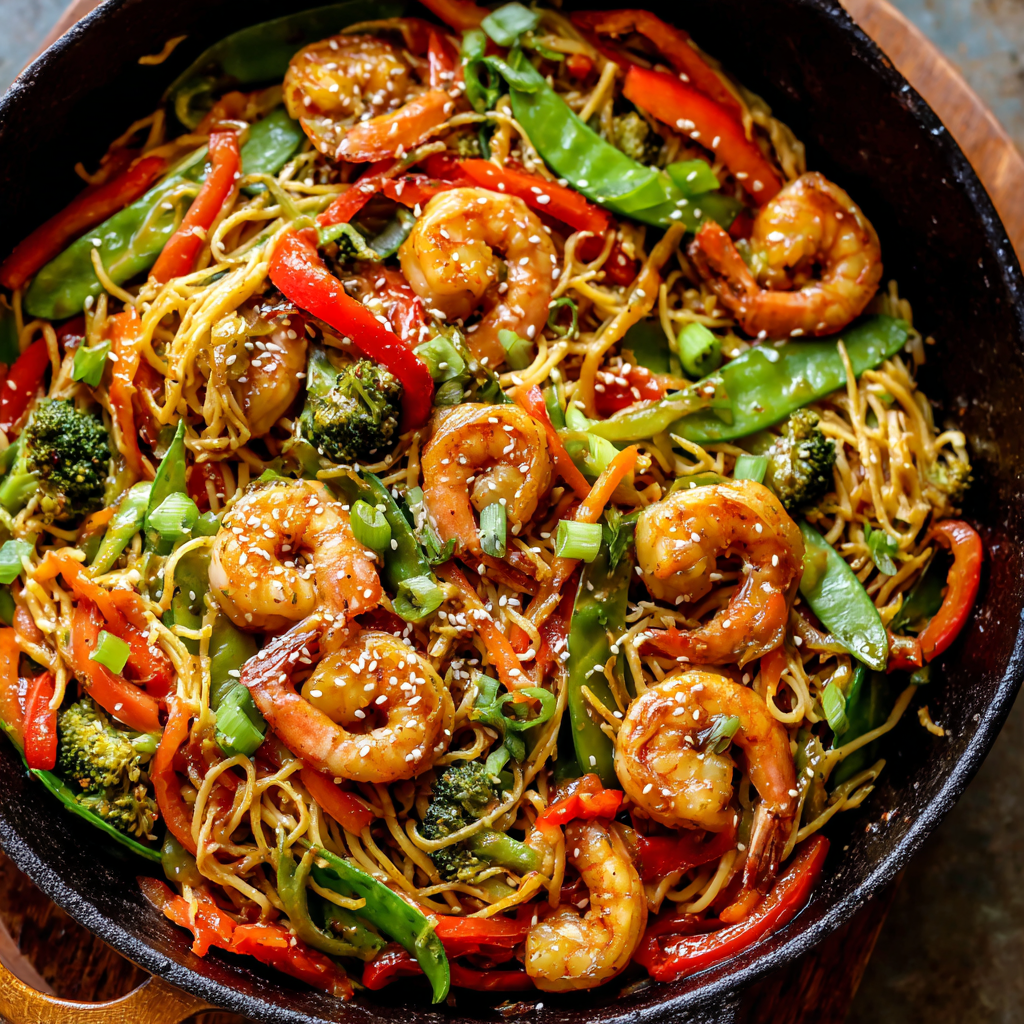
Well, my friend, you just hit the jackpot. This High-Protein Shrimp Stir Fry with Noodles is my absolute GO-TO for those exact nights. It’s the recipe I make when I need a surefire win. We’re talking plump, juicy shrimp, a rainbow of crisp-tender veggies, and those wonderfully chewy noodles, all tossed in a savory-sweet sesame garlic sauce that you’ll want to drink with a spoon. It’s bold, comforting, and packed with the kind of clean energy that fuels your body right.
The best part? This isn’t some complicated, fussy chef recipe. This is real-deal, one-pan (okay, one pan and one pot for noodles) magic that comes together in 25 minutes flat. I’ve packed this guide with all my favorite chef hacks and flavor twists to make it foolproof. So, tie on your apron, grab your favorite wok or skillet, and let’s cook something awesome together that’s as fit for your goals as it is for your taste buds.
That One Stir-Fry That Started It All
This recipe takes me right back to my early days in a tiny apartment kitchen, where my “dining table” was a fold-out tray and my most prized possession was a chipped, secondhand wok. I was learning to cook on a budget, trying to eat well, and honestly, just winging it most of the time.
One night, after a particularly long day, I craved the vibrant, sizzling stir-fries from my favorite spot but knew my wallet couldn’t handle it. I raided my fridge—a bag of frozen shrimp, some sad-looking veggies, and a lone pack of noodles. I whipped up a sauce with what I had: soy sauce, a knob of ginger, and the last of my honey. The sizzle, the steam, the incredible aroma that filled my whole apartment… it was a revelation. That messy, thrown-together meal tasted like a victory. It proved that unforgettable flavor doesn’t come from a fancy restaurant; it comes from your own kitchen, from a little courage and a lot of “what if we tried this?” energy. This recipe is the polished, protein-packed, absolutely dialed-in version of that very first kitchen win.
Gathering Your Flavor Power Players
Here’s everything you’ll need to build this flavor powerhouse. Don’t stress if you’re missing something—I’ve got substitution ideas for almost every ingredient. Cooking is about making it work for YOU.
- 2 pounds large shrimp, peeled and deveined – The star of our protein show! I like to pat them dry with a paper towel before cooking—this gives them a beautiful sear instead of steaming. Chef’s Tip: If you’re using frozen shrimp (no shame, I do it all the time!), just thaw them overnight in the fridge or in a bowl of cold water.
- 16 oz high-protein noodles – I’m using chickpea noodles for a boost, but edamame, lentil, or even whole wheat spaghetti work great. They add staying power and a fantastic chewy texture.
- 2 red bell peppers, thinly sliced – They bring a sweet crunch and a gorgeous pop of color.
- 2 cups broccoli florets – My favorite little trees! They soak up the sauce like a dream.
- 2 carrots, julienned – I use a julienne peeler for those perfect little matchsticks in seconds. They add a subtle sweetness.
- 2 cups snow peas – For that fresh, crisp snap. If you can’t find them, sugar snap peas are a perfect substitute.
- 6 tablespoons low-sodium soy sauce or tamari – The salty, umami backbone of our sauce. Using low-sodium lets us control the salt level. Tamari is a fantastic gluten-free alternative.
- 2 tablespoons minced garlic – Because more garlic is always the answer. Freshly minced is best for that pungent kick!
- 2 teaspoons freshly grated ginger – The zing that wakes up the whole sauce. I keep a knob of ginger in the freezer and just grate it frozen—no peeling needed!
- 2 tablespoons sesame oil – This is for the sauce, providing that deep, nutty, quintessential stir-fry flavor. Don’t use it for the high-heat cooking—we’ll use a neutral oil for that.
- 2 tablespoons honey or maple syrup – A touch of natural sweetness to balance the salty and savory notes. Maple syrup keeps it vegan-friendly.
- 2 teaspoons sriracha or red pepper flakes (optional) – Your heat dial. Start with a little, you can always add more!
- 2 tablespoons sesame seeds & 4 green onions, chopped – The grand finale! These aren’t just garnish—they add crucial texture and fresh flavor.
- 4 tablespoons crushed peanuts or cashews (optional) – For that final layer of crunch and richness. Highly recommended!
Let’s Get Sizzling: Your Foolproof Steps
Ready to make some magic? Follow these steps, and you’ll have a restaurant-quality stir fry on your table before you can even decide on a delivery app.
- Cook the Noodles: Get a pot of salted water boiling and cook your high-protein noodles according to the package directions. Pro-Tip: Once they’re done, drain them and give them a quick rinse with cold water to stop the cooking process. This prevents them from turning into a sticky, mushy blob while we work on everything else. Toss them with a tiny bit of oil to keep them from sticking and set them aside. We want them ready to dive into that sauce later!
- Sear the Shrimp: Place your largest skillet or wok over medium-high heat and let it get properly hot. Add a tablespoon of a neutral, high-heat oil like avocado or vegetable oil. Once the oil is shimmering, add your dried shrimp in a single layer. Don’t crowd the pan! We’re searing, not steaming. Cook them for 2-3 minutes per side, just until they’re pink, opaque, and beautifully curled. They cook fast! Pull them out of the pan and onto a clean plate. They’ll finish heating through later, so it’s okay if they’re slightly underdone now. Overcooked shrimp are rubbery, and we’re not about that life.
- Cook the Veggies: In that same glorious pan (with all the yummy shrimp bits still in there!), add another tiny splash of oil if it looks dry. Now, toss in your harder veggies first: the broccoli and carrots. Let them stir-fry for about 2 minutes to get a head start before adding the softer peppers and snow peas. Another 3-4 minutes of tossing and stirring is all you need. We’re going for “crisp-tender”—they should still have a satisfying crunch. This is where the “wok hei,” that breath of the wok, starts to build.
- Whisk the Magic Sauce: While the veggies are doing their thing, grab a small bowl or, my favorite, a liquid measuring cup. Whisk together the soy sauce, minced garlic, grated ginger, sesame oil, honey, and sriracha. Whisk it until the honey is fully dissolved and the sauce is one harmonious liquid. Giving it a quick taste now is a great idea—adjust the heat or sweetness to your liking!
- The Grand Finale: Bring It All Together! This is the best part. Add the cooked noodles and the seared shrimp back into the pan with your crisp-tender veggies. Now, pour that incredible sauce over everything. Using a pair of tongs, toss, toss, TOSS! Make sure every single noodle, every piece of shrimp, and every veggie gets coated in that glossy, fragrant sauce. Let it all heat through for another 2-3 minutes, allowing the sauce to thicken slightly and cling to everything. Your kitchen should smell absolutely insane right now.
- Garnish & Serve: Kill the heat. Immediately shower your masterpiece with the chopped green onions, a generous sprinkle of sesame seeds, and a handful of those crushed nuts for crunch. Serve it up hot and watch it disappear!
How to Plate This Beauty
You’ve done the hard part, now let’s make it look as good as it tastes! I’m a big believer that we eat with our eyes first.
For a family-style meal, I love piling the entire stir-fry into a big, wide serving bowl. It feels generous and inviting. For individual plates, use a pair of tongs to create a nice nest of noodles, then artfully arrange the shrimp and veggies on top. Don’t just dump it! Make it pretty. Finish with those garnishes right at the end so they stay bright and crunchy.
This dish is a complete meal in a bowl, but if you want to round it out, a simple side of a light cucumber salad or a few potsticker dumplings from the freezer aisle would be absolutely killer. And don’t forget an extra little dish of sriracha or chili crisp on the side for the heat-seekers at your table!
Make It Your Own: Flavor Twists & Swaps
The beauty of a stir-fry is its flexibility. This is your canvas! Here are a few of my favorite ways to mix it up.
- Peanutty Bliss: Whisk a heaping tablespoon of creamy peanut butter into the sauce. It creates a richer, thicker, satay-like sauce that’s just out-of-this-world good.
- Bright & Zingy: Right at the end, right before serving, squeeze the juice of half a lime or add a splash of rice vinegar over the top. That hit of acidity cuts through the richness and makes all the flavors pop.
- Veggie Load-Up: Toss in a couple of big handfuls of baby spinach or shredded cabbage in the last minute of cooking. They’ll wilt down and add a fantastic boost of greens and fiber without any extra effort.
- Chicken or Tofu Swap: Not a shrimp person? No problem! Use 1.5 pounds of thinly sliced chicken breast or thigh, or a block of extra-firm tofu (pressed and cubed). Just adjust the cooking time accordingly until they’re fully cooked through.
- Spicy Dragon Version: For a real kick, add a teaspoon of chili garlic paste or gochujang to the sauce along with the sriracha. You’ve been warned!
Jackson’s Kitchen Notebook
This recipe has been a work in progress for years, and it’s evolved with me. I used to just throw all the veggies in at once, resulting in some being mush and others being raw. The key is that staggered veggie addition—hard ones first, soft ones later. It seems simple, but it’s a total game-changer.
Another funny lesson learned the hard way: I once tried to grate ginger on the fine side of my box grater without a spoon to scrape it. Let’s just say I spent the next 10 minutes picking tiny ginger fibers out of the grater and my recipe tasted… faintly of ginger. Now I use a microplane or the coarse side. It’s the little things, folks! This dish is forgiving, so don’t be afraid to get in there and make it yours.
Stir-Fry SOS: Your Questions, Answered
Here are answers to the most common questions I get, so your stir-fry journey is smooth sailing.
Q: My stir-fry is turning out watery/soupy. What did I do wrong?
A: This is the #1 stir-fry issue! The culprits are usually: 1) Not patting your shrimp and veggies dry, 2) Overcrowding the pan, which steams instead of sears, or 3) Using veggies with super high water content (like zucchini) that release a lot of liquid. The fix? Dry your ingredients, cook in batches if needed, and make sure your pan is screaming hot. If it’s still a bit watery at the end, just let it simmer for an extra minute or two to evaporate the liquid.
Q: Can I make this ahead for meal prep?
A: Absolutely! This is a meal prep superstar. Let the stir-fry cool completely before dividing it into airtight containers. It will keep in the fridge for 3-4 days. The noodles might soak up a bit of the sauce, so I like to keep a tiny extra container of the sauce on the side to drizzle over after reheating. Reheat gently in the microwave or in a skillet on the stove.
Q: My shrimp came out rubbery. How can I prevent that?
A> Overcooking is the enemy of tender shrimp! They cook in just a few minutes. The moment they turn pink, opaque, and form a loose “C” shape, they’re done. If they curl into a tight “O,” they’re overdone. Remember, we pull them out early and they get a second heat-up when we combine everything at the end.
Q: Is this recipe gluten-free?
A> It easily can be! Just use tamari instead of soy sauce and make sure your chosen noodles (like chickpea or edamame) are certified gluten-free. Double-check your other sauce ingredients, like sriracha, to be safe.
Fueling Your Body Right
I’m not a registered dietitian, but I care deeply about creating food that makes you feel amazing. Here’s a general breakdown of what you’re getting in this powerhouse meal (per serving, assuming 4 servings).
This dish is a fantastic source of lean protein (around 38g!) from the shrimp and high-protein noodles, which is essential for muscle repair, keeping you full, and supporting a healthy metabolism. The complex carbs from the veggies and noodles provide sustained energy, while the healthy fats from the sesame oil and nuts help with nutrient absorption and keep you satisfied.
It’s also packed with fiber (about 6g) from all those beautiful vegetables, which is great for digestive health. By using low-sodium soy sauce and controlling the sweetener, we keep this dish balanced and far healthier than any takeout alternative. It’s a meal that truly loves you back.
You’ve Got This!
And there you have it! Your new secret weapon for a busy, flavor-packed, and totally satisfying weeknight. I hope this recipe brings as much joy and ease to your kitchen as it has to mine. Remember, cooking isn’t about perfection; it’s about the fun of creating something delicious with your own two hands.
Now go on, enjoy every single bite. You’ve earned it.
Until next time, keep melding those flavors!
– Jackson