My Mom’s Old Fashioned Vegetable Beef Soup: A Bowlful of Comfort
Hey friends, Jackson from Food Meld here. Let’s talk about real, no-fuss, soul-warming food. The kind that doesn’t just fill your belly but wraps you up in a cozy hug from the inside out. For me, that food will always, always be a steaming, fragrant, and utterly irresistible bowl of my mom’s vegetable beef soup.
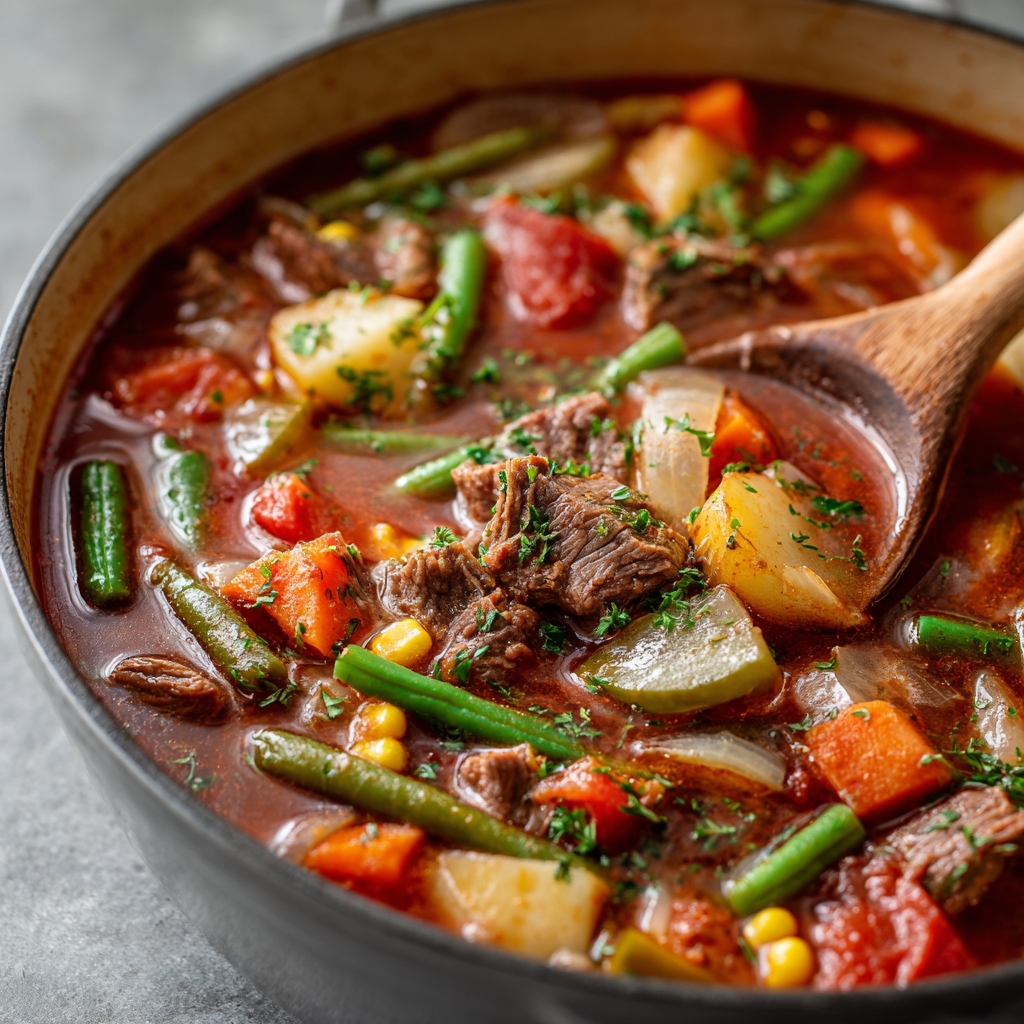
This isn’t just a recipe; it’s a feeling. It’s the smell that greets you at the door after a long, chilly day, telling you everything is going to be alright. It’s the sight of a big, bubbling pot on the stove, promising a meal that’s both hearty and wholesome. And it’s the taste—oh, the taste! Tender chunks of beef that melt in your mouth, a garden’s worth of colorful vegetables, all swimming in a rich, tomato-infused broth that has simmered for just long enough to become something truly magical.
I’m a huge believer that cooking should be fun, not intimidating, and this soup is the perfect example. You don’t need any fancy chef skills. You just need a big pot, a little bit of time, and the desire to create something truly unforgettable. This recipe is forgiving, flexible, and designed for real life. It makes a giant batch, meaning you get delicious lunches or easy dinners for days, and I swear it tastes even better the next day after the flavors have had a proper party in the fridge.
So, whether you’re a total beginner looking for a foolproof comfort food classic or a seasoned cook in need of a little nostalgic inspiration, I’m so excited to share this piece of my family’s kitchen with you. Let’s ditch the complicated stuff and get back to the good, real, and incredibly tasty basics. Grab your favorite Dutch oven, and let’s cook up some comfort together.
The Story Behind the Soup: More Than Just Dinner
For me, this soup will forever be tied to the sound of a football game on a crisp autumn Saturday. My dad would be glued to the TV, but my mom and I had our own game going on in the kitchen. Her massive, speckled blue stockpot would take center stage on the stove, and I was her official vegetable prep chef.
My small hands would struggle with the peeler on those stubborn carrots, and I’d meticulously line up the celery stalks to chop them into what I thought were perfectly even pieces (they weren’t, but Mom always said they were perfect). The best part was the searing of the beef. That initial sizzle when the cubes hit the hot oil was like the starting pistol for our cooking adventure. The entire house would fill with this incredible, savory aroma that felt like the very essence of home.
She never used a timer. She’d just lift the lid, give the soup a slow stir, and taste the broth from a wooden spoon, her eyes closing for a second in concentration. “Needs a pinch more pepper,” she’d say, or “Just another twenty minutes for the potatoes to get soft.” It was kitchen intuition, learned from her mother and now being passed to me. We weren’t just making soup; we were building a memory. And let me tell you, no five-star restaurant meal has ever come close to the perfection of a bowl of that soup, eaten on the couch while watching the game with my family. That’s the magic we’re bringing to your kitchen today.
Gathering Your Flavor Crew: The Ingredients
This is where the fun begins! Here’s your shopping list for a big batch of cozy. Don’t stress if you’re missing something—I’ve included my favorite swaps and chef insights to make this recipe work for you.
- 2 pounds beef stew meat (chuck or round): This is our flavor foundation. Chuck roast is my top pick because it has beautiful marbling that breaks down into fall-apart tenderness during the long simmer. Chef Insight: Don’t skip searing this! It creates a flavorful “fond” (those browned bits at the bottom of the pot) that makes the broth incredibly rich.
- 2 tablespoons olive oil: Our trusty searing and sautéing medium.
- 1 large onion, chopped & 3 cloves garlic, minced: The aromatic dream team. They build a savory-sweet base that makes the entire soup sing. Substitution Tip: Got a leek? Use it! Yellow, white, or sweet onions all work beautifully here.
- 4 cups beef broth & 2 cups water: The liquid gold. The broth provides the deep beefy base, and the water ensures it doesn’t get too salty. Chef Insight: For an even richer flavor, try using a dark beer or a splash of red wine instead of the water!
- 1 (28 oz) can diced tomatoes & 1 tablespoon tomato paste: This duo brings acidity, sweetness, and body. The tomatoes break down into the broth, while the paste adds a concentrated depth. Substitution Tip: No tomato paste? A squirt of ketchup can work in a pinch, but paste is best.
- 3 large carrots, 3 celery stalks, 2 large potatoes: The hearty vegetable trifecta! They hold their shape well and provide a wonderful texture and sweetness. Chef Insight: I like to cut my carrots and potatoes into similar-sized chunks so they cook evenly.
- 1 cup green beans, 1 cup corn kernels, 1 cup peas: The colorful finishing crew! We add these later to keep their bright color and fresh flavor. Substitution Tip: Fresh is fantastic, but frozen is your weeknight hero! No need to thaw, just toss ’em in.
- 1/2 teaspoon dried thyme, 1/2 teaspoon dried basil: The herbal backup singers. They add a subtle, earthy layer that complements the beef and tomatoes perfectly.
- Salt and pepper, to taste: The essential flavor finishers. We’ll season in layers!
- Optional: fresh parsley for garnish: A little pop of fresh green color and flavor right at the end. It makes all the difference.
Let’s Get Cooking: The Step-by-Step Simmer
Alright, team, fire up the stove! This is where we transform these simple ingredients into a masterpiece. Read through these steps once before you start—it’s like having a road map to deliciousness.
- Sear the Beef: In your largest, heaviest-bottomed pot or Dutch oven, heat the olive oil over medium-high heat. Pat your beef cubes dry with a paper towel—this is a crucial hack for getting a good, dark sear instead of steaming the meat. Working in batches if needed to avoid crowding, add the beef and let it sear, untouched, for a few minutes per side until you get a beautiful brown crust. Don’t rush this step! This is where we build a ton of flavor. Remove the beef to a plate and set aside.
- Sauté the Aromatics: In that same glorious pot, with all the beefy browned bits (the fond!), add your chopped onion. Sauté for about 4-5 minutes until they start to turn translucent and smell amazing. Now, add the minced garlic and cook for just one more minute until fragrant. Chef Tip: Garlic burns easily, so we add it after the onions have softened to keep its flavor sweet, not bitter.
- Build the Broth: Return the seared beef and any accumulated juices back to the pot. This is a flavor reunion! Pour in the beef broth and water, and use your spoon to scrape up all those browned bits from the bottom of the pot. This is called “deglazing,” and it’s the secret to a deeply flavorful broth. Stir in the entire can of diced tomatoes (with their juices) and the tablespoon of tomato paste.
- The First Simmer: Bring everything to a lively simmer, then reduce the heat to maintain a gentle, happy bubble. Now, add your carrots, celery, potatoes, dried thyme, dried basil, and a good pinch of salt and pepper. Let this simmer, uncovered, for about 30 minutes. This gives the tougher root vegetables and the beef a head start to become tender.
- The Final Veggie Push: After 30 minutes, your kitchen should smell incredible. Now, stir in your green beans, corn, and peas. These are more delicate, so they only need 20-30 minutes to cook through. Let it all bubble away until the potatoes and carrots are easily pierced with a fork and the beef is tender enough to cut with your spoon.
- Taste and Garnish: This is the most important step! Turn off the heat. Grab a clean spoon and taste your creation. Does it need more salt? A few more cracks of black pepper? Adjust it until it tastes perfect to YOU. Ladle it into bowls and top with a sprinkle of fresh, chopped parsley for that bright, finishing touch.
How to Serve It Up: The Grand Finale
You’ve done the work, now let’s enjoy the rewards! This soup is a full meal in a bowl, but a few simple pairings can turn it into a feast.
My absolute non-negotiable is a thick, crusty slice of warm, buttered bread. Whether it’s a rustic sourdough, a fluffy baguette, or even a classic slice of cornbread on the side, you need something to sop up every last drop of that incredible broth. For a real treat, grill that bread with a little garlic butter—you can thank me later.
If you’re feeling extra fancy (or just extra hungry), a simple side salad with a sharp vinaigrette is a fantastic way to cut through the richness of the soup. The crisp, fresh greens provide a lovely contrast to the warm, hearty bowl.
And presentation? Keep it simple and rustic. I love using wide, shallow bowls so you can see all the beautiful colors of the vegetables poking through. Ladle a generous serving right from the pot, making sure everyone gets a good mix of beef, potatoes, and all the veggie goodness.
Make It Your Own: Flavorful Twists & Swaps
One of the best things about this soup is its flexibility. It’s a blank canvas for your cravings! Here are a few of my favorite ways to mix it up:
- Spicy Kick: Add a pinch of red pepper flakes with the dried herbs, or stir in a diced jalapeño (seeds and all for more heat!) when you’re sautéing the onions.
- Global Meld: Give it an Italian spin by swapping the thyme and basil for a tablespoon of Italian seasoning and stirring in a Parmesan rind while it simmers (remove it before serving). Or, go Southwest by adding a teaspoon of cumin and chili powder and swapping the potatoes for a can of rinsed black beans.
- Vegetarian/Vegan Powerhouse: Easy! Skip the beef and use a hearty vegetable broth. To replace the meaty texture, add a cup of pearled barley (add it with the carrots and potatoes) or two cans of drained and rinsed lentils (add them with the green beans).
- Low-Carb Comfort: Simply swap the potatoes for chopped turnips or radishes—they soften up beautifully and have a mild, slightly peppery flavor that works wonderfully. You can also reduce the amount of corn.
- “Clean Out the Fridge” Version: Got a zucchini? Toss it in. Some spinach that’s about to wilt? Stir it in at the very end. This soup is incredibly forgiving, so use what you have!
Jackson’s Chef Notes & Kitchen Stories
This recipe has evolved a bit since my mom first taught it to me. My one big “chef-ification” was insisting on that proper sear for the beef. Mom would sometimes just brown it, but I’m a searing evangelist now—the difference in the broth’s depth is night and day.
A funny story: I once decided to be “creative” and added a full tablespoon of smoked paprika, thinking it would be genius. Let’s just say we ended up with “Jackson’s Campfire Soup.” It was… intense. My dad, ever the diplomat, said it “sure had a personality!” The lesson? A little smoked paprika is great; a lot will make your soup taste like a cured meat. Start small, taste often!
The other beautiful thing about this soup is its voice. When it’s simmering perfectly, it has a quiet, gentle bubble. If it’s boiling too aggressively, it shouts at you, and the liquid evaporates too quickly. Listen to your soup—it’ll tell you what it needs.
Your Soup Questions, Answered!
I’ve gotten a lot of questions about this recipe over the years. Here are the most common ones to help you troubleshoot like a pro.
Q: My soup turned out a bit thin. How can I thicken it?
A: No worries! An easy fix is to make a “slurry.” Mix 2 tablespoons of cornstarch with ¼ cup of cold water until smooth. Stir this into your simmering soup and let it cook for another 2-3 minutes. It will thicken up beautifully. You can also mash a few of the potato pieces against the side of the pot to naturally thicken the broth.
Q: Can I make this in a slow cooker or Instant Pot?
A> You bet! For the Slow Cooker: Follow steps 1 and 2 on the stovetop to sear the beef and sauté the onions/garlic, then transfer everything to your slow cooker. Add all remaining ingredients except the green beans, corn, and peas. Cook on LOW for 7-8 hours or HIGH for 4-5 hours. Add the remaining veggies in the last 30-60 minutes of cooking. For the Instant Pot: Use the Sauté function for steps 1 and 2. Add everything except the delicate veggies. Cook on High Pressure for 15 minutes, then do a quick release. Switch back to Sauté, add the green beans, corn, and peas, and simmer for 5-10 minutes until tender.
Q: Why is my beef still tough?
A> This almost always means it just needs more time. The beef in stews and soups needs a long, slow, gentle cook to break down its connective tissue and become tender. If it’s tough, just put the lid on and let it simmer for another 20-30 minutes, checking periodically. Low and slow is the key!
Q: My soup is too salty! Help!
A> We’ve all been there. The best fix is to add more volume. Toss in a diced, raw potato or two and let the soup simmer for another 20-30 minutes. The potatoes will absorb a surprising amount of salt. You can also add a bit more water or unsalted broth to dilute it.
Nourishing Your Body & Soul
While I’m all about flavor first, it feels good to know that this comforting bowl is also packed with real, wholesome nutrition. This is a rough estimate per serving (assuming 8 servings), but it can vary based on your specific ingredients.
This soup is a fantastic source of high-quality protein from the beef, which is essential for muscle repair and keeping you full and satisfied. The colorful array of vegetables provides a wide spectrum of vitamins and minerals: Vitamin A from the carrots, Vitamin C from the tomatoes, and various B vitamins from the potatoes and greens.
It’s also a great source of dietary fiber from the vegetables, which is great for digestive health. Using leaner cuts of beef can reduce the saturated fat content, and you can always control the sodium by choosing a low-sodium
broth. This recipe strikes that beautiful balance between hearty and wholesome — the kind of meal that satisfies your cravings and leaves you feeling good afterward.
Here’s an approximate nutritional breakdown per serving (based on 8 servings):
-
Calories: ~390
-
Protein: ~32g
-
Fat: ~14g
-
Carbohydrates: ~34g
-
Fiber: ~6g
This soup checks every box: comforting, nourishing, and family-approved. It’s a full meal in a bowl that fuels your body just as much as it warms your heart.
Final Thoughts: The Taste of Home, One Spoonful at a Time
And there you have it — my mom’s Old Fashioned Vegetable Beef Soup, a recipe that’s been simmering its way through generations of love. It’s simple, satisfying, and full of that unmistakable “made with care” flavor you just can’t fake.
Every time I make this soup, I’m reminded of the rhythm of my mom’s kitchen — the steady chop of the knife, the scent of onions hitting hot oil, the sound of quiet laughter between stirs. It’s more than a meal; it’s a memory. And now, I hope it becomes part of yours too.
So the next time you need a little warmth, a little nostalgia, or just a big, delicious bowl of comfort — make this soup. Let it bubble away while you slow down, breathe, and remember that food has the power to bring us back to ourselves.
From my family’s kitchen to yours — here’s to comfort, connection, and one more spoonful of love.
— With warmth and gratitude,
Jackson from Food Meld 🍲❤️