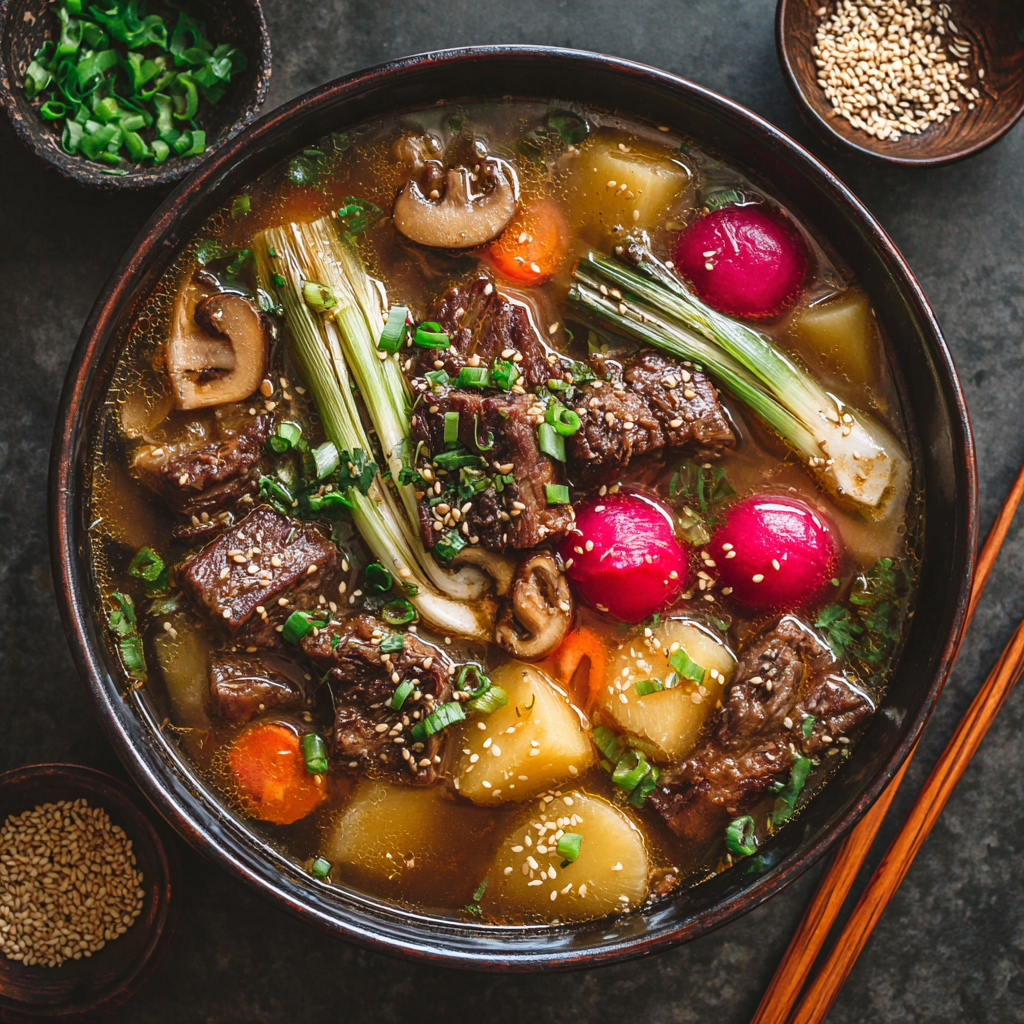
Let’s Make Some Soul-Warming Korean Short Rib Radish Soup (Galbitang)!
Hey friends, Jackson here from Food Meld. Pull up a stool and get comfortable. Today, we’re diving into one of those legendary, soul-in-a-bowl recipes that just makes everything feel right in the world. We’re talking about Galbitang – a stunningly clear, deeply comforting Korean short rib and radish soup.
Now, I know the words “Korean soup” might sound a little intimidating if you’re new to it, but trust me, this is where my whole “cooking should be fun, not frightening” philosophy really shines. We’re not just boiling meat here; we’re building layers of flavor, creating a broth that’s so clean, so rich, and so nourishing it feels like a warm hug from the inside out. It’s the kind of meal that heals you on a rainy day, impresses a crowd on a Saturday night, and fills your kitchen with the most incredible, savory aroma you can imagine.
My version sticks to the classic, soul-satisfying roots but, true to Food Meld form, I’m layering in a few little twists—like earthy shiitake mushrooms and a finishing swirl of toasted sesame oil—that take the flavor from “wow” to “YOU’VE GOTTA TRY THIS.” I’ve also scaled this baby up, because good food is meant to be shared. This recipe comfortably feeds a hungry crew of 8-10, making it perfect for your next family gathering or a week of seriously epic leftovers. So, are you ready to cook something awesome together? Let’s get this galbitang going.
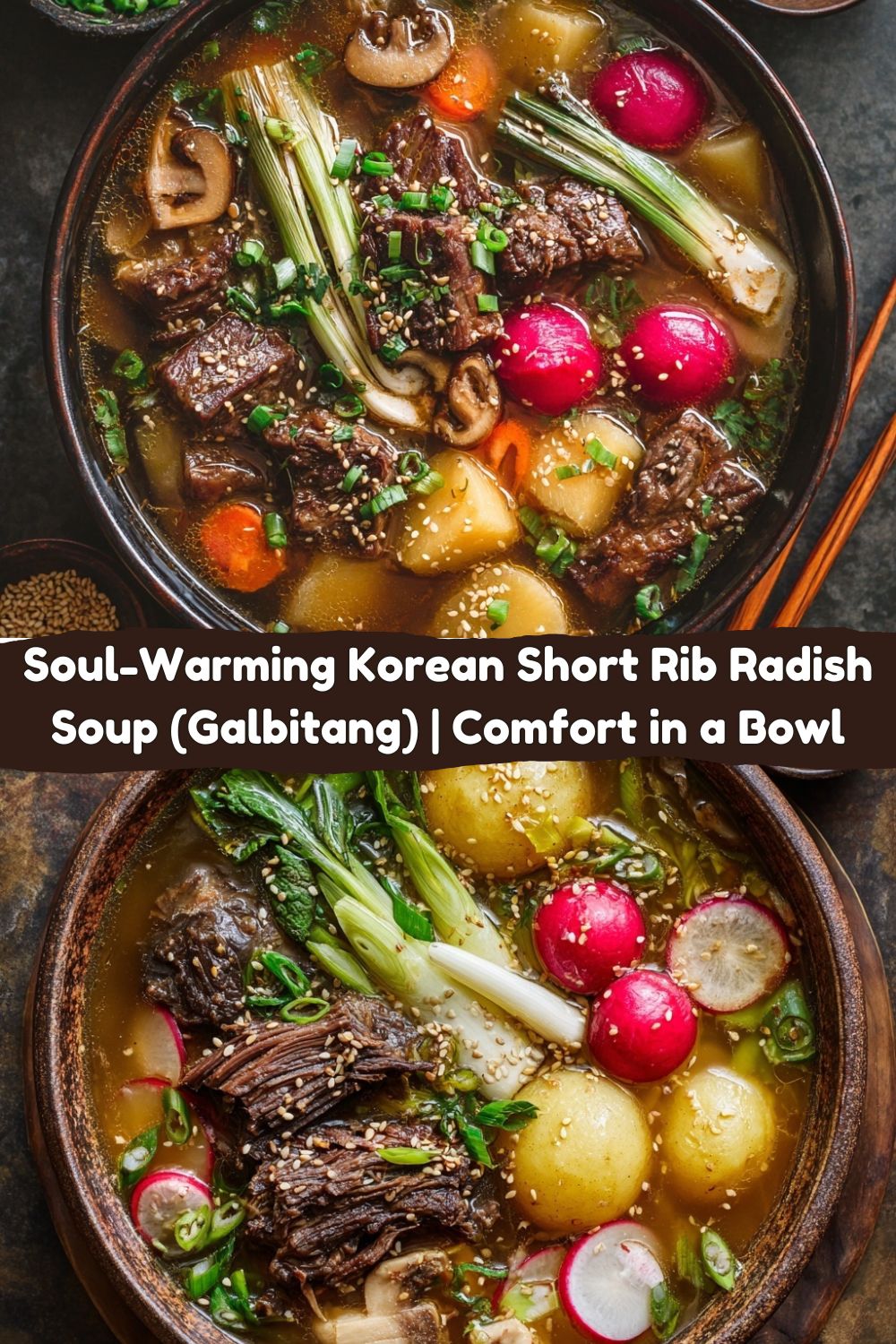
A Bowl of Soup and a Flood of Memories
I’ll never forget the first time I truly got galbitang. It wasn’t in a fancy restaurant; it was at my friend Min-jun’s family home during a particularly bleak and slushy November. I walked in, chilled to the bone, and was immediately greeted by a wave of steamy, savory warmth that seemed to coat the entire house. His halmeoni (grandmother) was in the kitchen, presiding over a giant, bubbling pot with the quiet confidence of a culinary general.
She didn’t speak much English, and my Korean was, well, non-existent. But she sat me down at the table, placed a heavy, stoneware bowl in front of me, and gestured for me to eat. That first spoonful? It was a revelation. The broth was crystal clear yet packed with a profound, beefy depth. The meat was so tender it fell right off the bone, and the radish had soaked up all that beautiful flavor, becoming this soft, juicy, melt-in-your-mouth treasure. We didn’t need words. The shared smiles, the satisfied sighs, the simple act of breaking bread—or in this case, spooning soup—together said it all. That bowl was more than food; it was comfort, community, and care. It’s that exact feeling I try to bring into every pot I make, and I’m so excited to share it with you.
What You’ll Need for This Flavor Bomb
Gathering your ingredients is the first step to kitchen magic. Here’s your shopping list, complete with my chef-y insights and easy swaps so you can rock this recipe no matter what.
- 3 lbs beef short ribs, trimmed: This is our star! Look for “flanken-cut” ribs, which are cut across the bone, making them perfect for soup. A little marbling is great for flavor, but trim off any excessive surface fat for a cleaner broth.
- 20 cups water: Seems like a lot, but we’re going for a big batch of broth! Using filtered water can make a subtle but positive difference in the final clarity and taste.
- 2 whole yellow onions, halved: We’re roasting these bad boys! Chef’s Hack: If they’re organic, just give ’em a good scrub and leave the skin on. It adds a gorgeous golden color to the broth.
- 4 green onions or 2 Korean leeks: These bring a fresh, allium kick. If you find Korean leeks (daepa), grab them! They’re thicker and milder than standard green onions.
- 4 slices fresh ginger (about ¼-inch thick): No need to peel! Just slice and toss them in. Ginger adds a warm, zesty backbone that cuts through the richness.
- 6–8 green onion roots (optional but so good): Don’t throw those root ends away! They are FLAVOR BOMBS. Rinse off any dirt, save them in a bag in your freezer, and add them to stocks and soups.
- 1 medium Korean radish (mu), quartered & sliced: This is the “radish” in our radish soup! It’s sturdier and sweeter than a daikon. It holds its shape beautifully and turns translucent and delicious when cooked.
- 4 tbsp chopped garlic or 10–12 whole cloves: We’re not shy with garlic here. It mellows and sweetens during the long simmer, becoming a subtle but essential layer.
- 2 tbsp Korean soup soy sauce (guk ganjang): This is key! It’s saltier, lighter, and less sweet than regular soy sauce, specifically made for soups. If you can’t find it, use a light Japanese usukuchi shoyu or a low-sodium soy sauce, but add it gradually and adjust the salt accordingly.
- 3 tsp sea salt (to taste): We season at the end. Start with less, you can always add more!
For Our Flavorful “Food Meld” Twist:
- 1 tsp toasted sesame oil: Added right at the end. This is our secret weapon, giving the broth an incredible nutty aroma.
- ½ cup shiitake mushrooms, fresh or rehydrated: These add a deep, earthy umami. If using dried, just soak them in hot water for 20 minutes before using.
- 1 tsp black pepper: Freshly cracked is always best!
- A few glass noodles (dangmyeon), soaked: A fun, chewy addition for serving. They make the meal even more hearty and satisfying.
Let’s Build That Beautiful Broth: Your Step-by-Step Guide
Alright, team, let’s get cooking. This is a low-and-slow situation, so put on some good music, pour yourself a drink, and enjoy the process. The payoff is absolutely worth it.
- Parboil the Ribs – Don’t Skip This!Place your short ribs in your large stockpot and cover them with cold water. Bring it to a rolling boil over high heat and let it go for a solid 5 minutes. You’ll see a greyish foam rise to the top – that’s the impurities and blood we want to get rid of! Drain the ribs into a colander and give them a good rinse under cold water, washing off any leftover scum. This step is the secret to a crystal-clear, restaurant-quality broth, so don’t be tempted to rush it!
- The Flavor FoundationWipe out the same pot (less dishes!), and add your beautifully cleaned ribs back in. Pour in the 20 cups of fresh, cold water. Now, let’s build our flavor base. Add in the halved onions (skin-on for that golden hue!), the whole green onions or leeks, the ginger slices, all the garlic, the green onion roots, and the shiitake mushrooms if you’re using them. We’re creating a flavor party in this pot.
- The Long, Loving SimmerBring the pot to a boil over high heat. As soon as it starts bubbling, you’ll see a little more foam. Grab a fine-mesh skimmer or a spoon and gently skim off that foam. It’s mostly protein and will make your broth cloudy if you leave it in. Once it’s relatively clear, reduce the heat to low, partially cover the pot (leave a small crack for steam to escape), and let it simmer gently for 2.5 to 3 hours. We’re not looking for a raging boil here, just a few lazy bubbles breaking the surface. This slow cooking coaxes all the collagen, marrow, and flavor from the bones.
- Introducing the RadishAfter the first hour of simmering, it’s time for our radish to join the party. Add your quartered and sliced Korean radish directly into the broth. It will simmer for the remaining 1.5-2 hours, soaking up all that beefy goodness and becoming incredibly tender and flavorful.
- The Final Touches & SeasoningOnce the meat is fork-tender and falling off the bone, and the radish is translucent, we’re in the home stretch. Carefully remove all the solid bits – the ribs, radish, onions, etc. – using tongs or a slotted spoon. You can strain the entire broth through a fine-mesh sieve for a super-clear result, or just fish out the big pieces like I often do. Return the beautiful, clear broth and the ribs/radish back to the pot. Now, we season! Start with the guk ganjang (soup soy sauce), the sea salt, and black pepper. Taste, taste, TASTE! Adjust until it’s perfect for you. Right before you turn off the heat, stir in that magical teaspoon of toasted sesame oil. That’s the “Meld” magic right there.
How to Serve This Masterpiece
Presentation is part of the fun! I like to ladle the hot soup into deep, warm bowls. Make sure each person gets a couple of meaty short ribs and several pieces of that glorious radish. If you’re using the optional glass noodles, add a small nest of them to the bottom of each bowl before pouring the soup over top.
Garnish generously with a shower of thinly sliced green onions. For a true Korean table experience, serve this with a big bowl of steamed short-grain rice (you can even add a scoop directly to your soup bowl), a side of kimchi for a spicy, fermented kick, and maybe some simple seasoned spinach or bean sprouts (namul). The contrast of the clean, savory soup with the bold, spicy kimchi is a match made in heaven.
Mix It Up! Your Galbitang, Your Rules
Once you’ve mastered the classic, feel free to get creative! Here are a few of my favorite twists:
- The “Dak” (Chicken) Swap: Not in the mood for beef? Swap the short ribs for a whole chicken or 3-4 lbs of chicken thighs/legs. You’ll get a lighter, but equally delicious, Samgyetang-inspired vibe. Cook time will be closer to 1.5 hours.
- Spicy Tteokguk Twist: Craving heat? Add 1-2 tablespoons of gochujang (Korean red chili paste) to your bowl and stir it in until dissolved. Throw in some sliced rice cakes (tteok) instead of the glass noodles for a chewy, festive treat.
- Leafy Green Boost: Right at the end of cooking, stir in a few big handfuls of fresh spinach or chopped napa cabbage. It wilts instantly and adds a lovely pop of color and freshness.
- Garlic Lover’s Dream: For an intense, aromatic punch, mince a few extra cloves of raw garlic and add it to your individual bowl right before serving. The heat from the soup will cook it just slightly.
Jackson’s Kitchen Notes & Stories
This recipe has evolved so much in my kitchen. The first time I made it, I was so nervous I skimmed that pot every 10 minutes like a hawk! I’ve since learned to relax—a few bubbles and a little cloudiness just mean it’s made with love. My favorite “oops” moment was the time I accidentally used dark soy sauce instead of the soup soy sauce. Let’s just say we had a very, VERY dark and intensely salty “galbitang” that night. We laughed, we ordered pizza, and I learned to always double-check my bottles! The beauty of this soup is in its simplicity and its ability to adapt. It’s a recipe that asks for your patience and rewards you with pure, unadulterated comfort.
Galbitang Questions? I’ve Got Answers!
Q: My broth isn’t as clear as I’d like. What did I do wrong?
A: The most common culprits are not parboiling the ribs thoroughly or boiling the soup too aggressively instead of simmering it gently. Don’t worry, it will still taste amazing! For next time, make sure to skim well at the beginning and keep the heat low and steady.
Q: Can I make this in an Instant Pot or pressure cooker?
A> Absolutely! Sauté the ribs after parboiling for a minute, then add all ingredients EXCEPT the radish. Pressure cook on high for 45 minutes. Do a natural release for 15 minutes, then quick release. Add the radish and cook on Sauté for another 15-20 minutes until tender, then season.
Q: The meat is still a bit tough. Help!
A> No problem! It just needs more time. Keep that pot simmering and check it every 20-30 minutes. Collagen takes time to break down into gelatin, but when it does, it’s a textural miracle. Patience is key.
Q: How long does it keep?
A> Let it cool completely and store it in an airtight container in the fridge for up to 4 days. The flavor actually gets better! You can also freeze it for up to 3 months. The fat will solidify on top, which you can skim off before reheating if you prefer.
Nourishment in a Bowl (The Quick Breakdown)
While I’m all about flavor first, it’s nice to know what’s fueling your body. This galbitang is a nutritional powerhouse! The long simmer pulls collagen, minerals, and gelatin from the bones, which is fantastic for gut health, joints, and skin. The short ribs provide a solid dose of high-quality protein to keep you full and satisfied, and the Korean radish is low in calories but high in Vitamin C and digestive enzymes. It’s a balanced, wholesome meal that truly nourishes you from the inside out. (Note: These are estimates and can vary based on your specific ingredients.)
Per Serving (approx):
Calories: 280 | Protein: 24g | Fat: 18g | Carbs: 6g | Sodium: 550mg
You Did It! Now, Dig In.
And there you have it, friends! Your very own pot of Korean Short Rib Radish Soup, made with your own two hands. I am so incredibly proud of you for taking on this project. You’ve created something truly special—a meal that’s not just food, but an experience. It’s the kind of dish that brings people together, that tells a story, and that fills your home with love and incredible smells.
I hope this recipe becomes a new favorite in your rotation, a go-to for cozy nights and celebratory feasts alike. Remember, cooking is a journey, not a destination. So make it yours, share it with people you love, and most importantly, enjoy every single, soul-warming bite. Thanks for cooking with me today. Until next time, keep melding those flavors!